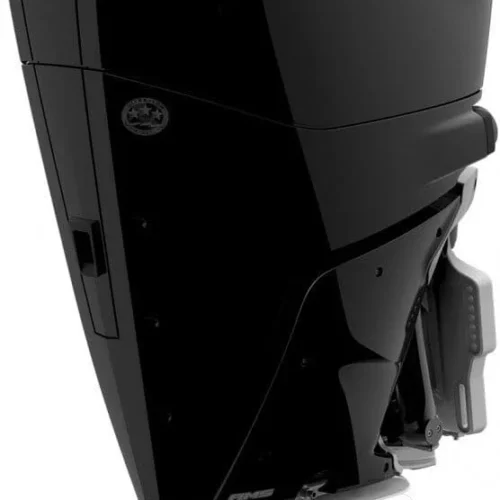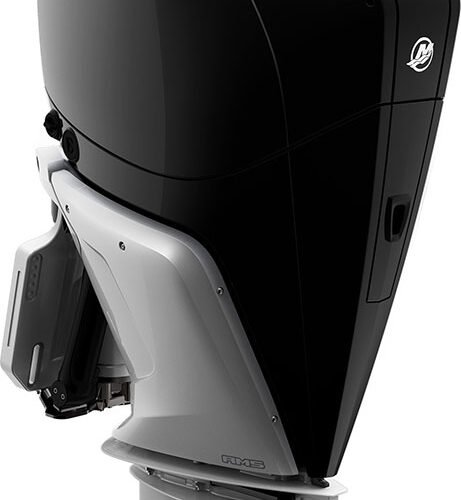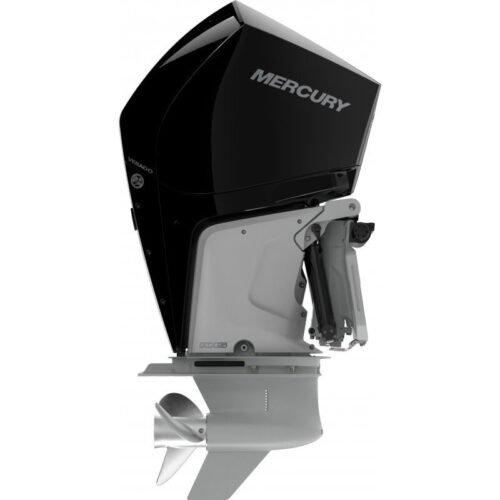

Description
The Service Story Nobody Else Tells
Most 30 HP outboard listings recite displacement and weight, then stop. The most useful thing to know about this engine is how much time it takes to own it.
Mercury fits a no-spill system for changing oil. Anyone who has changed oil on an outboard hanging off a transom knows why that matters: the conventional method involves a drain plug, a hull you are trying not to contaminate, and a certain amount of luck. The no-spill system routes it cleanly. The annual service on this engine is genuinely shorter than on its competitors, thanks to the combination of easy-change gear lube and a lifetime maintenance-free valve train.
The valve train point deserves emphasis. On most four-stroke outboards, valve clearance is a scheduled adjustment: a workshop job, at intervals, for money. Mercury eliminates it on this engine. Over a ten-year ownership, that is a meaningful running-cost difference, and it is invisible on a spec sheet.
Three Cylinders, Balanced and Isolated
The 500cc inline three uses a 61 x 63 mm bore and stroke with six valves through a single overhead cam. Three-cylinder engines are inherently better balanced than twins, firing at 120-degree intervals, which cancels the rocking couple a twin produces. Mercury then balances the powerhead itself and mounts it on soft rubber isolators that direct residual vibration away from the transom rather than into it.
What you feel is an engine that is noticeably calmer than a 20 HP twin at the same throttle setting, even though it makes half again as much power. Over a full day, that is the difference between a comfortable trip and a tiring one.
The operating range runs 5800 to 6200 rpm, the highest in Mercury’s small-engine line. Electronic fuel injection is battery-free on manual-start models, so the engine generates the power to run its injection from the recoil pull. Electric-start models carry a 17-amp, 204-watt alternator, which is enough to run a sounder, a chart plotter, a live well pump, and navigation lights together without touching the start battery.
Engine protection monitors four conditions: low oil pressure, over-rev, overheat, and sensor failure.
Tiller, Prop Matching, and Trim
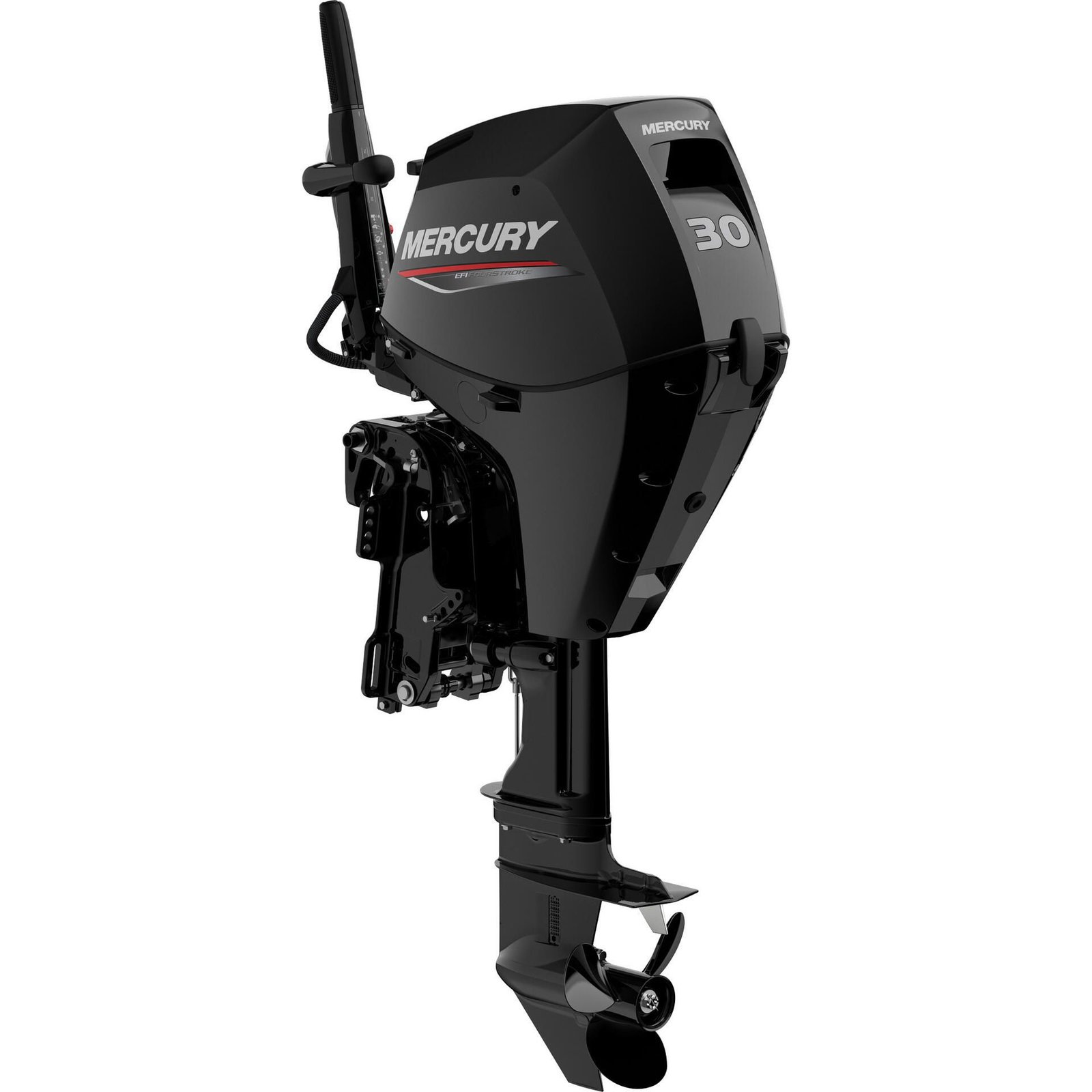
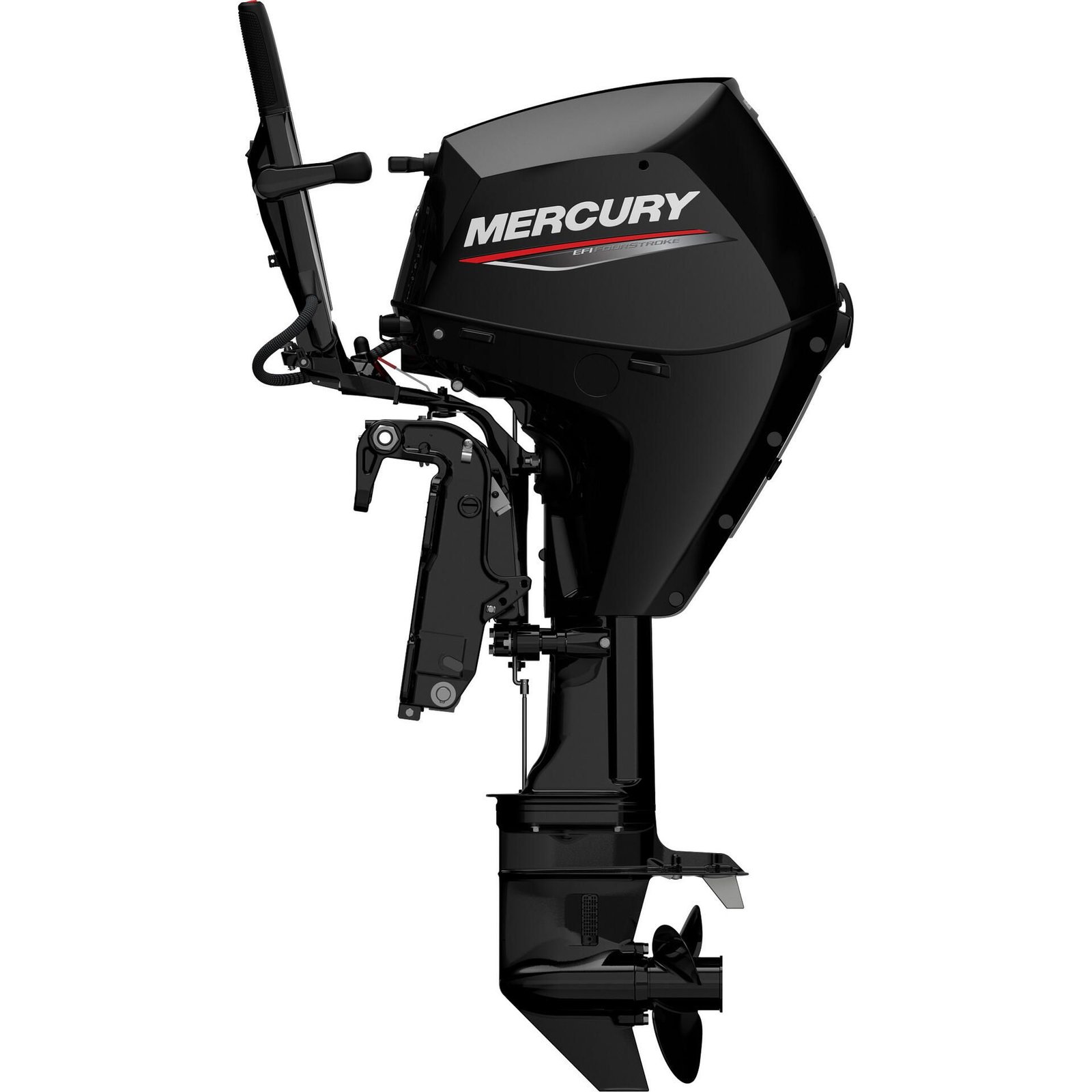
The Mercury tiller on this engine runs close to 23 inches and adjusts for left or right-handed driving. It includes a down-angle stop that holds it at a comfortable height whether you are seated or standing and an adjustable throttle friction so you can set a speed and let go. Those two features are what separate a tiller you can use for six hours from one you cannot use for that long.
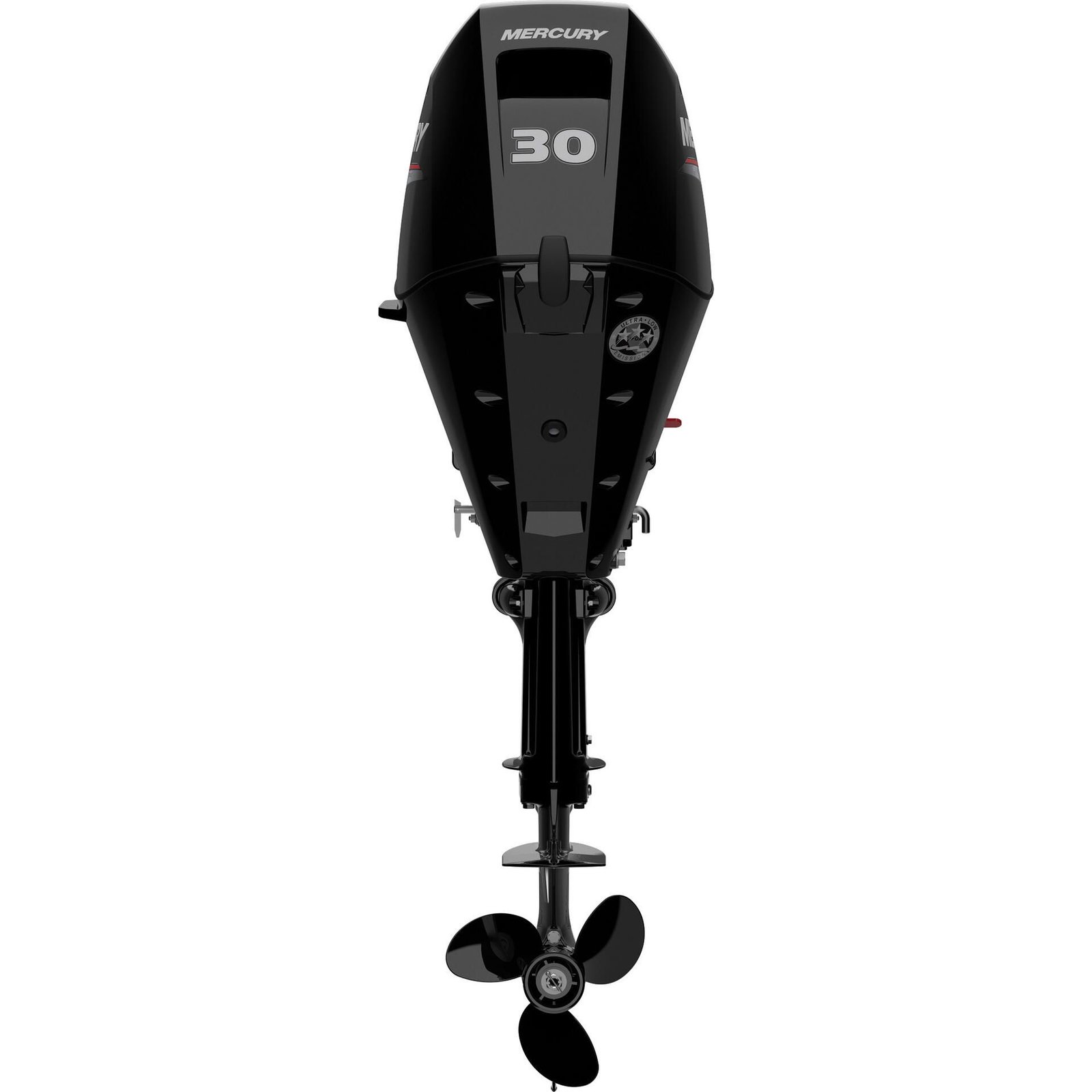
Mercury offers a series of Black Max propellers designed specifically for the 25 and 30 HP family, in one-inch pitch increments. That is unusual at this size. Most manufacturers offer two or three prop options and expect you to live with the compromise. One-inch increments let you actually tune the engine to your hull and load: more pitch for top speed on a light boat, less for a hole shot on a heavy one. If you are buying this engine for a specific boat, ask about prop selection rather than accepting the default.
Trim is gas-assisted on some configurations and full-power trim and tilt on others, with a 73-degree tilt range. Gear shift is forward, neutral, and reverse. Exhaust discharges through the propeller hub. Lubrication is a wet sump with a 1.6-liter capacity. Fuel comes from a 6.6-gallon (25-liter) external tank supplied with a line.
What It Suits
Small aluminum fishing boats, runabouts, inflatables, jon boats, and tenders, typically 16 to 18 feet. It is also one of the most common repower choices in the market, because a modern EFI 30 replacing an old carbureted two-stroke of the same rating delivers better fuel economy, easier starting, and far less noise for a straightforward transom swap.
Every Mercury 30 HP outboard we ship is new, factory sealed, and pre-delivery inspected before crating. Compare across the Potent Power range, step down to Vast Versatility, or browse the Mercury outboard motors hub. For hull matching, see our pontoon boats and rigid-hull inflatables. Cross-brand, see the Yamaha midrange series.
Mercury 30 HP Four-Stroke EFI: Full Factory Specifications
| Feature / Specification | Technical Detail / Value |
|---|---|
| Models | 30MHGA, 30MLHGA, 30EH, 30ELPT, and variants |
| Horsepower | 30 HP |
| Engine type | Inline 3-cylinder, four-stroke |
| Displacement | 500 cc / 30.5 CID |
| Bore and stroke | 61 x 63 mm / 2.40 x 2.48 in |
| Full-throttle RPM range | 5800 to 6200 rpm |
| Fuel induction | 6-valve, single overhead cam (SOHC) |
| Fuel system | Electronic fuel injection (EFI), battery-free on manual start |
| Recommended fuel | 87 octane, up to 10% ethanol |
| Recommended oil | Mercury FourStroke 10W-30 |
| Lubrication | Wet sump, 1.6 L capacity, no-spill change system |
| Valve train | Lifetime maintenance-free |
| Ignition | CDI with electronic spark advance |
| Cooling system | Water-cooled with thermostat |
| Alternator | 12V, 204 W, 17 amp |
| Starting | Manual or electric |
| Steering | Tiller (approx. 23 in., adjustable) or remote |
| Gear shift | Forward, Neutral, Reverse |
| Gearcase ratio | 2.17:1 |
| Propeller | Black Max series, 1-inch pitch increments available |
| Shaft lengths | 15 in / 381 mm, 20 in / 508 mm |
| Trim system | Gas assist or power trim and tilt |
| Tilt range | 73 degrees |
| Exhaust system | Through the propeller |
| External fuel tank | 6.6 gal / 25 L with line |
| Dry weight | 145 to 154 lb / 66 to 70 kg by configuration |
| Engine protection | Low oil pressure, over-rev, overheating, sensor failure |
| CARB star rating | 3 stars |
| Color | Phantom Black |
| Warranty | Mercury 3-year |
| Condition | New, factory sealed, PDI completed |
Frequently Asked Questions
Does the Mercury 30 HP outboard need a battery?
Not on manual-start models. Mercury’s EFI on the 30 HP is battery-free, drawing the electrical power it needs to run fuel injection from the recoil pull itself. Electric-start models require a battery and carry a 17-amp, 204-watt alternator, which is enough to run a sounder, chart plotter, live well pump, and navigation lights simultaneously while still charging.
How often does the Mercury 30 HP need servicing?
Less often than most comparable outboards, because Mercury fits a lifetime maintenance-free valve train. On most four-stroke outboards, valve clearance is a scheduled workshop adjustment at set intervals. This engine eliminates it. Combined with the no-spill oil change system and easy-change gear lube, annual service is shorter and cheaper over a long ownership.
What is the difference between the Mercury 25 HP and 30 HP?
Both use the same 500 cc three-cylinder block, the same gearcase, and the same tiller. The 30 HP is tuned to a higher 5800 to 6200 rpm range for more power at a small weight increase. As with most Mercury families built on a shared block, the higher-rated model is the better value unless a hull rating or regulation caps you at 25 HP.
Can I choose a different propeller for the Mercury 30 HP?
Yes. Mercury offers a Black Max propeller series designed specifically for the 25 and 30 HP family in one-inch pitch increments, which is finer than most manufacturers provide at this size. More pitch favors top speed on a light hull; less pitch favors a hole shot on a heavy one. Tell us your boat and typical load, and we will recommend the pitch.
What size boat does a 30 hp outboard motor suit?
A 30 hp outboard motor suits small aluminum fishing boats, runabouts, inflatables, and jon boats from roughly 16 to 18 feet. It is also one of the most common repower choices on the market, since a modern EFI 30 replacing an aging two-stroke carbureted engine of the same rating gives better fuel economy, easier starting, and considerably less noise for a straightforward transom swap.