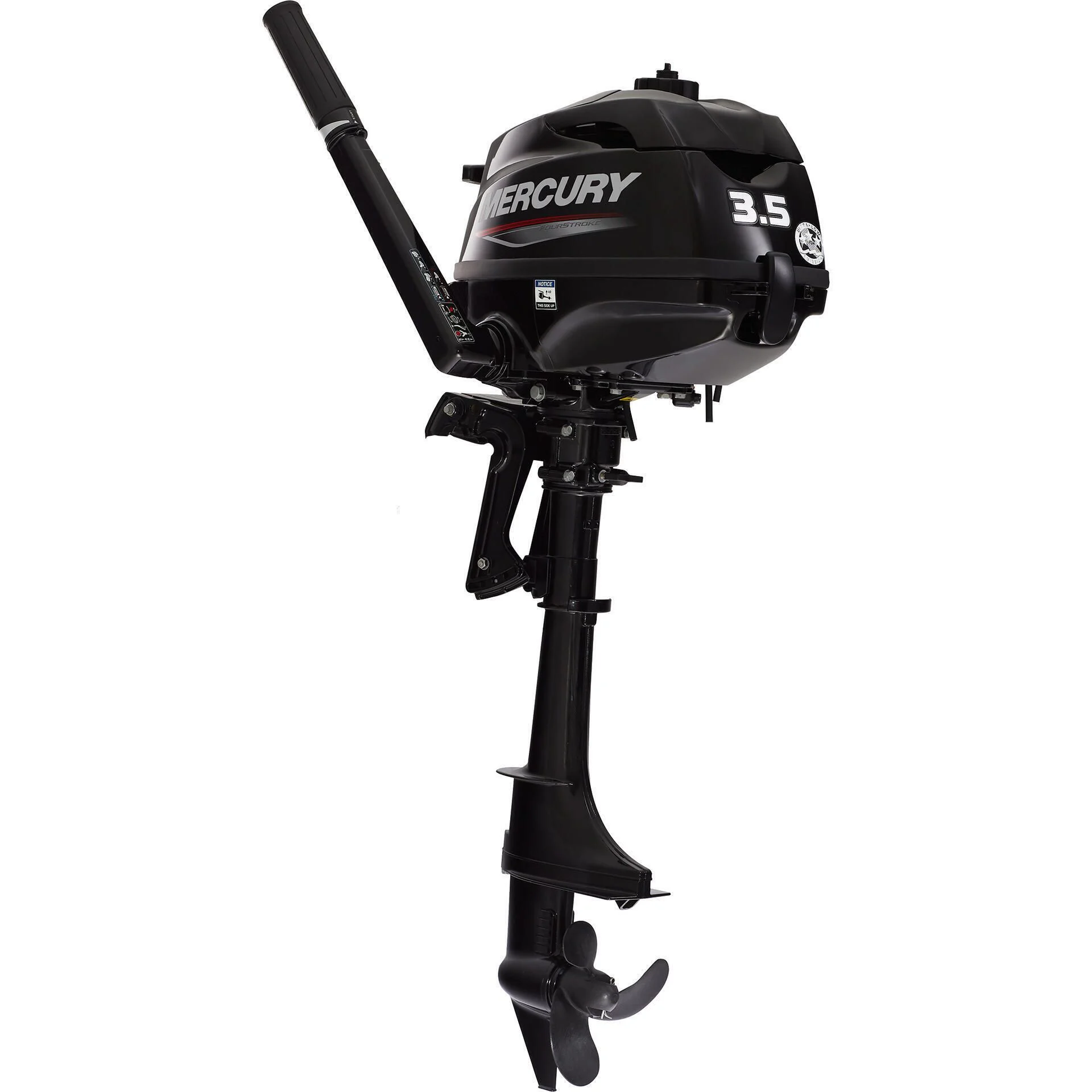
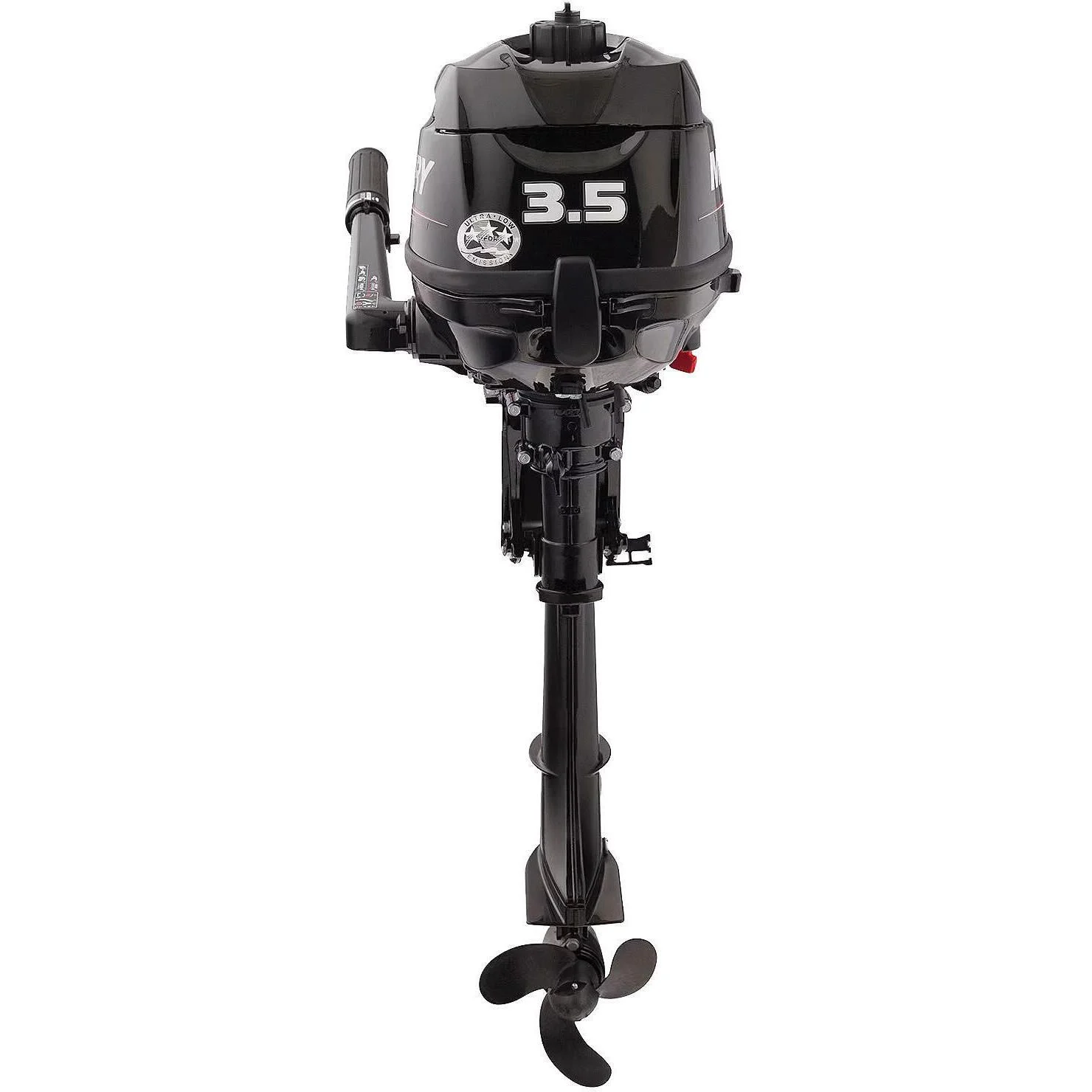
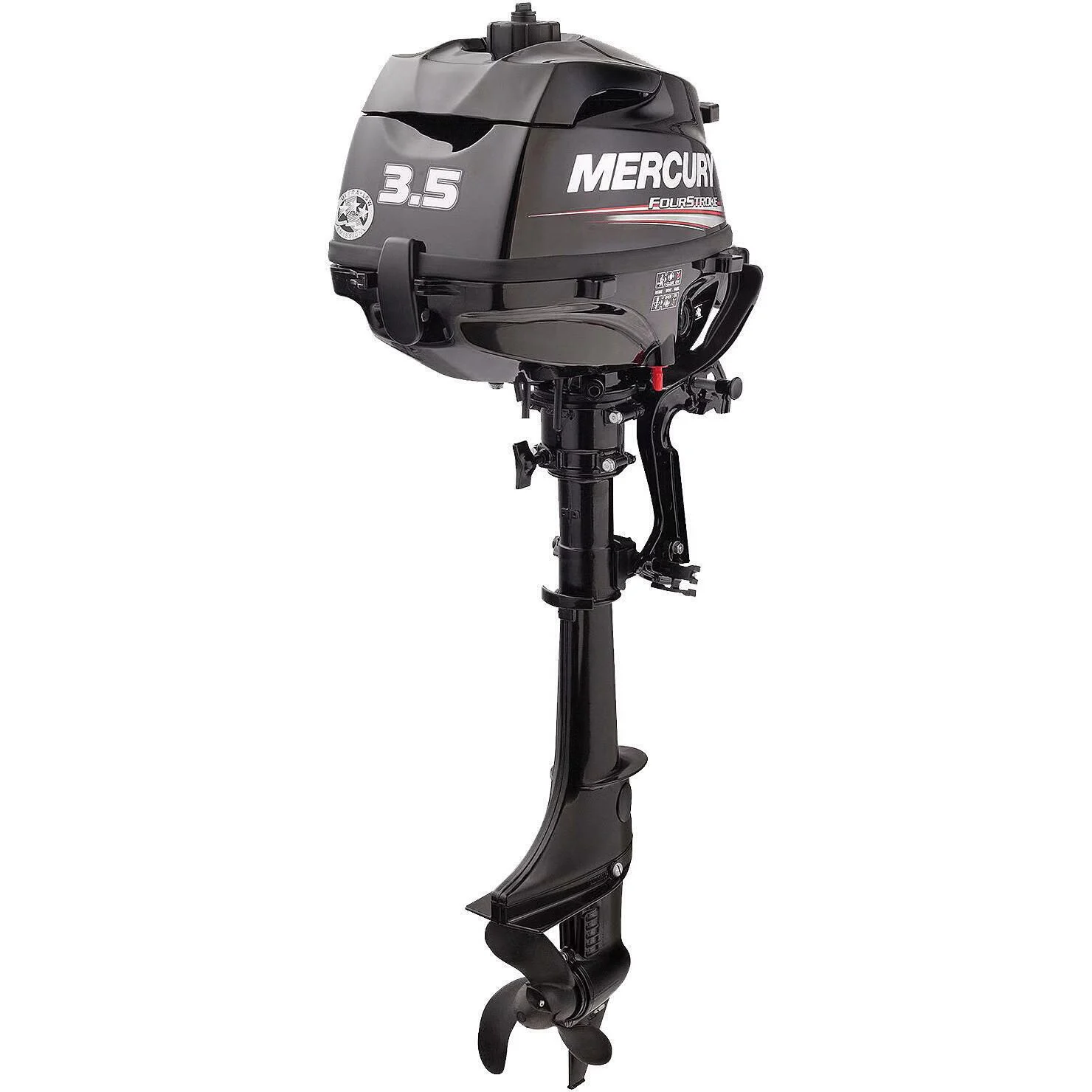
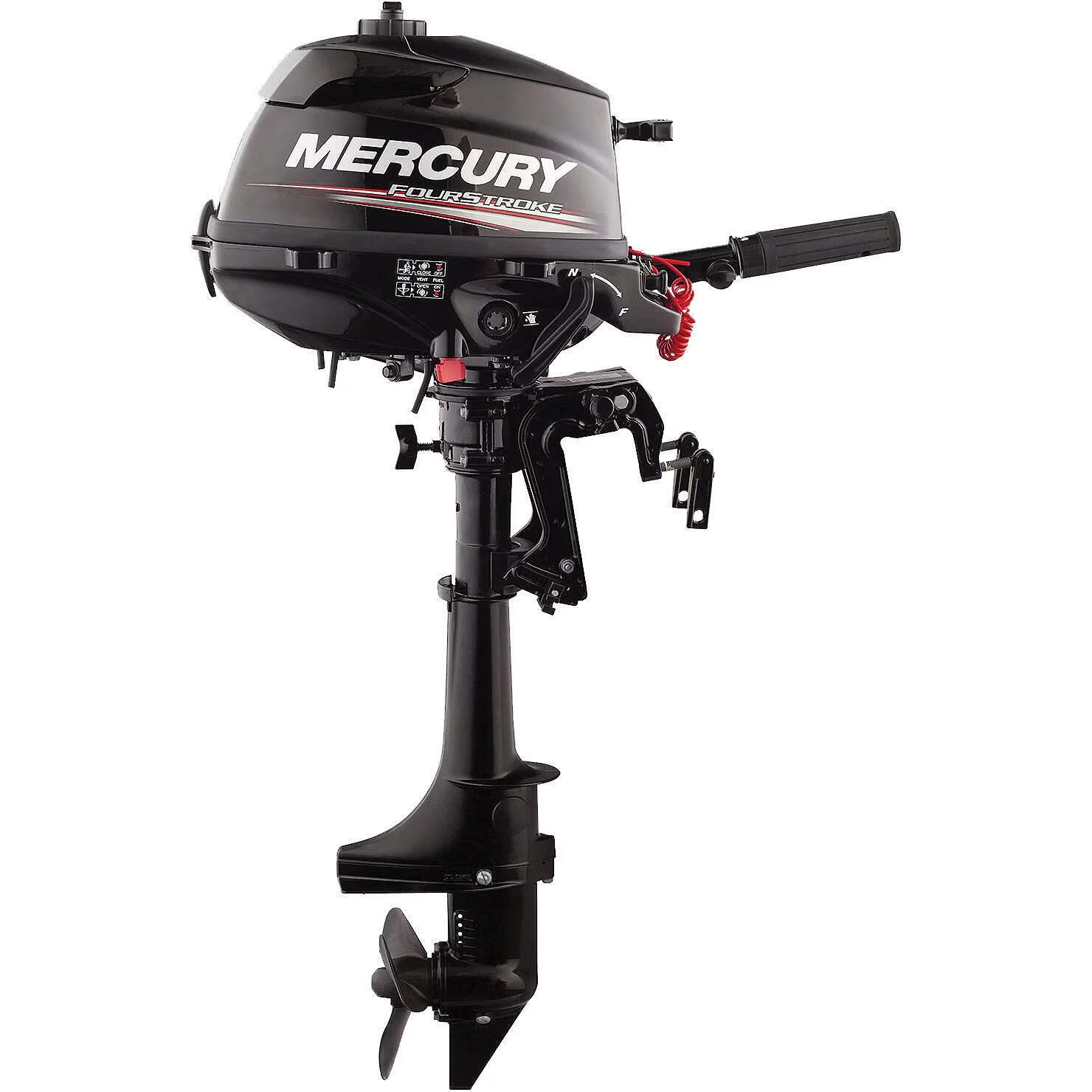
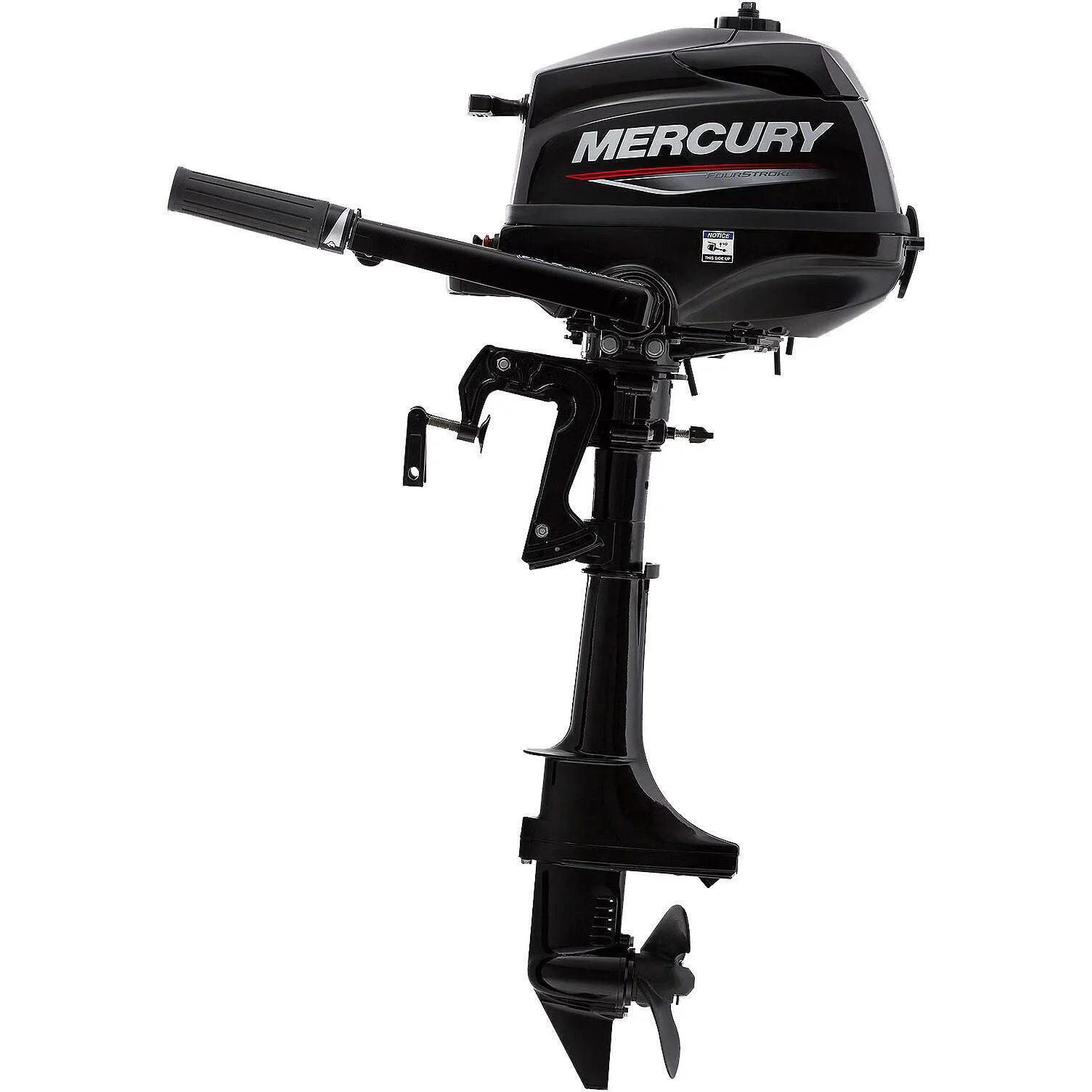
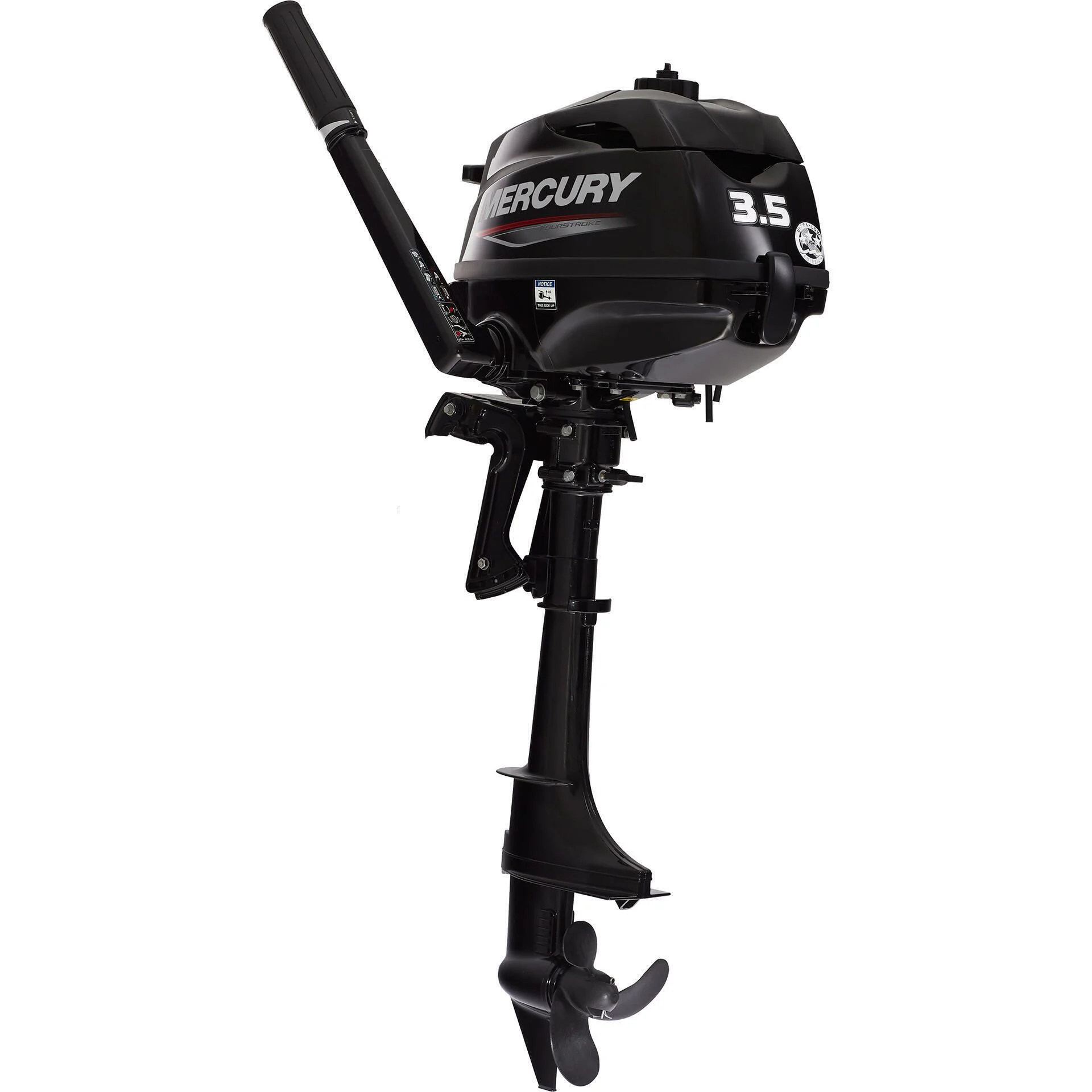

Description
Why the Mercury 3.5 HP Outboard Is the Default Choice Over the 2.5
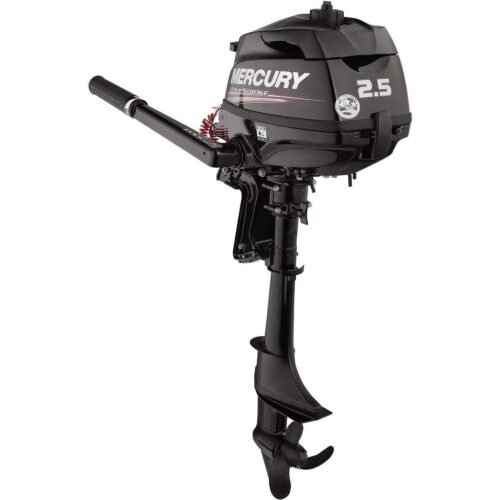
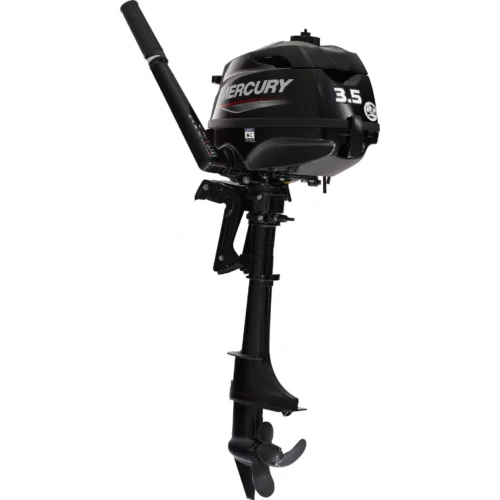
These two engines share a part number family, a 41 lb dry weight, and the same 85 cc block. The difference is jetting and gearing tune: the 3.5 runs a 5000 to 6000 rpm wide open throttle band against the 2.5’s 4500 to 5500. You get one extra horsepower at the propshaft for no extra weight and, at current pricing, $90.
That matters in exactly one situation, and it is the common one. A 2.5 HP on an inflatable tender with two adults aboard reaches hull speed and holds it. The same hull with a 3.5 HP has reserve left. When a crosswind picks up on the runback from shore, or when you are pushing a loaded dinghy against an outgoing tide, reserve is the difference between arriving and not arriving. Anyone who will ever carry a passenger should be looking at the 3.5 rather than the 2.5.
The second reason is shaft length. The 2.5 HP ships are in a 15-inch short shaft only. The 3.5 HP is available as the 3.5 MH with a 15 inch shaft and the MLH with a 20 inch shaft. If your transom measures over 17 inches, if you are mounting on a sailboat pushpit bracket, or if you run a hard-bottom tender that sits higher in the water, the 20 inch version keeps the anti-ventilation plate where it belongs and stops the prop from ventilating every time the bow lifts.
Powerhead and Fuel System
The 85 cc single cylinder uses a 55 x 36 mm bore and stroke with a two-valve pushrod overhead valve head and splash lubrication. No oil pump, no oil filter, no cartridge to source in a country where Mercury parts are thin on the ground. An oil change is a drain plug and 450 ml of 10W-30.
The carburetor runs 87 octane with ethanol content up to 10 percent, which covers pump fuel almost everywhere you will use this engine. The integrated 0.3-gallon (1.1-liter) tank lives under the cowl with the filler cap on top, so there is no external tank, no fuel line, and no primer bulb. Running time is roughly 40 to 50 minutes at cruise, slightly shorter than the 2.5 HP because the 3.5 turns have higher revs for the same distance.
Ignition is CDI with electronic spark advance. Cooling runs through a thermostat rather than a raw circuit, which is the specification that keeps the engine at a temperature through the long idles a tender engine actually spends its life doing.
Reverse, Trim, and Handle
Read this before ordering. The Mercury 3.5 HP gearbox is forward and neutral only with no reverse gear, the same arrangement as the 2.5 HP. You reverse by rotating the tiller handle through a full 360 degrees so the thrust points astern. Mercury builds it this way to hold the dry weight at 41 lb.
This feature is the single most common surprise for buyers stepping down from a 9.9 HP or 15 HP. In practice it takes two outings to become automatic, and the 360-degree steering gives you more maneuvering authority in a tight marina than a conventional reverse gear does, because you can vector thrust in any direction rather than just backwards. But you should know it before the crate arrives, not after.
Trim is a four-position manual ratchet with a 16-degree shallow water range, enough to clear a gearcase when beaching. Gear reduction is 2.15:1 through a standard gearcase. Exhaust discharges above the propeller.
Corrosion protection matches Mercury’s larger outboard specification, including sacrificial anodes and a coated powerhead, and the engine is saltwater rated from the factory. The maintenance load is genuinely light: flush after salt use, change the gearcase lubricant annually, replace the spark plug, and run the carburetor dry with the external shutoff before any storage period longer than a month.
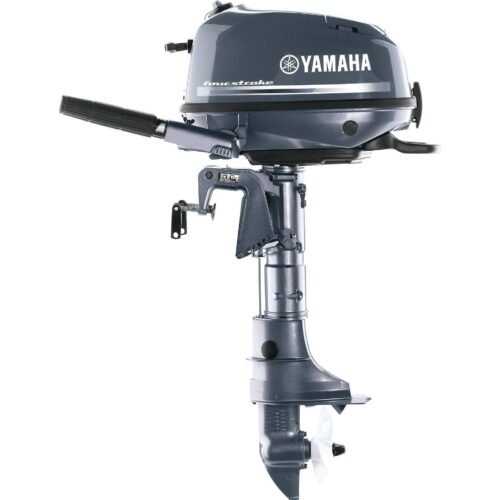
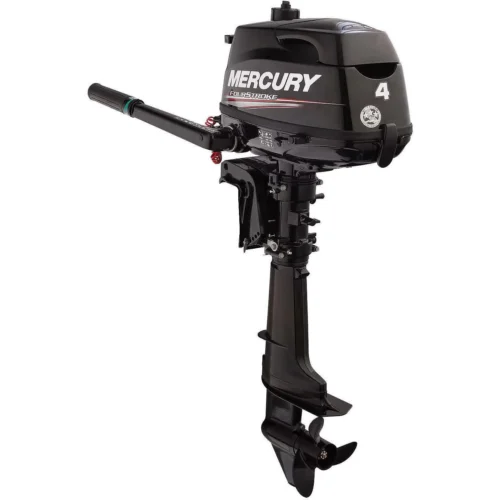
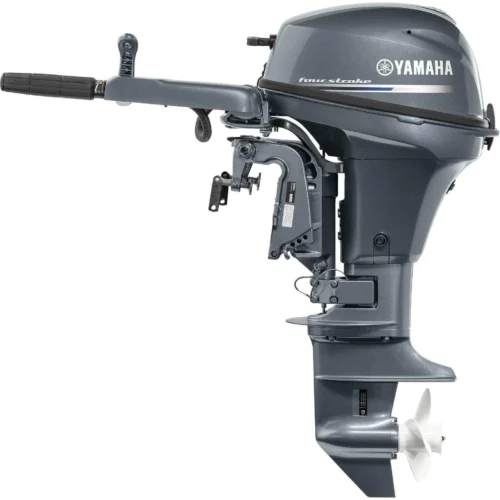
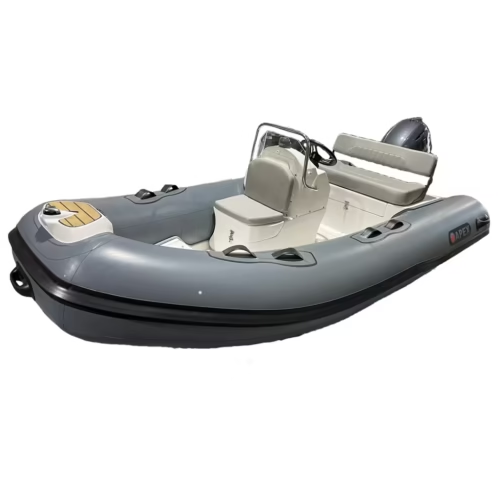
Every Mercury 3.5 HP outboard we ship is new, factory sealed, and pre-delivery inspected before crating, arriving with a propeller fitted, an owner’s manual, a tool kit, and Mercury FourStroke oil. Browse the rest of the Cool Compacts range if you want to compare against the 4 HP, which adds a true reverse gear. For hull matching, our inflatable boats and tenders and Apex dinghy range are transom-rated for this class. The closest cross-brand comparison in stock is the Yamaha F4 portable outboard.
Mercury 3.5 HP Four-Stroke: Full Factory Specifications
| Feature / Specification | Technical Detail / Value |
|---|---|
| Models | 3.5 MH (15″ shaft), 3.5 MLH (20″ shaft) |
| Horsepower | 3.5 HP / 2.6 kW |
| Engine type | 1 cylinder, four-stroke |
| Displacement | 85 cc / 5.2 CID |
| Bore and stroke | 55 x 36 mm / 2.16 x 1.42 in |
| Full-throttle RPM range | 5000 to 6000 rpm |
| Fuel induction | 2-valve pushrod (overhead valve) |
| Fuel system | Carbureted |
| Recommended fuel | 87 octane, up to 10% ethanol |
| Recommended oil | Mercury FourStroke 10W-30 |
| Ignition | CDI with electronic spark advance |
| Cooling system | Water-cooled with thermostat |
| Starting | Manual (recoil) |
| Steering | 360-degree tiller |
| Gear shift | Forward, Neutral (no reverse gear) |
| Gearcase ratio | 2.15:1 |
| Alternator | Not available |
| Shaft lengths | 15 in / 381 mm, 20 in / 508 mm |
| Trim system | Manual, 4 positions |
| Shallow water trim range | 16 degrees |
| Exhaust system | Above propeller |
| Integrated fuel tank | 0.3 gal / 1.1 L |
| Dry weight | 41 lb / 18 kg |
| Engine protection | Over-rev warning system |
| CARB star rating | 3 stars |
| Color | Phantom Black |
| Saltwater rated | Yes. |
| Condition | New, factory sealed, PDI completed |
Frequently Asked Questions
What is the difference between the Mercury 2.5 HP and 3.5 HP outboard?
The 3.5 HP and 2.5 HP share the same 85 cc powerhead and the same 41 lb dry weight. The 3.5 HP is tuned to a higher 5000 to 6000 rpm operating range, producing one extra horsepower at no weight penalty, and it is available in both 15 inch and 20 inch shaft lengths, whereas the 2.5 HP is a short shaft only. If you will ever carry a passenger or face current, buy the 3.5 HP.
Does the Mercury 3.5 HP outboard have reverse?
No. The Mercury 3.5 HP has a forward and neutral gearbox with no reverse gear. You reverse by rotating the tiller handle through 360 degrees so propeller thrust points astern. Mercury omits the reverse linkage to keep the engine at 41 lb. The first Mercury portable with a conventional forward-neutral-reverse gearbox is the 4 HP.
Should I order the 15 inch or 20 inch shaft?
Measure your transom from the top of the transom board to the bottom of the hull. Up to 17 inches, order the 15 inch shaft (3.5 MH). Above 17 inches, or for sailboat bracket mounting, order the 20 inch shaft (3.5 MLH). A shaft that is too short ventilates the propeller in chop and loses thrust. A shaft that is too long adds drag but is the safer error of the two.
How big a boat will a 3.5 hp outboard motor push?
A 3.5 hp outboard motor suits tenders, dinghies, and small craft up to roughly 12 feet carrying one to two adults. On a 10-foot inflatable with two occupants, it holds hull speed with reserve in hand for wind and current. On a 12-foot jon boat with a single occupant, it moves competently in flat water. Beyond that, step up to the 5 HP or 6 HP outboard.
Do you ship the Mercury 3.5 HP outboard internationally?
Yes. Naviora Marine ships outboard motors worldwide by sea and air freight with export documentation prepared for you. Engines are created new and factory sealed with pre-delivery inspection completed before dispatch. Request a freight quote with your delivery address for a landed figure. Model comparisons are collected in our marine blog and guides.