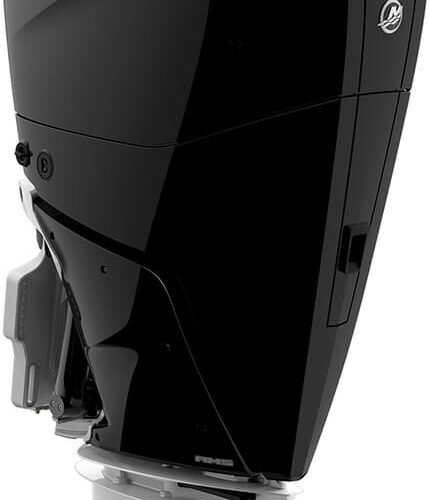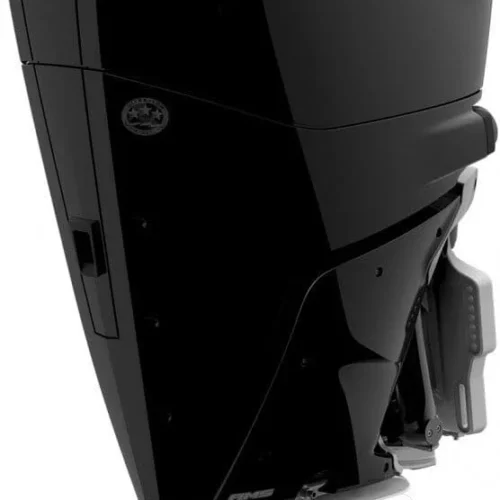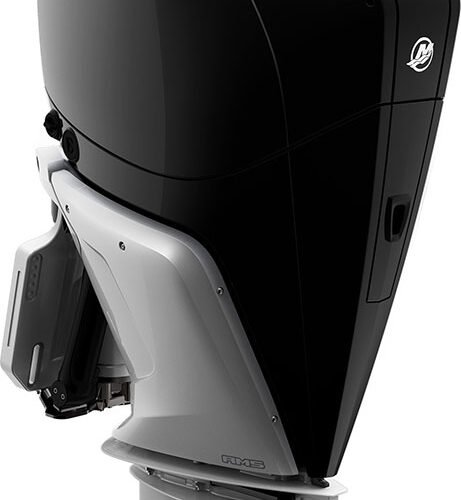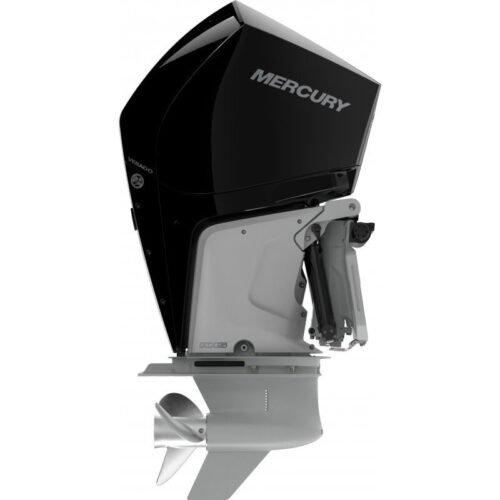

Description
Same V10, Higher Calibration
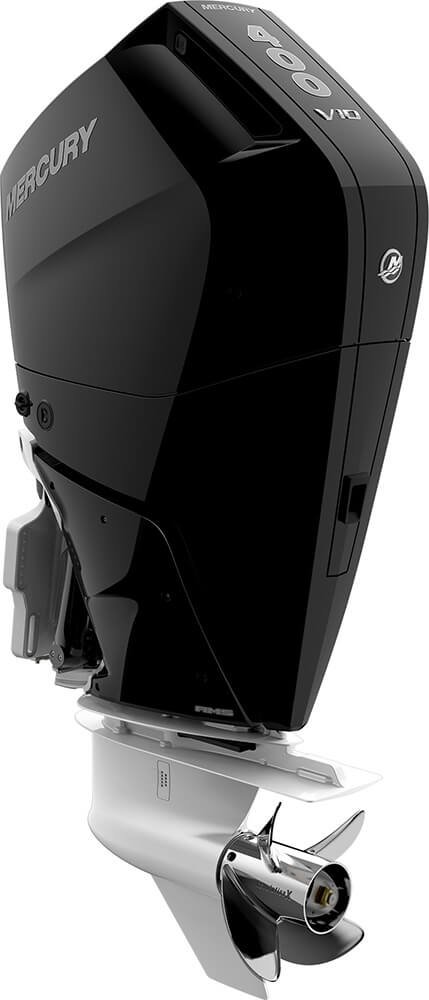
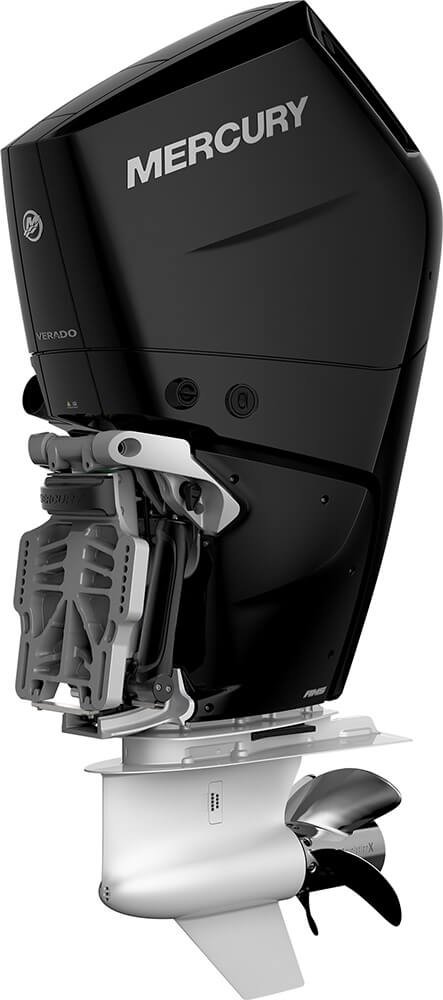
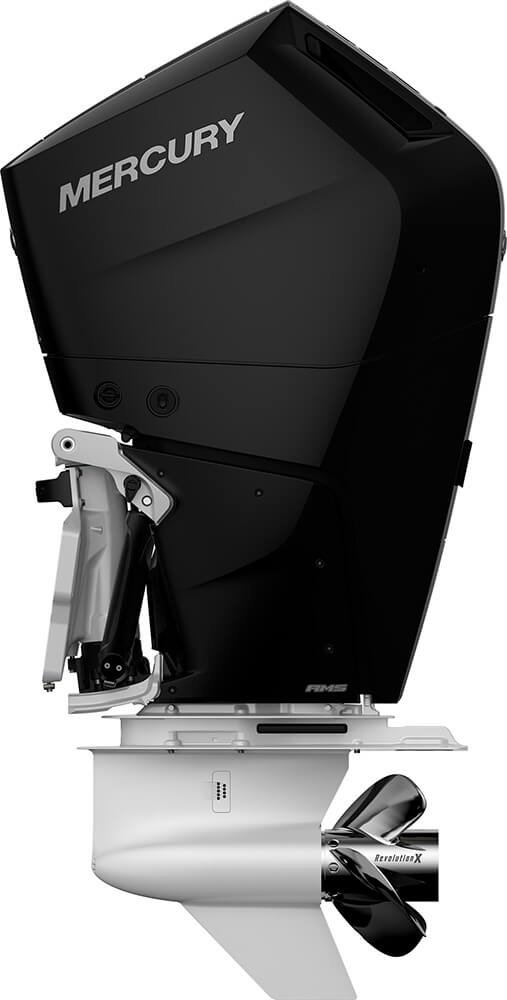
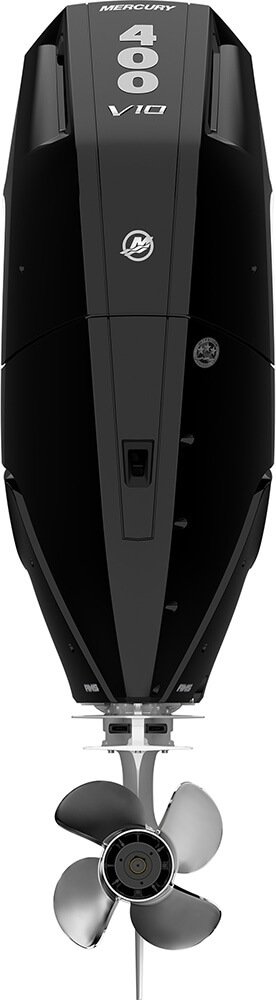
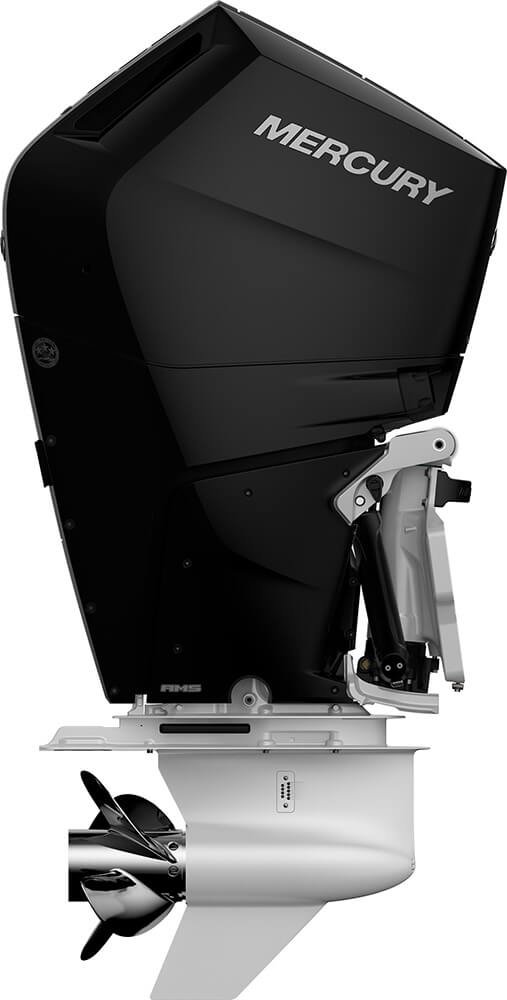
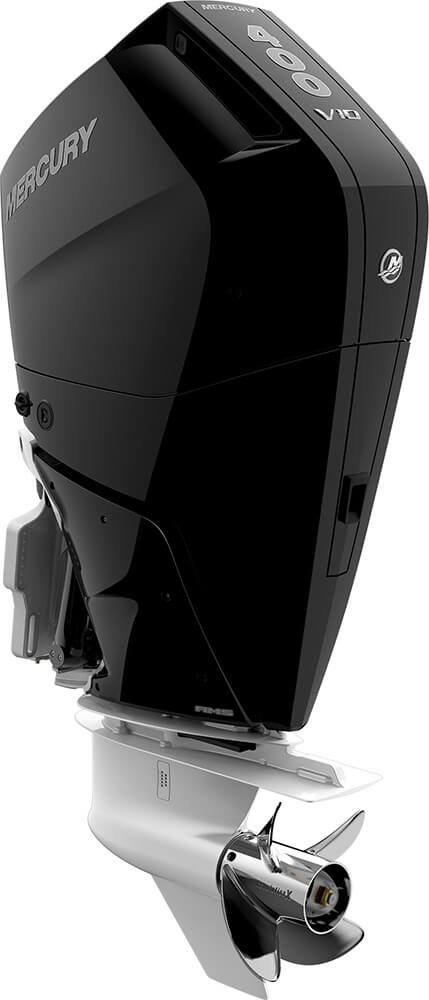
The Verado 400 and Verado 350 are the same physical engine. Identical 5.7-liter V10 block, identical 92 x 86 mm bore and stroke, identical quad cam 40-valve powerhead, identical 6.4-inch gearcase at 2.08:1, identical 150-amp alternator, identical Revolution X propeller, identical 695 to 709 lb dry weight, and identical transom footprint.
Mercury changes the calibration to release 50 more horsepower. The installation does not change in any respect.
That means the decision is the same one that recurs throughout the Mercury range: check your hull capacity plate, and if it allows 400, take the 400. There is no weight penalty, no rigging difference, and no additional complexity. The only constraints are the hull rating and the price difference, which here is $11,000.
One genuine consideration at this level: 400-horsepower engines are usually specified in multiples. Four Verado 400s on a 40-foot hull is a meaningfully different purchase from four Verado 350s, both in capital and in fuel. Run the total before deciding, not the per-engine difference.
What 400 Horsepower from 5.7 Liters Means
Naturally aspirated, 400 horsepower from 5.7 liters works out to roughly 70 horsepower per liter, which is a healthy but not extreme specific output for a modern four-stroke. The engine is not straining.
That matters more at this power level than lower down the range, because these engines work hard. A quad-engine sport yacht running offshore sits at sustained high load for hours, and an engine reaching its output through displacement rather than boost handles that duty cycle with less thermal stress.
The quad cam layout with 40 valves gives independent intake and exhaust timing on both banks, which lets Mercury optimize breathing across the whole 5,800 to 6,400 rpm range rather than at a single point. The performance-tuned intake manifold does the same on the induction side.
The Drivetrain
The 6.4-inch gearcase at 2.08:1 with the Revolution X propeller is unchanged from the 350 and is the most important part of this engine’s character. It is built for large, heavy boats: a big gearcase turning a big propeller with 50 percent more blade area than the previous Verado generation.
At 400 horsepower feeding that drivetrain, the thrust available at low speed is considerable. Getting a heavy sport yacht onto a plane, holding a station against wind, or maneuvering a large hull in a marina are all situations where thrust matters more than horsepower, and this combination delivers it.
Charging and Auxiliary Power
The 150 amp, 1,890 watt alternator at 1,500 rpm is unchanged from the 350. On a quad installation that is 600 amps of combined charging capacity, which is generator territory.
The optional dual-mode 48V/12V alternator is specifically intended to replace an onboard generator when paired with a lithium-ion auxiliary system. On a large boat, removing the generator saves weight, space, fuel, noise, and a significant maintenance burden. If you are specifying a new build, raise this at the design stage.
Idle Charge monitors battery voltage on the water and raises idle rpm automatically to lift output.
Rigging
Steering is electro-hydraulic with fully electric options. Shaft lengths are 20, 25, 30, and 35 inches. Trim is power trim and tilt. Starting is electric with SmartStart protection. SmartCraft is compatible throughout.
Fuel is unleaded regular at 87 octane minimum, which is worth noting on a 400-horsepower engine and is a direct consequence of it being naturally aspirated rather than boosted.
What It Suits
Large center consoles, sport fishing boats, express cruisers, and sport yachts from roughly 32 to 45 feet, usually in twin, triple, or quad installations. Single-engine on very heavy displacement hulls where torque is the requirement.
Every Mercury Verado 400 we ship is new, factory sealed, and pre-delivery inspected before crating. Matched multi-engine sets with counter-rotation are available. Compare across the Verado 250 to 600 range and the Mercury outboard motors hub. For multi-engine quotes, propeller selection, or rigging advice, send us your hull details.
Mercury Verado 400 HP V10: Full Factory Specifications
| Feature / Specification | Technical Detail / Value |
|---|---|
| Horsepower | 400 HP |
| Engine type | V10, 64 degrees, quad overhead cam, 40 valves |
| Displacement | 5.7 L / 349 CID |
| Bore and stroke | 92 x 86 mm |
| Full-throttle RPM range | 5800 to 6400 rpm |
| Induction | Naturally aspirated, performance-tuned intake manifold |
| Fuel system | Electronic fuel injection |
| Recommended fuel | Unleaded regular, 87 octane minimum |
| Ignition | SmartCraft digital |
| Cooling system | Water-cooled with thermostat |
| Alternator | 150 amp / 1,890 W at 1,500 rpm, with Idle Charge |
| Optional alternator | Dual-mode 48V/12V for lithium auxiliary systems |
| Starting | Electric with SmartStart protection |
| Steering | Electro-hydraulic, fully electric, optional |
| Gear shift | Forward, Neutral, Reverse |
| Gearcase ratio | 2.08:1 |
| Gearcase diameter | 6.4 in |
| Standard propeller | Revolution X |
| Shaft lengths | 20 in, 25 in, 30 in, 35 in |
| Trim system | Power trim and tilt |
| Multi-engine | Twin, triple, and quad capable, counter-rotation available |
| SmartCraft compatible | Yes. |
| Dry weight | 695 to 709 lb / 316 to 322 kg by configuration |
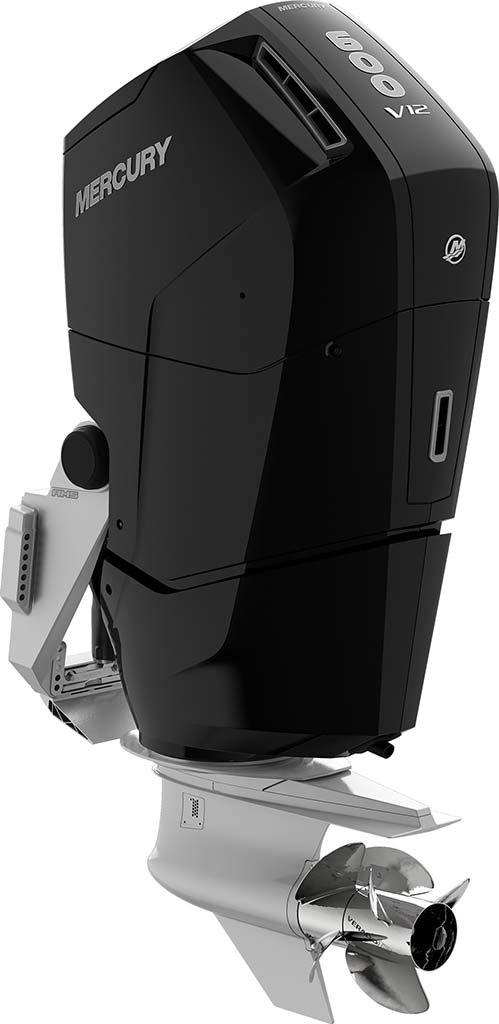
| Color | Phantom Black |
| Condition | New, factory sealed, PDI completed |
Frequently Asked Questions
What is the difference between the Mercury Verado 350 and 400?
They are the same physical engine. Identical 5.7-liter V10 block, identical quad cam 40-valve powerhead, identical 6.4-inch gearcase at 2.08:1, identical 150-amp alternator, identical Revolution X propeller, and identical 695 to 709 lb dry weight. Mercury changes the calibration to release 50 more horsepower. The installation is unchanged.
Does the Mercury Verado 400 need premium fuel?
No. It runs on unleaded regular at 87 octane minimum. Because the V10 is naturally aspirated and reaches 400 horsepower through 5.7 liters of displacement rather than forced induction, it does not carry the octane requirement a supercharged or turbocharged engine of similar output would.
Can I run quad Verado 400 engines?
Yes. The V10 Verado is used in twin, triple, and quad installations on large hulls, with counter-rotation available to balance steering torque. Multi-engine rigs require matched calibration, correct propeller pairing, and appropriate digital control systems, so request a matched-set quote with your hull details rather than ordering engines individually.
How much charging capacity does a multi-engine Verado 400 rig produce?
Each engine produces 150 amps at 1,890 watts from 1,500 rpm. A quad installation therefore delivers 600 amps of combined charging capacity, which is comparable to an onboard generator. With the optional dual-mode 48V/12V alternator and a lithium auxiliary bank, many boats can eliminate the generator entirely.
Should I choose the Verado 400 or the Verado 600?
The 400 is a 5.7-liter V10 at roughly 700 lb. The 600 is a 7.6-liter V12 at 1,260 lb with a two-speed transmission and contra-rotating propellers. The 600 is a different class of machine for hulls above roughly 40 feet. For most boats in the 32- to 45-foot range, multiple V10 Verados give better redundancy and easier service access than fewer V12s.