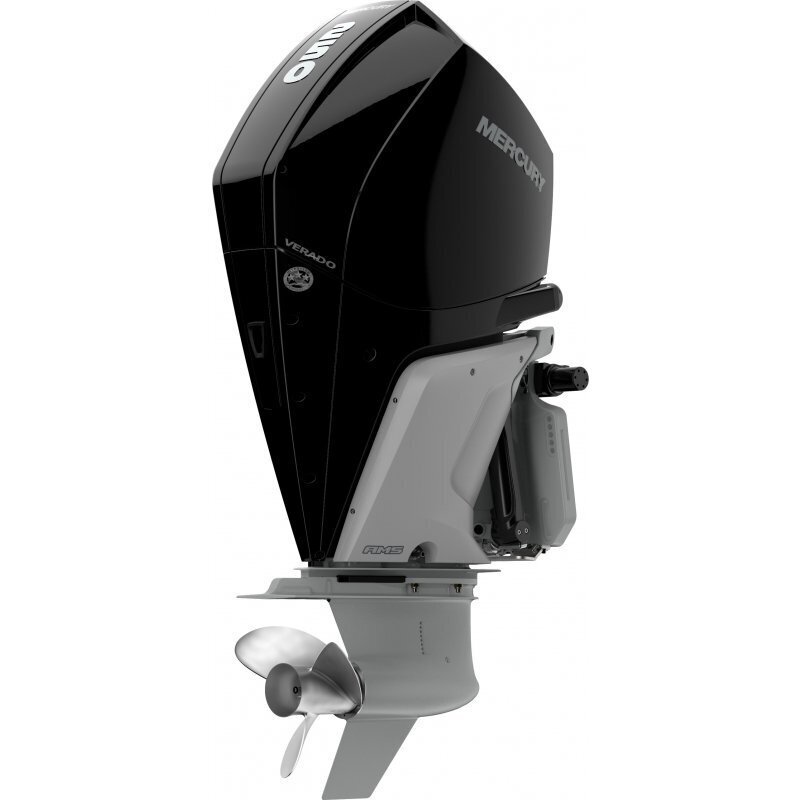

Description
Verado or Pro XS at 250 Horsepower
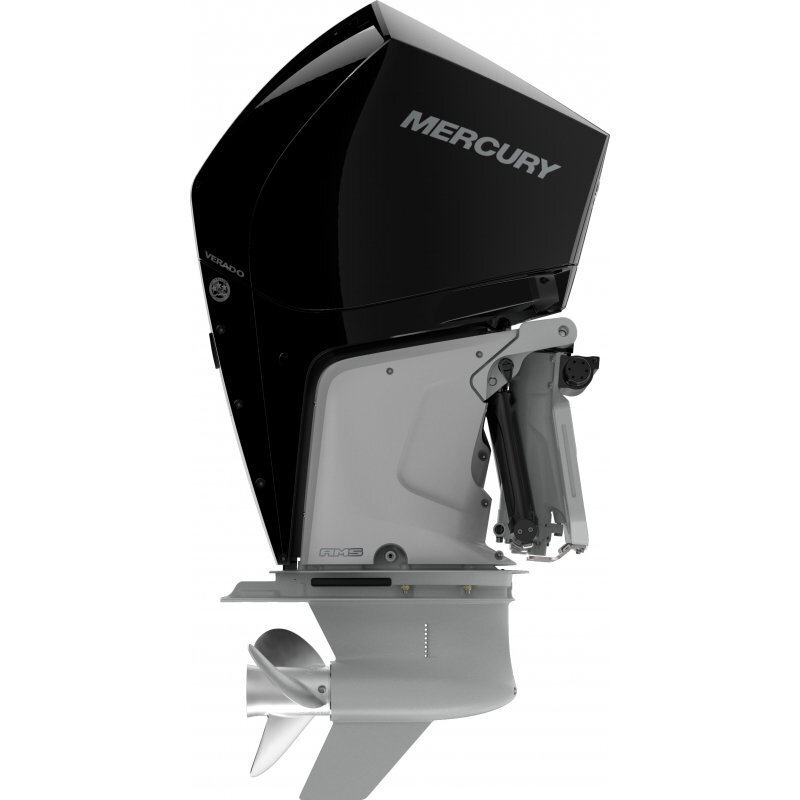
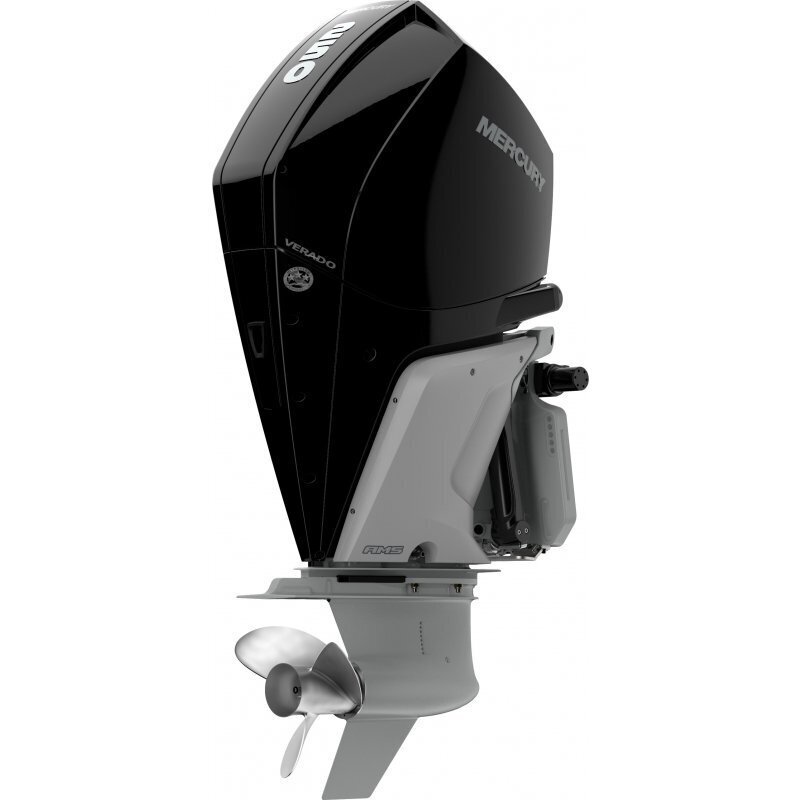
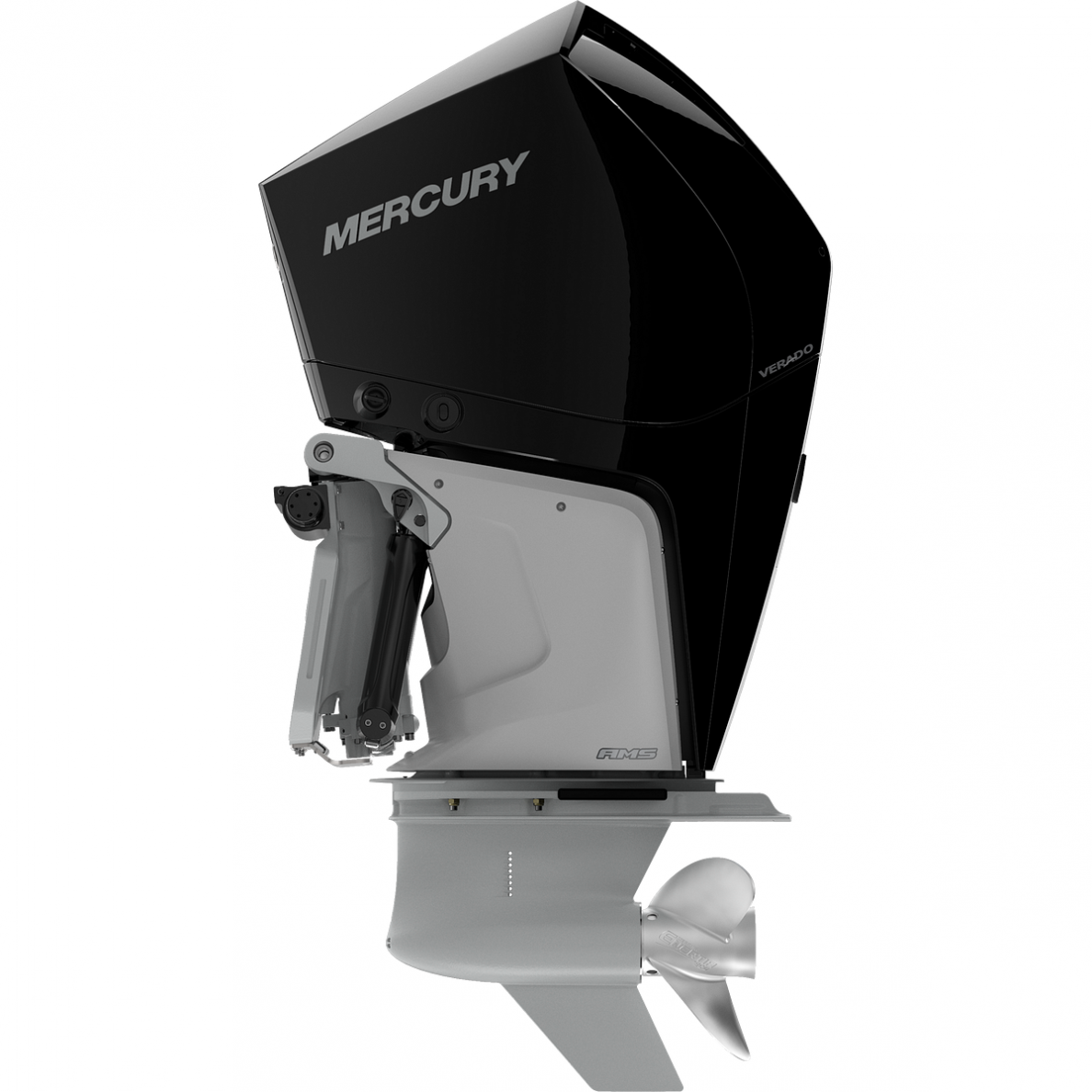
We sell both; they share the same 4.6-liter V8 block, and the right answer depends entirely on what you do with the boat.
Buy the Pro XS if you are a tournament angler or run a performance hull. It weighs 505 lb against the Verado’s 600, carries a TorqueMaster gearcase built for semi-surfacing high-speed rigs, and has a performance-tuned exhaust note. It accelerates harder, and it is 95 lb lighter on the transom.
Buy the Verado if you cruise, run distance, carry family aboard, or simply want the quietest 250 HP outboard on the market. Mercury builds this engine around noise reduction and refinement, and the extra 95 lb is largely insulation, a bigger gearcase, and a larger alternator.
Neither is a compromised version of the other. They answer different questions, and anyone who says one is simply better hasn’t asked what you do with the boat.
Where the 4.6-Liter V8 Advantage Shows
Mercury’s argument for large displacement is strongest on the Verado. The 250 and 300 Verado carry class-leading 4.6-liter displacement, and Mercury’s own comparison puts that at 12 to 15 percent more mid-range torque than the leading competitor at 300 HP, measured across the 3,500 to 4,500 rpm band.
Mid-range is where cruising happens. A boat on a long run sits between 3,500 and 4,500 rpm for hours at a time, and torque in that band is what holds the plane efficiently with a load aboard. It is a more meaningful comparison than peak horsepower because it describes the engine doing the job you actually ask of it.
The powerhead is a 64-degree V8 with dual overhead cams and 32 valves, 92 x 86 mm bore and stroke, running a performance-tuned long-runner intake manifold. The operating range is 5,200 to 6,000 rpm, lower than the Pro XS’s 5,600 to 6,200, which reflects the cruising rather than sprinting intent.
Because the displacement does the work, there is no supercharger. Earlier Verado generations used forced induction. The 4.6-litre V8 does not need it, which removes a belt, an intercooler, and a maintenance item from the engine entirely.
Charging, Steering, and the Gearcase
The alternator delivers 115 amps and 1,449 watts, which is 30 amps more than the Pro XS. Cruising boats carry heavier electrical loads than fishing boats in some respects: air conditioning on larger hulls, refrigeration, entertainment systems, autopilots, chart plotters, and lighting. Idle Charge raises idle rpm automatically when battery voltage drops, so extended time at anchor or idle with systems running does not flatten the bank.
Electro-hydraulic power steering is standard, not an option. That is a genuine difference from the Pro XS, which ships with conventional hydraulics and offers power as an upgrade. Electro-hydraulic steering is lighter at the wheel, more precise, and noticeably less tiring over a long day at the helm.
The gearcase is 5.44 inches with a 1.85:1 ratio, larger than the Pro XS’s 4.8-inch case. A bigger gearcase swings a bigger propeller and handles heavier boats better, which is consistent with the engine’s purpose.
Exhaust routes through the propeller, which reduces noise both underwater and at the transom. On the Pro XS, Mercury tunes the exhaust to sound purposeful. On the Verado, Mercury tunes the exhaust to be nearly inaudible.
The Shared Technology Package
Adaptive speed control maintains a target rpm regardless of load or sea state without throttle input. On a cruising boat this feature is more valuable than on a fishing boat, because you spend far longer at a set speed.
Transient Spark advances ignition timing during throttle transitions, boosting torque by as much as 7 percent during a hole shot to get a loaded boat onto a plane quickly.
Advanced range optimization leans the mixture at cruise for maximum range. On a boat used for distance rather than short runs, this is the feature that determines your fuel bill.
Ignition is SmartCraft PCM 112 digital inductive ignition. Starting is electric with SmartStart protection. Trim is power trim and tilt. Fuel is unleaded regular, with a minimum of 87 octane.
What It Suits
Cruising center consoles, family boats, walkarounds, larger pontoons, express cruisers, and any hull where noise and refinement matter more than the last two knots. Also a strong choice for twin installations on 26- to 32-foot hulls.
Every Mercury Verado 250 we ship is new, factory sealed, and pre-delivery inspected before crating. If performance matters more than refinement, compare the Mercury Pro XS 250, browse the full Verado 250 to 600 range, or visit the Mercury outboard motors hub. For hull matching, see our pontoon boats and rigid-hull inflatables. For rigging or twin-engine quotes, send us your hull details.
Mercury Verado 250 HP: Full Factory Specifications
| Feature / Specification | Technical Detail / Value |
|---|---|
| Horsepower | 250 HP / 186 kW at the propshaft |
| Engine type | V8, 64 degrees, dual overhead cam (DOHC), 32 valves |
| Displacement | 4.6 L / 279 CID |
| Bore and stroke | 92 x 86 mm / 3.6 x 3.4 in |
| Full-throttle RPM range | 5200 to 6000 rpm |
| Induction | Naturally aspirated, performance-tuned long-runner intake manifold |
| Fuel system | Computer-controlled EFI with Advanced Range Optimization |
| Torque technology | Transient Spark |
| Speed control | Adaptive Speed Control |
| Recommended fuel | Unleaded regular, 87 octane minimum |
| Ignition | SmartCraft PCM 112 Digital Inductive |
| Cooling system | Water-cooled with thermostat |
| Alternator | 115 amp / 1,449 W with Idle Charge |
| Starting | Electric with SmartStart protection |
| Steering | Electro-hydraulic power steering, standard |
| Gear shift | Forward, Neutral, Reverse |
| Gearcase ratio | 1.85:1 |
| Gearcase size | 5.44 in |
| Exhaust system | Through propeller, noise-reduced |
| Trim system | Power trim and tilt |
| SmartCraft compatible | Yes. |
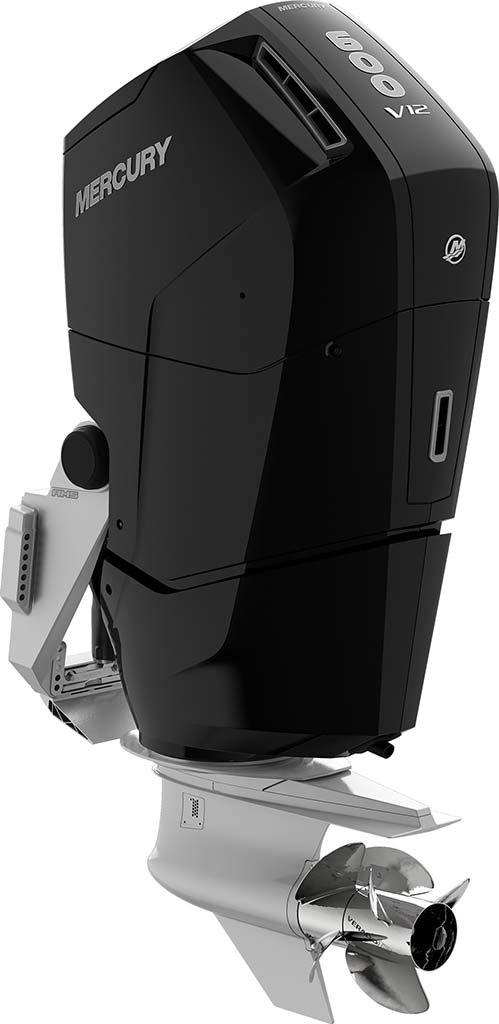
| Dry weight | 600 lb / 272 kg |
| Color | Phantom Black |
| Condition | New, factory sealed, PDI completed |
Frequently Asked Questions
What is the difference between the Mercury Verado 250 and the Pro XS 250?
Both use the same 4.6-liter V8 block. The Verado weighs 600 lb and is built for quiet, refined cruising, with extra sound insulation, a 5.44-inch gearcase, an 115-amp alternator, and electro-hydraulic power steering as standard. The Pro XS weighs 505 lb and is built for acceleration and top speed, with a TorqueMaster gearcase for high-speed rigs. Choose Verado for cruising and Pro XS for tournament fishing.
Is the Mercury Verado 250 supercharged?
No. Earlier Verado generations used forced induction, but the current 4.6-liter V8 Verado is naturally aspirated. Mercury reaches the output through displacement instead, which removes the supercharger belt, the intercooler, and their associated maintenance from the engine entirely.
How much electrical output does the Verado 250 produce?
115 amps at 1,449 watts, which is 30 amps more than the Pro XS at the same horsepower. Idle Charge automatically raises idle rpm when battery voltage drops, so running air conditioning, refrigeration, entertainment, and navigation systems at anchor or idle does not flatten the battery bank.
Does the Mercury Verado 250 come with power steering?
Yes. Electro-hydraulic power steering is standard on the Verado, not an option. It is lighter at the wheel and more precise than conventional hydraulic steering and noticeably less tiring over a long day at the helm. The Pro XS ships with conventional hydraulic steering and offers power as an upgrade.
How heavy is the Mercury Verado 250?
600 lb (272 kg), which is 95 lb more than the Pro XS 250. That additional weight is sound insulation, a larger 5.44-inch gearcase, and a bigger alternator. Check your transom capacity plate for both weight and horsepower limits before ordering, since the Verado’s extra weight can matter on a hull sized for a Pro XS.