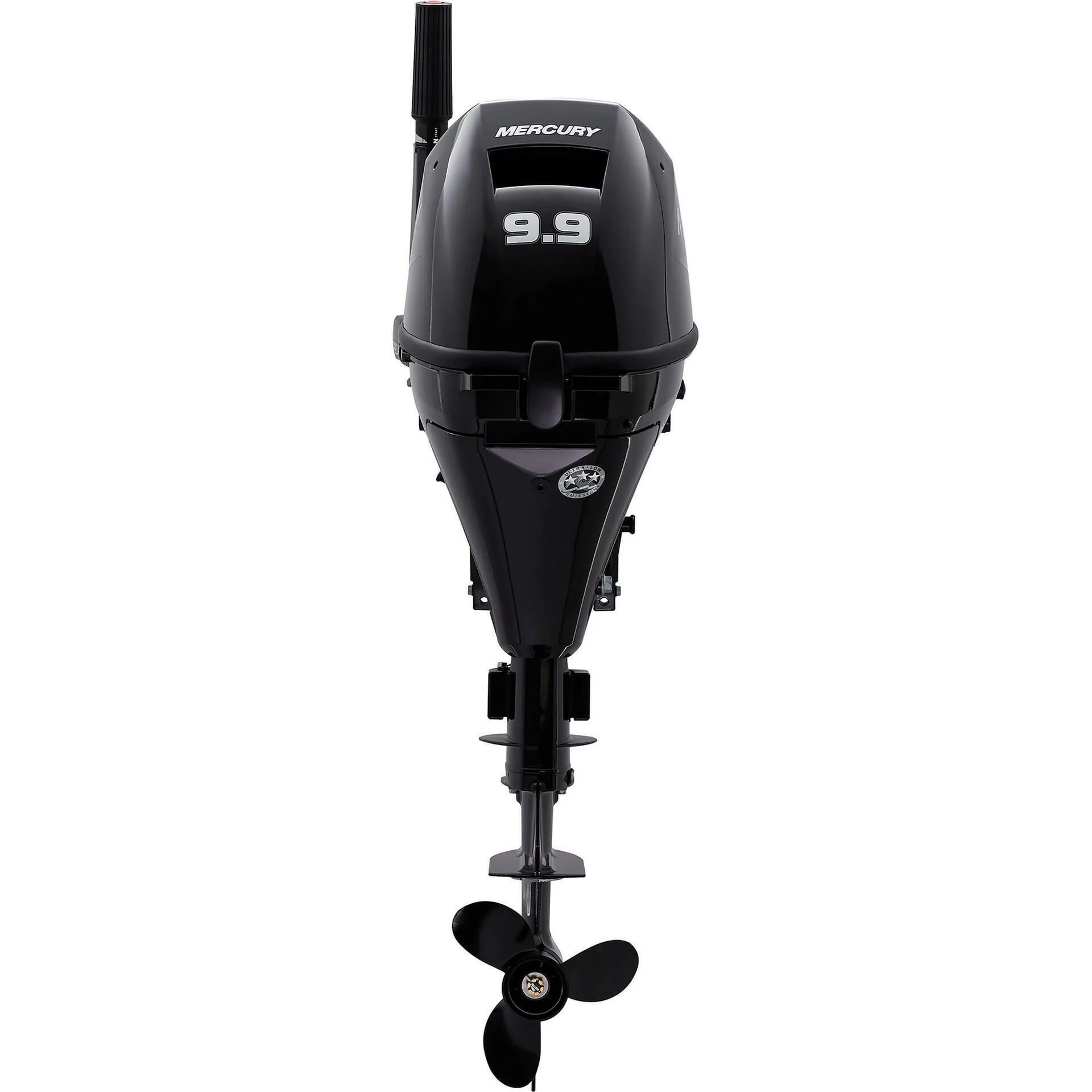
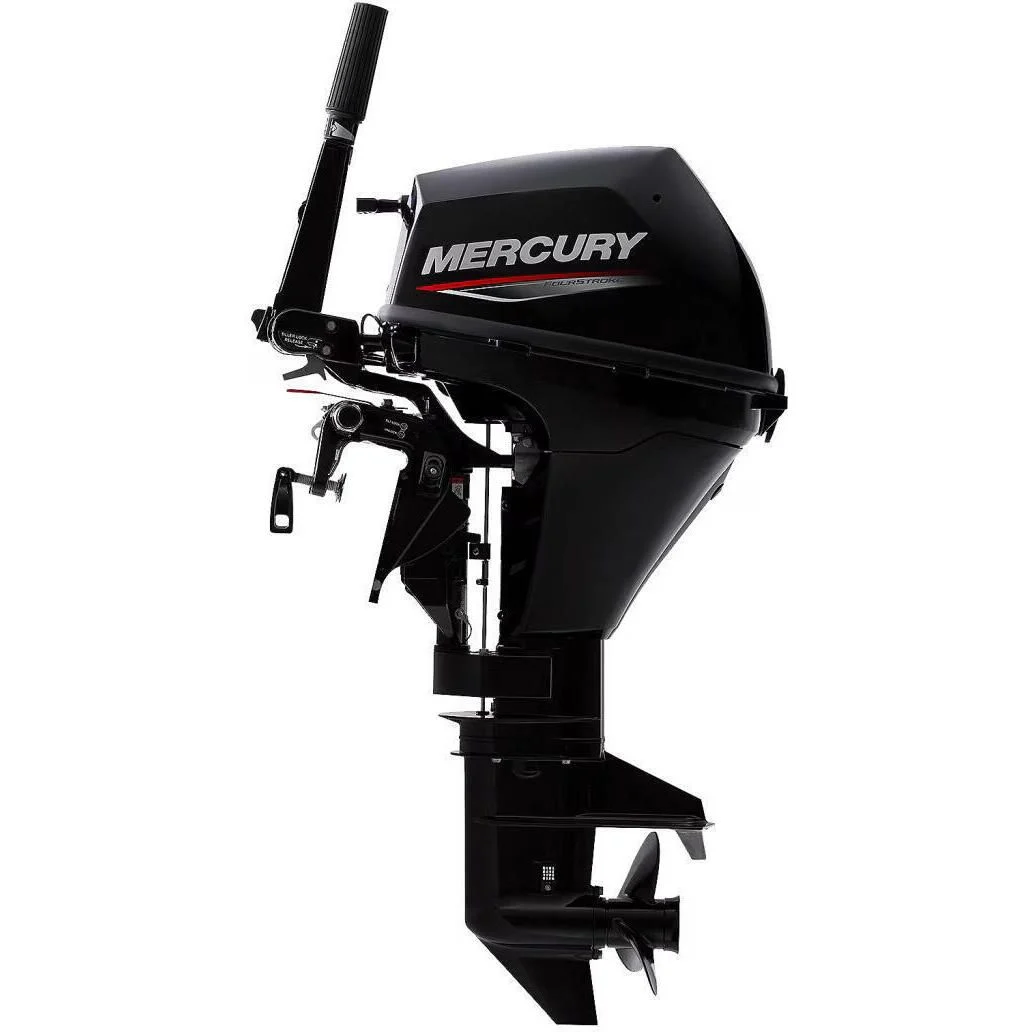
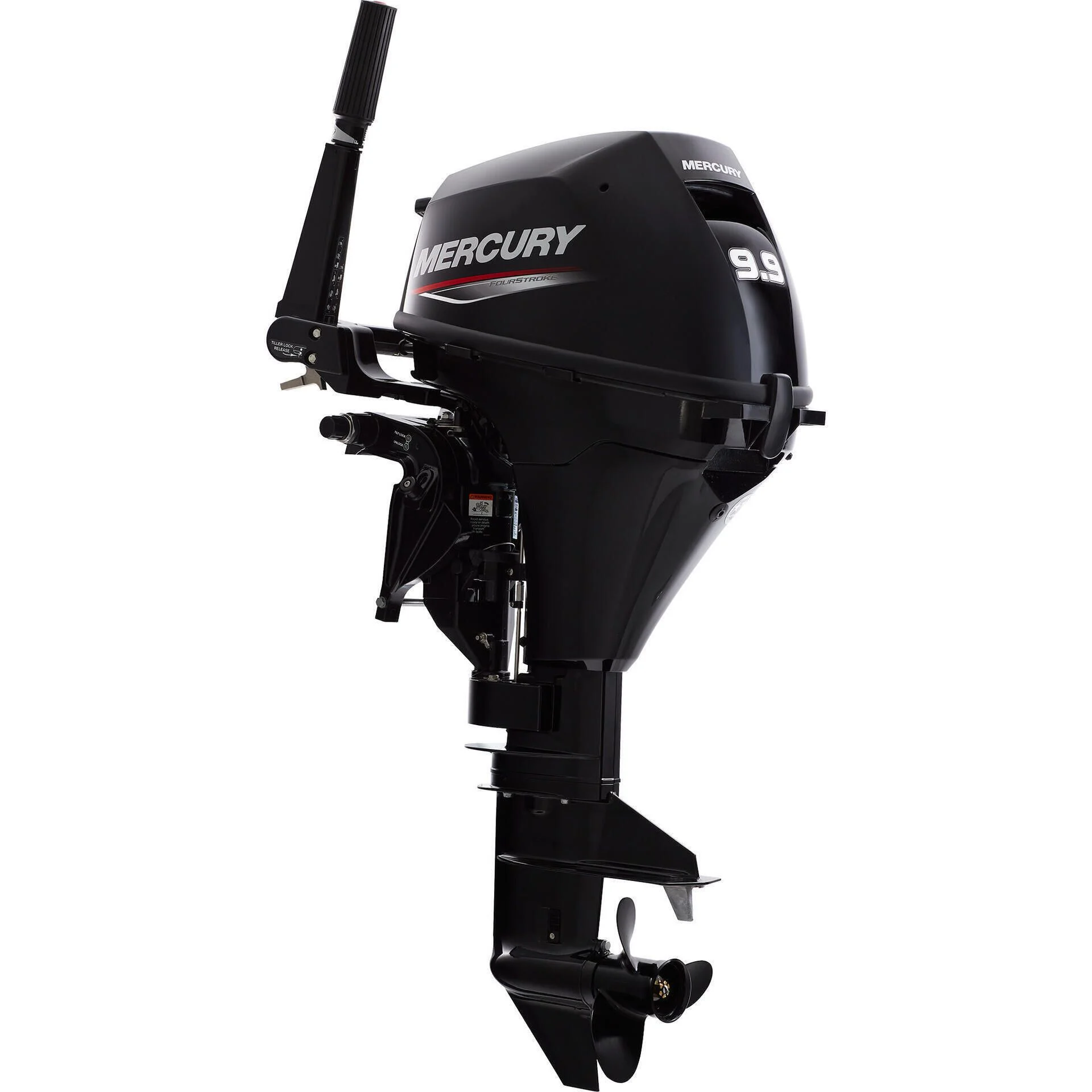

Description
Why 9.9 HP Exists as a Size
Most outboard sizes are engineering decisions. 9.9 HP is a legal one. In many jurisdictions, 10 horsepower is the threshold at which additional licensing, registration, or restrictions begin for inland waterways, lake associations, rental fleets, and insurance bands. Manufacturers responded by building engines that stop at 9.9.
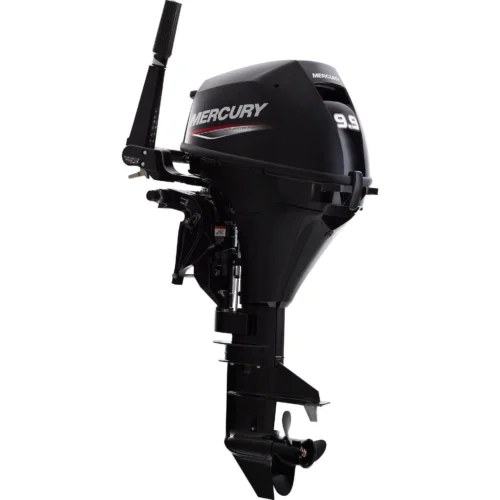
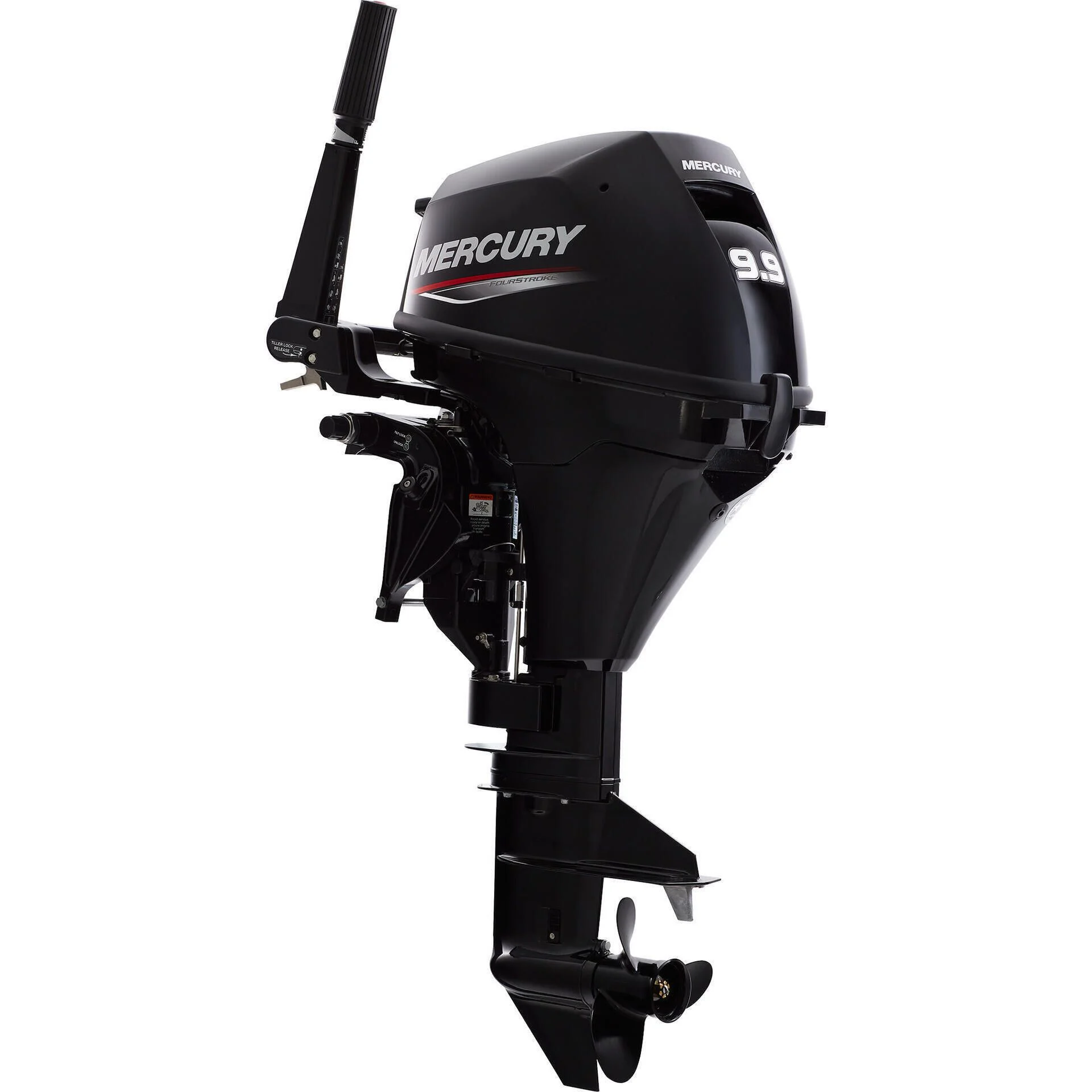
So if you are searching for a 9.9 hp outboard, there is a reasonable chance somebody has told you that is your ceiling. That changes what matters. When power is capped, the question is no longer how much power you can get; it is how much boat you can move with the power you are permitted and how well the engine behaves at that limit. Mercury’s answer is a 209cc twin that makes its rated output without straining, in a package light enough that the hull does not squat under it.
If you are not power-capped, read the 8 HP comparison below before you buy, and then read it again if you are considering the 15 HP.
The Powerhead and Why It Is the Same as the 8 HP
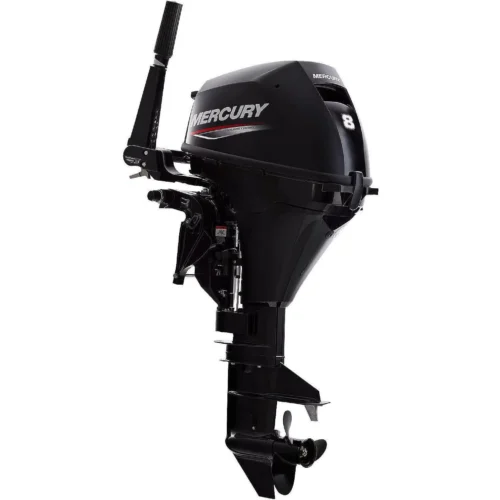
The Mercury 9.9 runs an inline two-cylinder 209 cc block with a 55 x 44 mm bore and stroke, two valves per cylinder driven by a single overhead cam, electronic fuel injection, and a wide open throttle range of 5000 to 6000 rpm. This is the identical architecture to the 8 HP. Mercury changes the tune, not the hardware.
That is excellent news for buyers and worth stating plainly. The 8 HP and 9.9 HP have the same dry weight of 84 lb / 38 kg, the same 2.08:1 gearcase, the same multi-function tiller, and the same trim system. The 9.9 HP produces roughly 24 percent more power for none of the usual costs. Unless a regulation, an insurance policy, or a hull rating caps you at 8 HP, the 9.9 HP is the correct purchase, and the price difference is small against what you receive.
Electronic fuel injection matters more on this engine than on almost any other in the range, because 9.9 HP outboards live demanding lives. They are kicker motors that sit idle for months while the main engine works. They are rental fleet engines started cold by strangers. They are sailboat auxiliaries that run twice a season. EFI removes the choke, removes the cold-start procedure, and removes the varnished float bowl entirely. For an engine that spends most of its life not running, this specification determines whether it starts when needed.
Lubrication is a wet sump with pressure monitoring and a low oil pressure alert, plus a temperature alert and a rev limiter. The alternator runs 12 volts, enough to power navigation lights and maintain a starter battery.
Shaft Lengths, Trim, and Propeller
Three shaft lengths are available: 15 inches, 20 inches, and 25 inches. The 25-inch option puts this engine into sailboat auxiliary duty on pushpit brackets, where anything shorter ventilates on every pitch. Mercury also offers ProKicker configurations for trolling applications, with a higher-thrust propeller and steering friction tuned for holding a heading at low speed.
The standard propeller is an 8.5-inch-diameter by 8.0-inch-pitch three-blade aluminum unit, a half-inch more pitch than the 8 HP carries, which is how the extra power converts into speed rather than just revs. Aluminum props can be repaired after a strike rather than discarded.
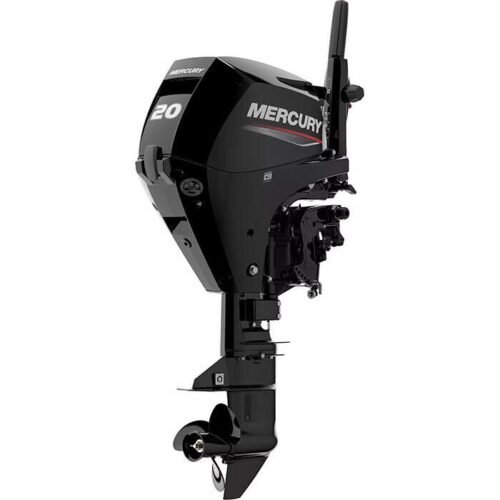
Trim is Mercury’s auto-ratchet system with a shallow water drive position and full tilt. The gear shift, throttle, throttle tension, steering, and stop switch all live on the tiller handle for genuine one-hand operation. Exhaust runs through the propeller hub. Cooling runs through a thermostat. The engine is saltwater-rated from the factory, with sacrificial anodes, a stainless steel water pump housing, and zinc-coated water passages.
What It Will Move
Long shaft jon boats, skiffs, small pontoons, larger RIBs and inflatable tenders, and displacement sailboats to roughly 32 feet as auxiliary power. As a kicker alongside a main outboard, it is the standard choice for trolling, because the twin-cylinder smoothness and the tiller ergonomics make hours at low speed tolerable.
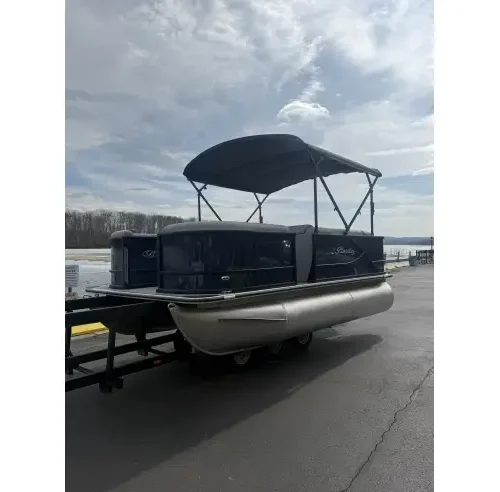
On a small pontoon within a 9.9 HP restriction, expect displacement speed rather than planing. That is the nature of the limit, not a shortcoming of the engine. On a 12- to 14-foot aluminum boat lightly loaded, the 9.9 will plane and hold it.
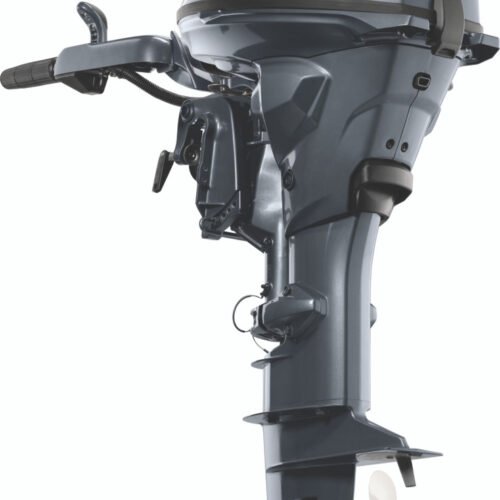
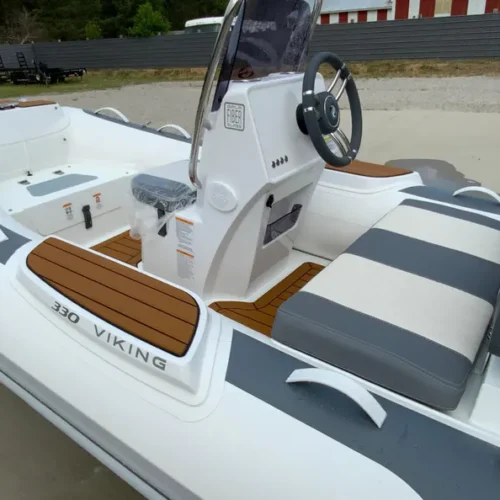
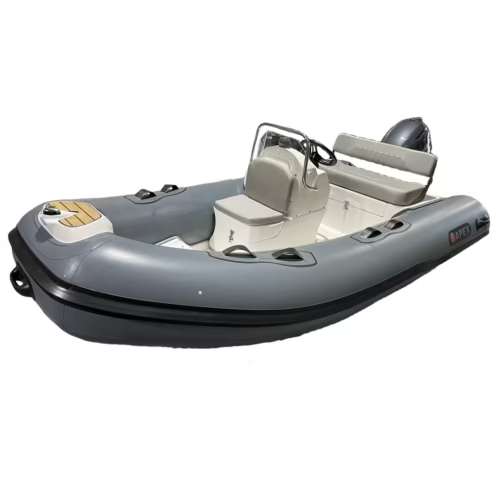
Every Mercury 9.9 HP outboard we ship is new, factory sealed, and pre-delivery inspected before crating, arriving with a propeller fitted, a remote fuel tank, an owner’s manual, and Mercury FourStroke oil. Compare the full Cool Compacts range and the Mercury outboard motors hub for larger sizes. For hull matching, see our rigid-hull inflatables, pontoon boats, and Apex dinghy range. The direct cross-brand comparison in stock is the Yamaha F9.9 outboard motor.
Mercury 9.9 HP FourStroke: Full Factory Specifications
| Feature / Specification | Technical Detail / Value |
|---|---|
| Models | 9.9MH (15″), 9.9MLH (20″), 9.9ELH, ProKicker variants |
| Horsepower | 9.9 HP / 7.3 kW |
| Engine type | Inline 2-cylinder, four-stroke |
| Displacement | 209 cc / 12.8 CID |
| Bore and stroke | 55 x 44 mm / 2.16 x 1.73 in |
| Full-throttle RPM range | 5000 to 6000 rpm |
| Fuel induction | 2 valves per cylinder, single overhead cam (SOHC) |
| Fuel system | Electronic fuel injection (EFI) |
| Recommended fuel | 87 octane, up to 10% ethanol |
| Recommended oil | Mercury FourStroke 10W-30 |
| Lubrication | Wet sump with oil pressure monitoring |
| Ignition | CDI with electronic spark advance |
| Cooling system | Water-cooled with thermostat |
| Alternator | 12V |
| Starting | Manual or electric |
| Steering | Multi-function tiller |
| Gear shift | Forward, Neutral, Reverse (shift in tiller handle) |
| Gearcase ratio | 2.08:1 |
| Standard propeller | 8.5 in diameter x 8.0 in pitch, 3-blade aluminum |
| Shaft lengths | 15 in / 381 mm, 20 in / 508 mm, 25 in / 635 mm |
| Trim system | Auto-ratchet manual tilt, shallow water drive, full tilt |
| Exhaust system | Through the propeller |
| Remote fuel tank | 3.2 gal / 12 L, standard |
| Dry weight | 84 lb / 38 kg |
| Engine protection | Low oil pressure, temperature alert, rev limiter |
| Emissions star rating | 3 stars |
| Color | Phantom Black |
| Saltwater rated | Yes. |
| Condition | New, factory sealed, PDI completed |
Frequently Asked Questions
Why do so many boats require exactly 9.9 HP?
Many inland waterways, lake associations, rental operations, and insurance bands set 10 horsepower as the threshold above which extra licensing, registration, or restriction applies. Manufacturers build engines rated at 9.9 HP so owners stay under that ceiling. If someone has told you that you need a 9.9, this requirement is almost always the reason, and it means the engine choice is about how well it performs at the cap rather than how much power you can buy.
Is the Mercury 9.9 the same engine as the Mercury 8 HP?
Yes, mechanically. Both use the same 209 cc inline twin block, the same 55 x 44 mm bore and stroke, the same 2.08:1 gearcase, the same 84 lb dry weight, and the same multi-function tiller. Mercury changes the tune, not the hardware. The 9.9 HP delivers roughly 24 percent more power for no weight penalty, so unless a regulation caps you at 8 HP, the 9.9 is the better purchase.
Does the Mercury 9.9 outboard come in a long shaft?
Yes. The Mercury 9.9 is available in 15-inch, 20-inch, and 25-inch shaft lengths. Order the 25-inch version for sailboat pushpit bracket mounting, where shorter shafts allow the propeller to break the surface each time the stern pitches. For a standard transom, measure from the top of the transom board to the bottom of the hull and match it: up to 17 inches, take the 15-inch; above that, take the 20-inch.
What is a Mercury 9.9 ProKicker?
ProKicker is Mercury’s configuration of the 9.9 HP built specifically for trolling as a secondary engine alongside a main outboard. It carries a higher-thrust propeller for low-speed control and steering friction tuned to hold a heading without constant correction. If the engine’s job is trolling rather than primary propulsion, specify the ProKicker version at order.
Does the Mercury 9.9 four-stroke have fuel injection?
Yes. Current Mercury 9.9 FourStroke models use electronic fuel injection. This matters more on a 9.9 than on most outboards because these engines commonly sit unused for long periods as kickers or sailboat auxiliaries. EFI removes the choke and the cold-start procedure and eliminates the varnished carburetor float bowl that causes most no-start problems on seasonally used small outboards.
Will a 9.9 hp outboard plane my boat?
On a 12- to 14-foot aluminum boat with a light load, a 9.9 hp outboard will plane and hold it. On a small pontoon or a heavily loaded hull operating under a 9.9 HP restriction, expect displacement speed rather than planing. That is a function of the horsepower cap rather than the engine, and the 209cc twin makes its rated output comfortably rather than straining at the limit.