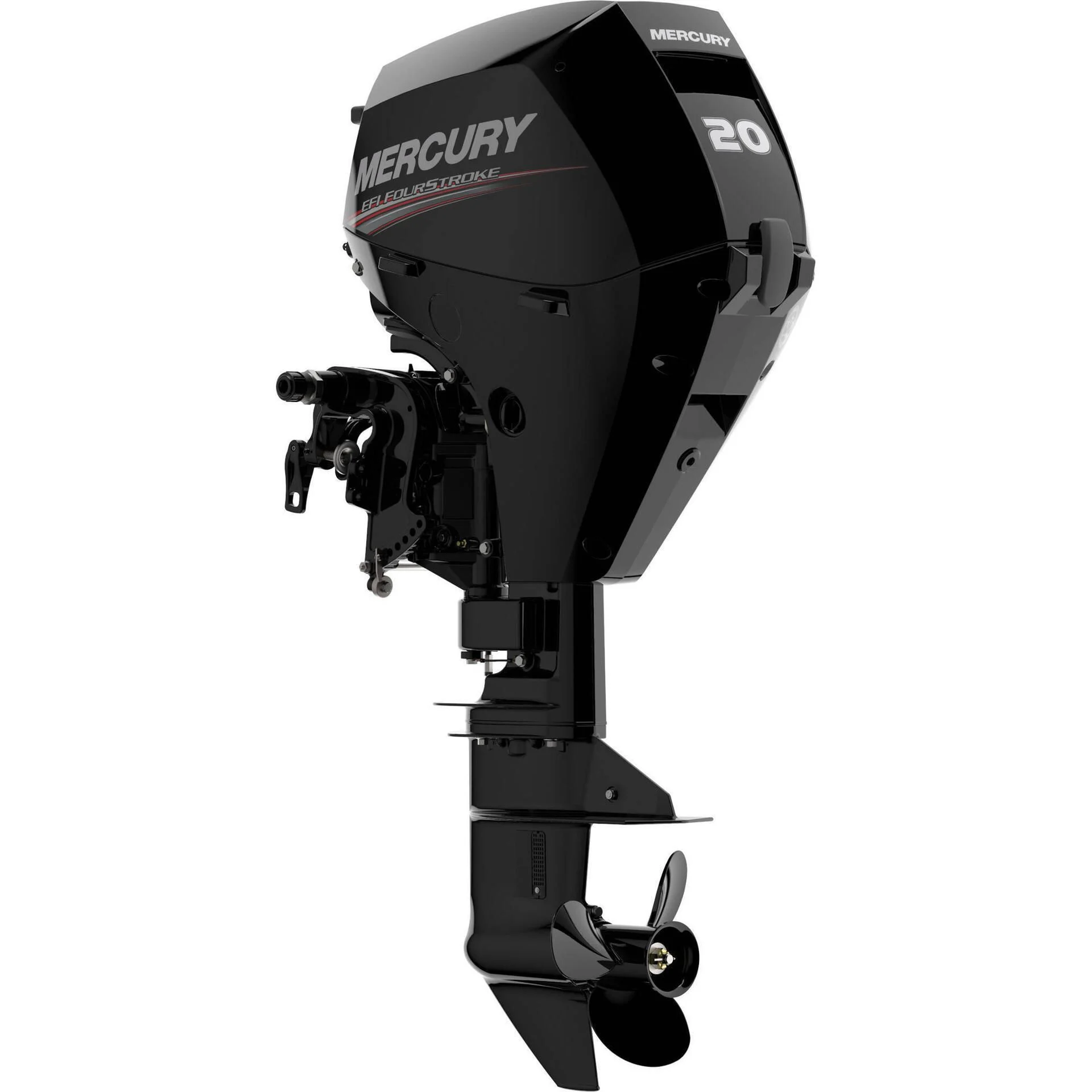

Description
Read This Before Comparing the 15 HP and 20 HP
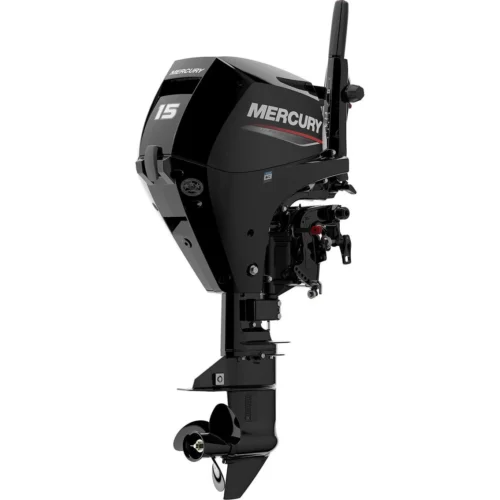
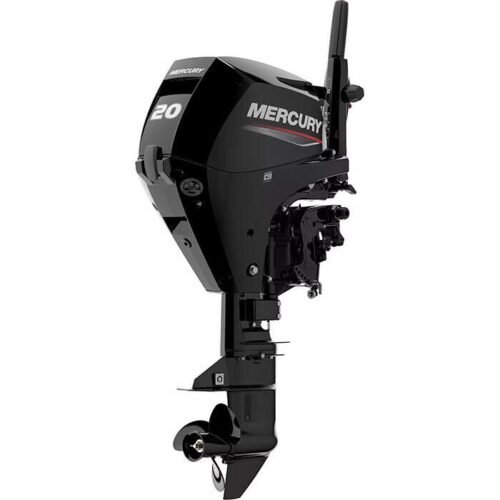
These two engines are mechanically the same. Same 333 cc inline twin, same 61 x 57 mm bore and stroke, same 5,700 to 6,200 rpm range, same 2.15:1 gearcase, same six-position trim, same tiller, same 99 lb dry weight. Mercury changes the calibration, not the hardware.
So the comparison is simple: $3,299.00 for 15 HP, $3,699.00 for 20 HP, identical weight, and identical footprint on the transom. Five extra horsepower for $400 and no pounds. Unless your hull is rated at a maximum of 15 HP, or a local regulation caps you there, the 20 HP is the correct purchase, and it is not a close decision.
The same logic applies to the 8 HP versus 9.9 HP pairing earlier in the range. Mercury builds families of engines on shared blocks and differentiates them by tune, so within a family the higher-rated model is almost always the better value. Knowing where those family boundaries sit is most of what you need to buy well from this catalog.
What the 333cc Twin Does on the Water
Twenty horsepower from 333 cc means this engine is not straining for its rating. Mercury tunes the intake specifically for acceleration, and the practical result is that a loaded hull comes onto the plane quickly rather than ploughing through a long transition. On a 16-foot aluminum boat with two people and gear, a hole shot is where you feel it.
Two cylinders firing alternately keep vibration low, which matters over distance. A single-cylinder outboard is fine for a twenty-minute run to a fishing spot. Over a two-hour day at the tiller, the twin is a different experience.
Electronic fuel injection is battery-free on manual-start models. The engine produces the electrical power it needs to run the injection system from the recoil pull itself. This removes the usual EFI tax on a small boat: no cranking battery, no box, no tray, no cabling, and no 35 lb of dead weight. You get cold-start reliability, automatic altitude and temperature compensation, and none of the installation burden.
Electric-start models carry a 12-amp, 145-watt alternator with a through-cowl backup manual start, so a dead battery does not end your day.
Hardware, Trim, and Propeller
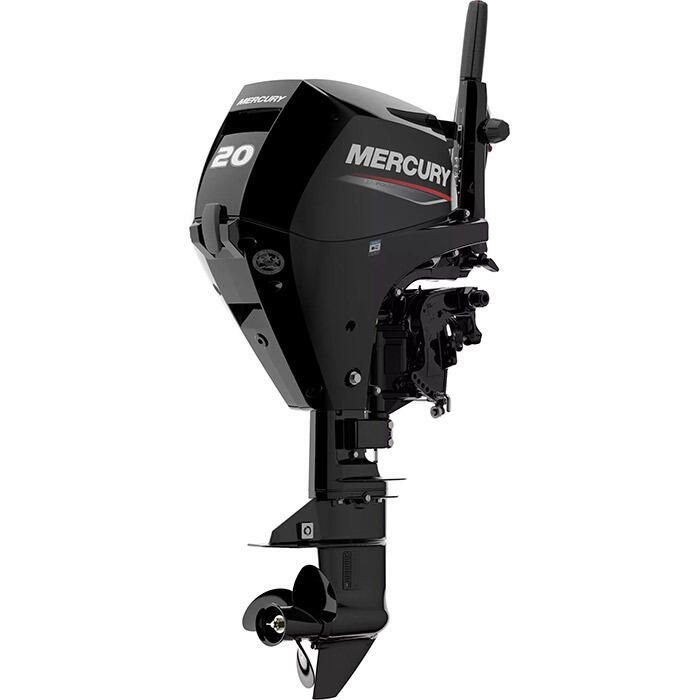
Fuel induction is two valves per cylinder through a single overhead cam. Ignition is a digital CD with electronic spark advance. Cooling runs through a thermostat. Construction is high-grade marine alloy with a stainless steel water pump housing, zinc-coated water passages, sacrificial zinc anodes, and a trim tab anode, saltwater rated from the factory.
Trim runs six positions with power tilt available on some configurations, plus a shallow water drive setting with a 16-degree range. On a shallow river or tidal flat, the shallow water drive position lets you keep running when the depth closes up.
The standard propeller is a 9.25-inch-diameter by 10-inch-pitch three-blade aluminum unit, a full inch more pitch than the 15 HP has. That is how the extra power converts into speed rather than just revs. Aluminum props can be repaired after a strike instead of needing replacement.
Gear shift is forward, neutral, and reverse integrated into the tiller handle, and the tiller locks at 73 degrees for fishing and trailering. The grip reverses for left- or right-handed operation.
Fuel is 87 octane with up to 10 percent ethanol from the 3.2 gallon (12 liter) remote tank supplied as standard with a quick-connect line.
What It Will Move
Aluminum tiller and console boats, jon boats, utility craft, sailboats needing serious auxiliary power, larger RIBs, and inflatable tenders are all suitable applications for this engine. Mercury positions this engine for aluminum tillers, inflatable soft hulls, junks, utility, and sail applications, which is an accurate list.
The practical upper limit is around 16 to 18 feet depending on hull weight and lAbove that length, or if you regularly carry four people, the 25 HP engine uses a three-cylinder block and is the better choice.swer.
Every 20 HP Mercury outboard we ship is new, factory sealed, and pre-delivery inspected before crating, arriving with a propeller fitted, a remote fuel tank, an owner’s manual, and Mercury FourStroke oil. Compare the wide range of Mercury outboard motors and their versatility. For hull matching, see our rigid-hull inflatables and pontoon boats. The direct cross-brand comparison in stock is the Yamaha 20 HP outboard motor.
Mercury 20 HP Four-Stroke EFI: Full Factory Specifications
| Feature / Specification | Technical Detail / Value |
|---|---|
| Models | 20MH, 20MLH, 20EH, 20ELH |
| Horsepower | 20 HP / 14.7 kW |
| Engine type | Inline 2-cylinder, four-stroke |
| Displacement | 333 cc / 20.3 CID |
| Bore and stroke | 61 x 57 mm / 2.40 x 2.24 in |
| Full-throttle RPM range | 5700 to 6200 rpm |
| Fuel induction | 2 valves per cylinder, single overhead cam (SOHC) |
| Fuel system | Electronic fuel injection (EFI), battery-free on manual start |
| Recommended fuel | 87 octane, up to 10% ethanol |
| Recommended oil | Mercury FourStroke 10W-30 |
| Ignition | Digital CD with electronic spark advance |
| Cooling system | Water-cooled with thermostat |
| Alternator | 12 amp / 145 W (electric start models) |
| Starting | Manual or electric, with through-cowl backup manual start |
| Steering | Adjustable tiller, reversible grip, 73-degree lock, or remote |
| Gear shift | Forward, Neutral, Reverse (in tiller handle) |
| Gearcase ratio | 2.15:1 |
| Standard propeller | 9.25 in diameter x 10 in pitch, 3-blade aluminum |
| Shaft lengths | 15 in / 381 mm, 20 in / 508 mm |
| Trim system | 6 positions, manual or power tilt |
| Shallow water drive | Yes, 16-degree range |
| Exhaust system | Through the propeller |
| Remote fuel tank | 3.2 gal / 12 L with quick-connect line, standard |
| Dry weight | 99 lb / 45 kg (lightest configuration) |
| Engine protection | Low oil pressure, over-rev |
| CARB star rating | 3 stars |
| Color | Phantom Black |
| Saltwater rated | Yes, zinc anodes and coated water passages |
| Condition | New, factory sealed, PDI completed |
Frequently Asked Questions
Is the Mercury 15 HP the same engine as the 20 HP?
Mechanically, yes. Both use the same 333 cc inline twin, the same 61 x 57 mm bore and stroke, the same 5700 to 6200 rpm range, the same 2.15:1 gearcase, and the same 99 lb dry weight. Mercury differentiates them by calibration. Because there is no weight or size penalty, the 20 HP is the better purchase unless your hull is rated for a maximum of 15 HP or a local regulation caps you there.
Does the 20 hp Mercury outboard require a battery?
No, not on manual-start models. The EFI system is battery-free, drawing its power from the recoil pull itself. That gives you fuel injection reliability without a cranking battery, box, and cabling adding weight to a small boat. Electric-start models need a battery and carry a 12-amp alternator, plus a through-cowl backup manual start.
What size boat does a 20 hp outboard motor suit?
A 20 hp outboard motor suits aluminum tiller and console boats, jon boats, utility craft, and larger inflatables from roughly 14 to 18 feet. On a 16-foot aluminum hull with two people and gear, it planes quickly. Above 18 feet or with four people aboard regularly, step up to the 25 HP, which has a three-cylinder block and considerably more torque.
Can I get the 20-horsepower Mercury outboard with remote steering?
Yes. The 20 HP is available in both tiller and remote-steering configurations. Tiller models carry the adjustable Mercury tiller with a reversible grip, integrated F-N-R shift, and a 73-degree lock. Remote models are configured for helm steering with a control box. Specify which you need at the order, since the two configurations are not interchangeable after the fact.
What propeller comes on the Mercury 20 HP?
The standard propeller is a 9.25-inch-diameter by 10-inch-pitch three-blade aluminum unit. That is one inch more pitch than the 15 HP carries, which is how the additional power translates into speed rather than just engine revs. Aluminum propellers can be repaired after striking an obstruction rather than requiring replacement.