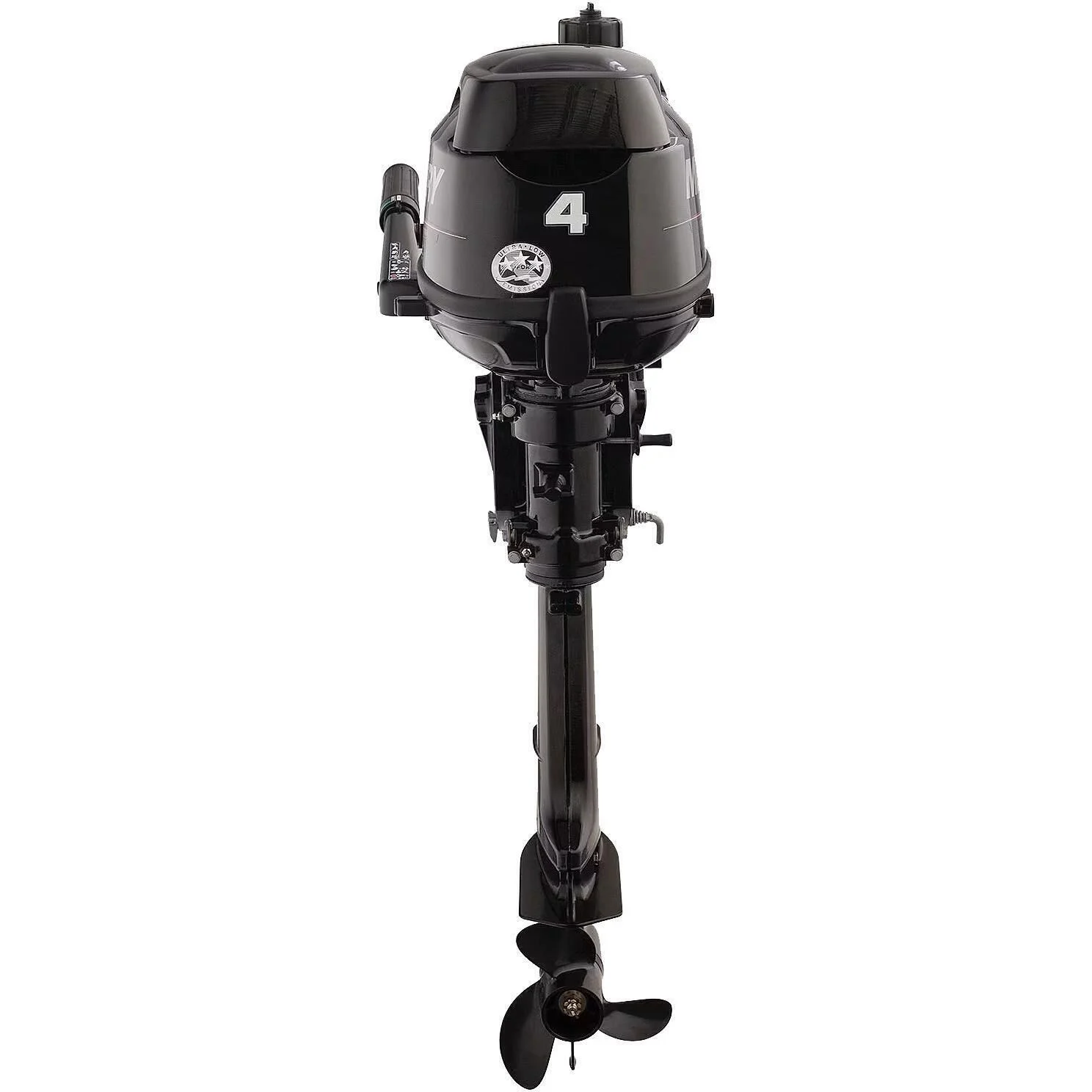
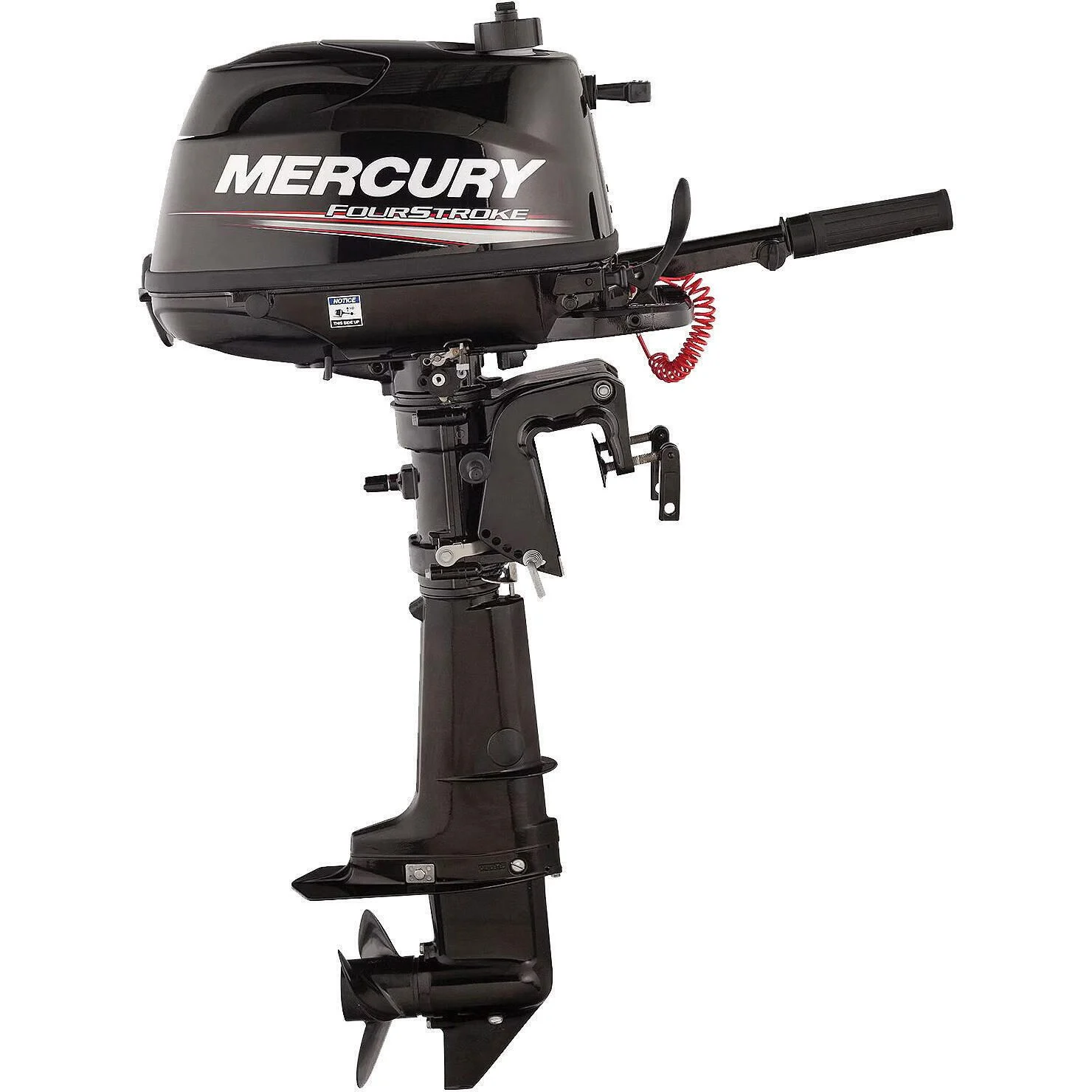
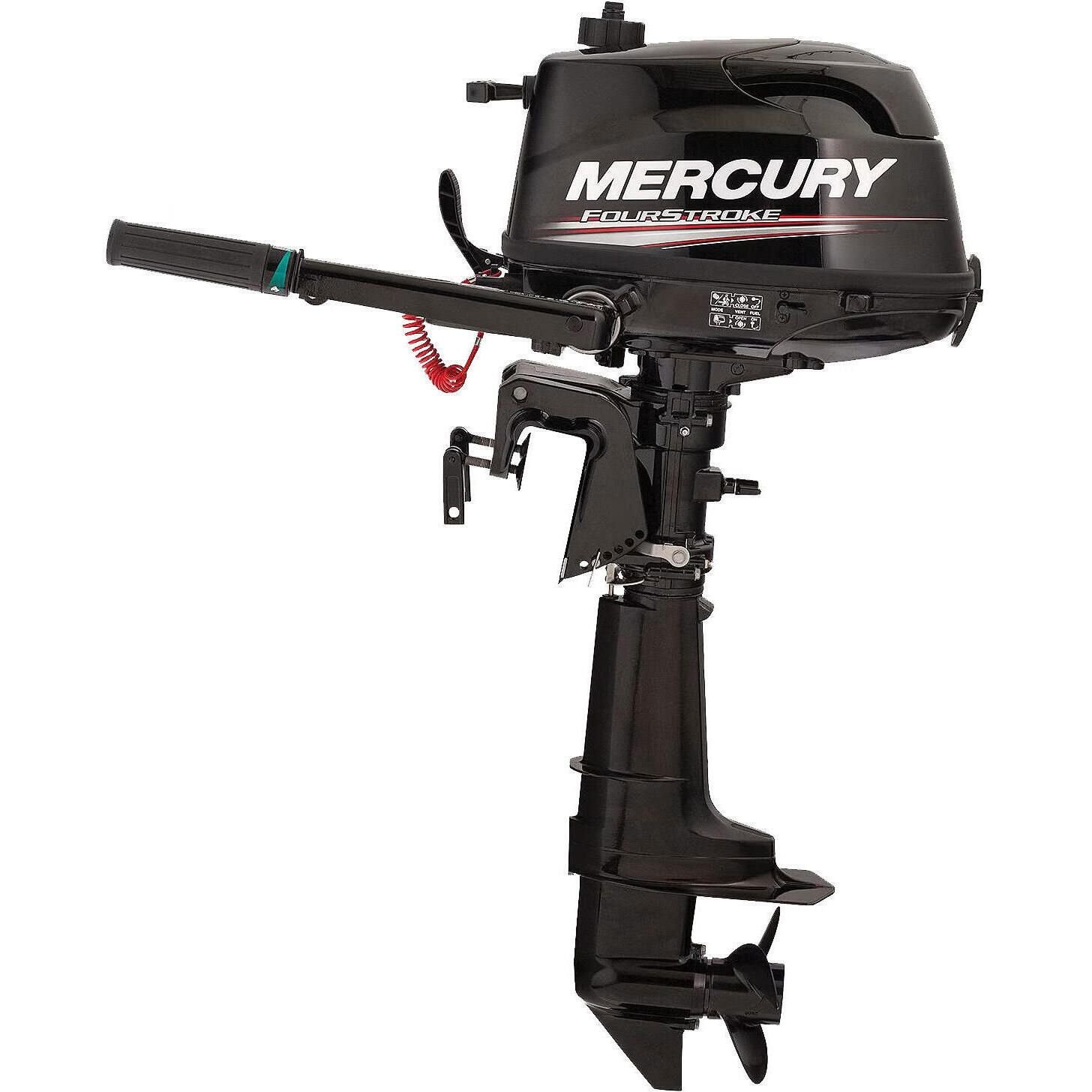
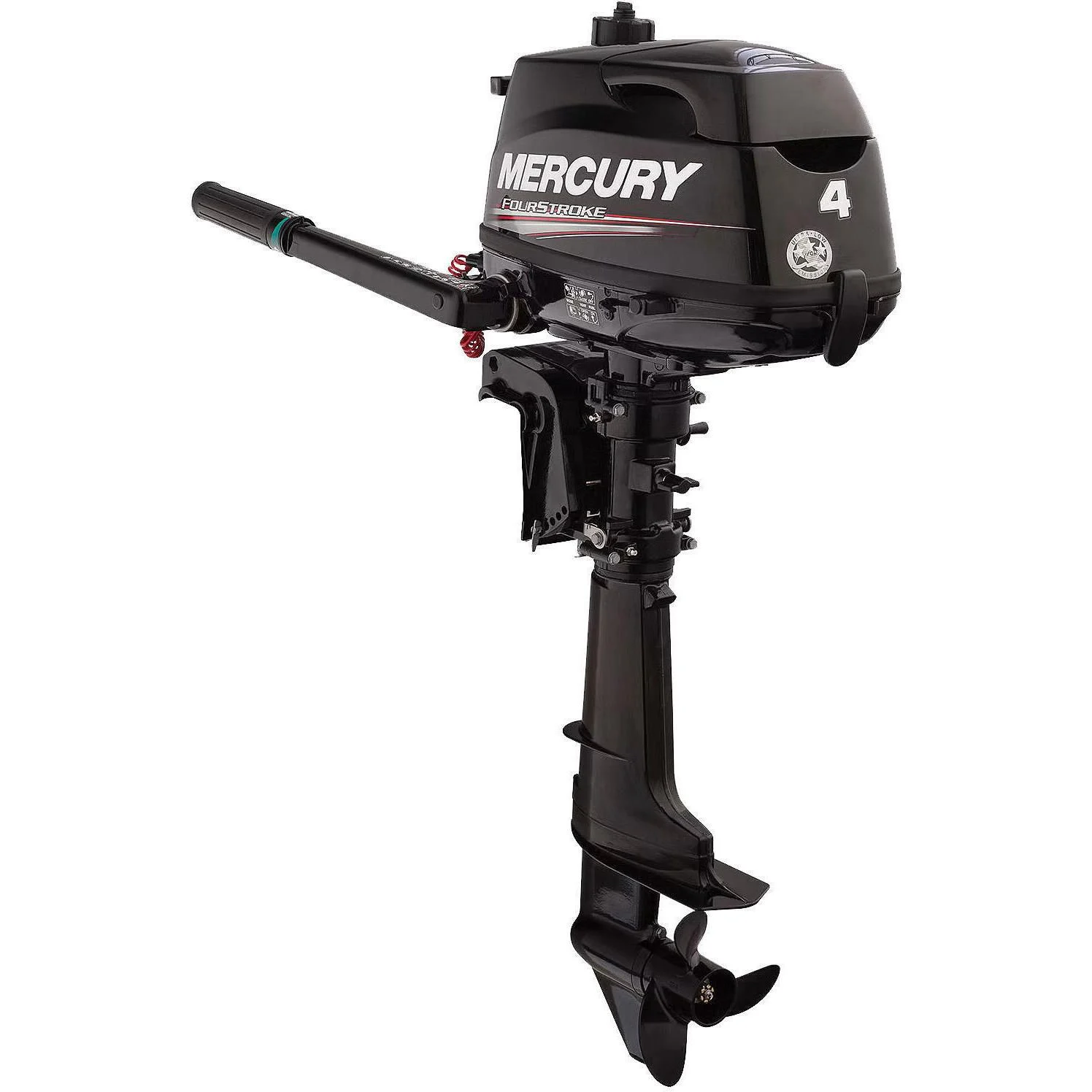

Description
What the 123cc Block Changes
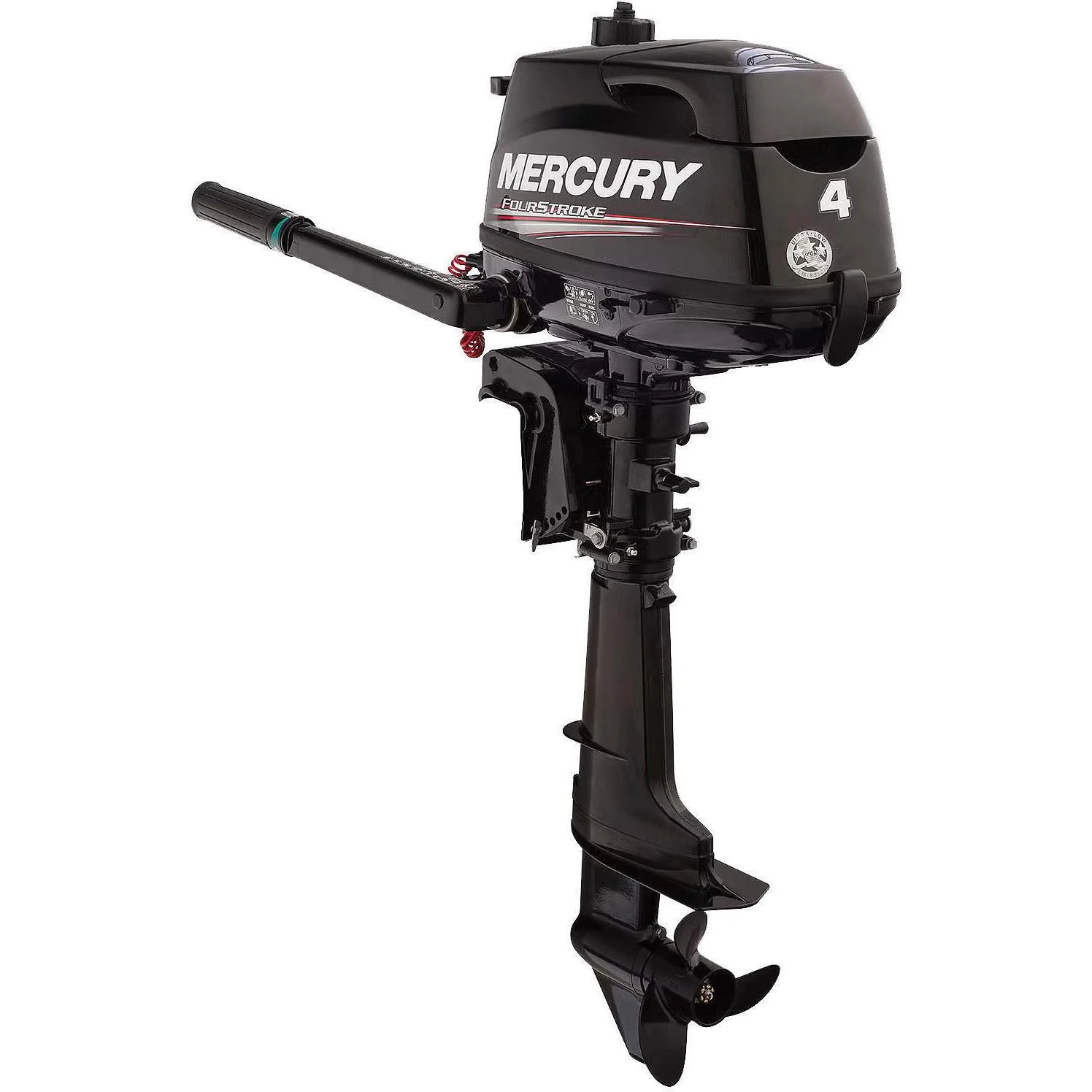
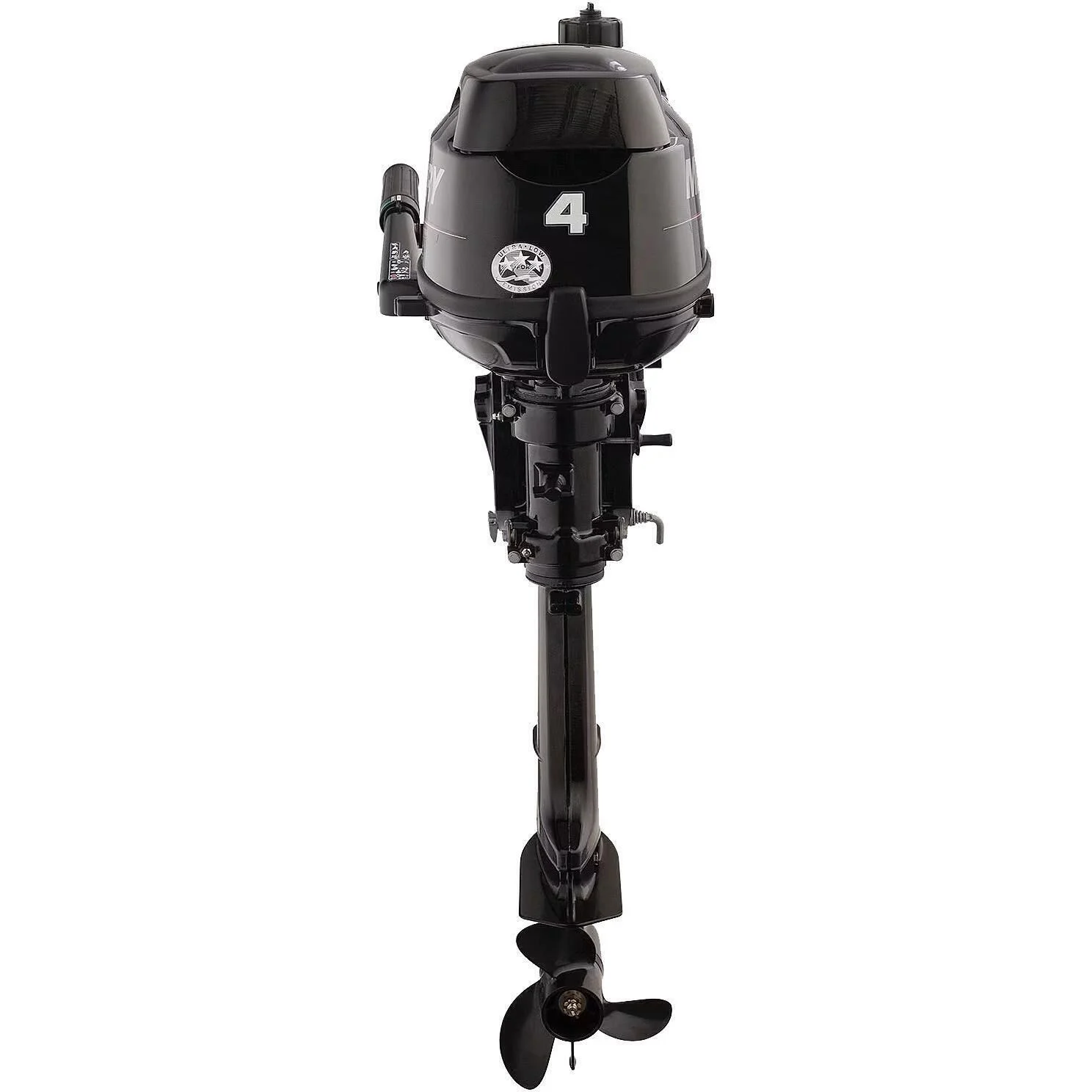
The jump from 3.5 HP to 4 HP looks like half a horsepower on paper. It is not. Mercury changes the entire engine underneath. The 85 cc block gives way to a 123 cc single cylinder with a 59 x 45 mm bore and stroke, and with the displacement comes a different class of hardware.
Most importantly, you get a real gearbox. Forward, neutral, and reverse, selected by a lever, are the ways an outboard is supposed to work. Every Mercury below 4 HP requires you to swing the tiller through 360 degrees to back up. For anyone docking single-handed, holding position against a current while a passenger boards, or backing off a beach, that is a meaningful operational difference, and it is the main reason buyers step up to this model.
The exhaust also moves. The 2.5 and 3.5 discharge exhaust above the propeller, which is a simple but audible arrangement. The 4 HP routes exhaust through the propeller hub, where the water column muffles it. At trolling speed the difference is this model, which is why this engine is the first engine in the range that anglers take seriously.
Trim goes from four positions to six, with a shallow water drive position and a 16-degree range. Six positions means you can actually tune the leg angle to the hull rather than picking the least wrong of four. On a planning dinghy that is worth real speed.
Fueling: Integrated and Remote
The 4 HP carries a 0.3 gallon (1.1 liter) integrated tank under the cowl with an external fuel shutoff valve, and it accepts an optional 3.2 gallon (12 liter) remote tank. That dual capability is the practical argument for this engine over the smaller portables.
The integrated tank keeps the boat clear for short runs: no hose across the floor, nothing to trip over in a tender. When you want range, you connect the remote tank and achieve a full day out of it. The external shutoff valve lets you run the carburettor dry before storage, which is the single most effective thing you can do to avoid a varnished float bowl after a winter layup.
Fuel is 87 octane with up to 10 percent ethanol. Oil is Mercury FourStroke 10W-30, and unlike the 85cc engines, this one has a genuine lubrication system with a low oil pressure warning as well as over-rev protection.
Handling, Weight, and Real Use
At 55 lb / 25 kg, the engine is still a one-person lift, but it is a serious lift. The 41 lb envelope is carried on a shoulder. This one wants two hands and a planned route from car to transom. If your use case involves carrying the engine any real distance or lifting it onto a pushpit bracket single-handed at anchor, be honest about that before choosing the 4 HP over the 3.5.
Where it pays back is the water. On a 10- to 12-foot inflatable or aluminum boat with two adults, the 4 HP has enough thrust to make progress against wind rather than simply holding position. On a 12-foot jon boat, it is a competent primary engine rather than an auxiliary. As a sailboat kicker, it will move a 26-foot displacement hull in calm conditions at hull speed, which the 3.5 will not do reliably.
Gear reduction is 2.15:1 through a standard gearcase, with CDI ignition and thermostatically controlled water cooling. Shaft options are 15-inch and 20-inch. Saltwater is rated from the factory to the same corrosion specification. Mercury uses across the range.
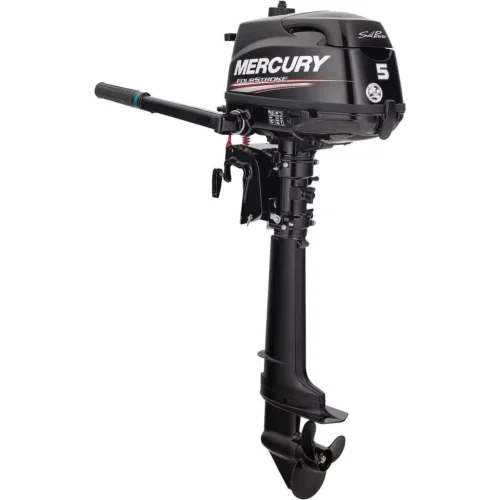
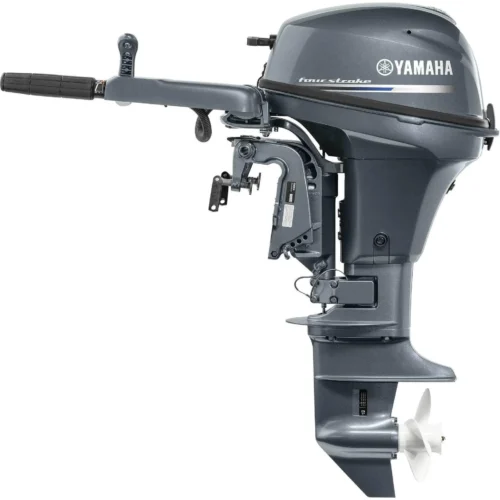
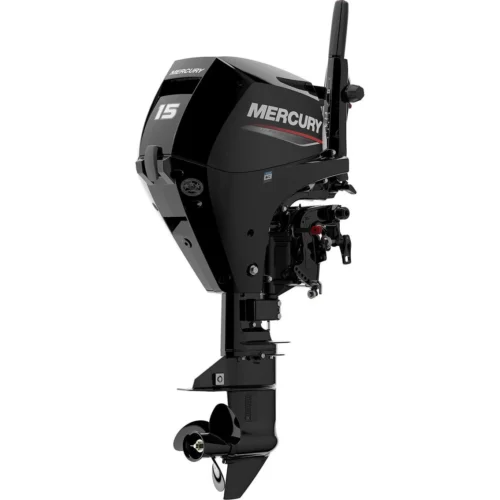
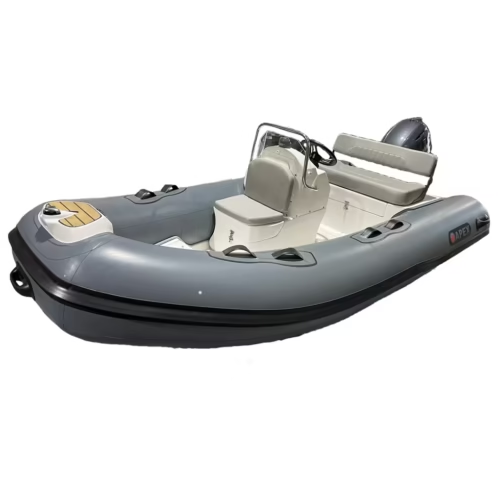
Every Mercury 4 HP outboard we ship is new, factory sealed, and pre-delivery inspected. Compare the rest of the Cool Compacts range, where the 5 HP and 6 HP share the same 123 cc block. For hull matching, see our inflatable boats and tenders and the Apex dinghy range. The direct cross-brand comparison in stock is the Yamaha F4 portable outboard, and the full Yamaha portable series runs from 4 HP to 25 HP.
Mercury 4 HP FourStroke: Full Factory Specifications
| Feature / Specification | Technical Detail / Value |
|---|---|
| Models | 4MH (15″ shaft), 4MLH (20″ shaft) |
| Horsepower | 4 HP / 2.9 kW |
| Engine type | 1 cylinder, four-stroke |
| Displacement | 123 cc / 7.5 CID |
| Bore and stroke | 59 x 45 mm / 2.32 x 1.77 in |
| Full-throttle RPM range | 4500 to 5500 rpm |
| Fuel induction | 2-valve pushrod (overhead valve) |
| Fuel system | Carbureted |
| Recommended fuel | 87 octane, up to 10% ethanol |
| Recommended oil | Mercury FourStroke 10W-30 |
| Ignition | CDI with electronic spark advance |
| Cooling system | Water-cooled with thermostat |
| Starting | Manual (recoil) |
| Steering | Tiller |
| Gear shift | Forward, Neutral, Reverse |
| Gearcase ratio | 2.15:1 |
| Shaft lengths | 15 in / 381 mm, 20 in / 508 mm |
| Trim system | Manual, 6 positions |
| Shallow water drive | Yes, 16-degree range |
| Exhaust system | Through the propeller |
| Integrated fuel tank | 0.3 gal / 1.1 L with external shutoff valve |
| Optional remote tank | 3.2 gal / 12 L |
| Dry weight | 55 lb / 25 kg |
| Engine protection | Low oil pressure, over-rev |
| CARB star rating | 3 stars |
| Color | Phantom Black |
| Saltwater rated | Yes. |
| Condition | New, factory sealed, PDI completed |
Frequently Asked Questions
Does the Mercury 4 HP outboard have a reverse gear?
Yes. The Mercury 4 HP is the smallest Mercury FourStroke model that has a true forward-neutral-reverse gearbox, which you select using a shift lever. Every Mercury below 4 HP (the 2.5 and 3.5) requires you to rotate the tiller 360 degrees to reverse. For buyers who dock single-handed or back off beaches regularly, this feature is the main reason to choose the 4 HP over the 3.5 HP.
What is the difference between the Mercury 4 HP and 5 HP outboard?
The 4 HP and 5 HP use the identical 123 cc powerhead, the same 2.15:1 gearcase, and the same 4500 to 5500 rpm range. The 5 HP is jetted for one extra horsepower and weighs 2 lb more than the 4 HP. The 5 HP also offers a 25-inch Sail Power shaft configuration that the 4 HP does not. If you need the extra shaft length for a sailboat, take the 5 HP. Otherwise, the 4 HP is a better value.
Can I use a remote fuel tank with the 4 hp outboard motor?
Yes. The Mercury 4 HP has a 1.1-liter integrated tank and accepts an optional 3.2-gallon (12-liter) remote tank for extended range. The integrated tank keeps a small boat uncluttered for short runs, while the remote tank connection gives you a full day of operation. An external fuel shutoff valve lets you run the carburettor dry before storage.
How heavy is the Mercury 4 HP outboard?
The Mercury 4 HP has a dry weight of 55 lb (25 kg), which is 14 lb heavier than the 3.5 HP. It remains a one-person lift but requires two hands rather than a shoulder carry. If you routinely carry an engine a long distance or lift it onto a pushpit bracket at anchor, weigh that against the reverse gear and through-prop exhaust that the 4 HP adds.
Is the Mercury 4 HP suitable for a sailboat auxiliary?
Yes, it is suitable for displacement hulls up to roughly 26 feet in calm to moderate conditions. Order the 20-inch shaft (4MLH) for pushpit bracket mounting so the propeller stays submerged when the stern lifts. The 5 HP Sail Power configuration is a better match for larger or heavier sailboats, as well as for anyone who wants a 25-inch extra-long shaft.