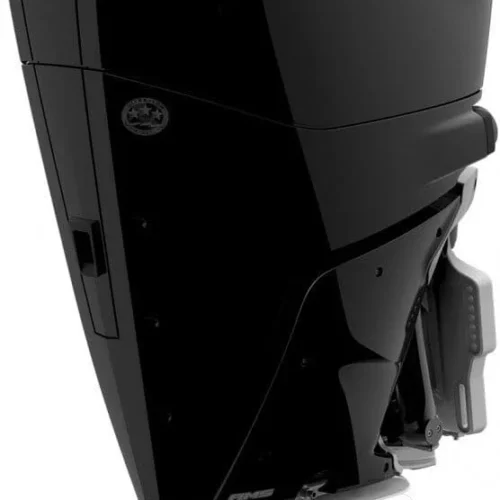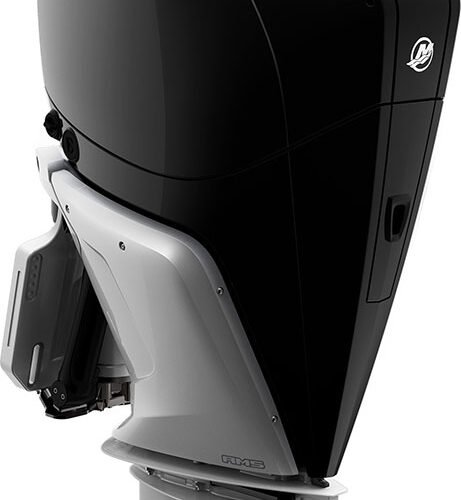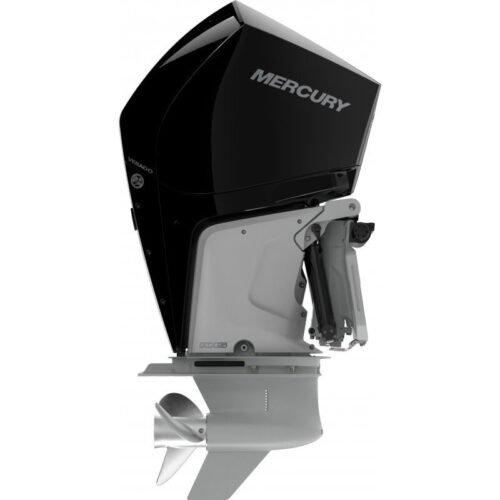

Description
The Argument for a Big V8 at 200 Horsepower
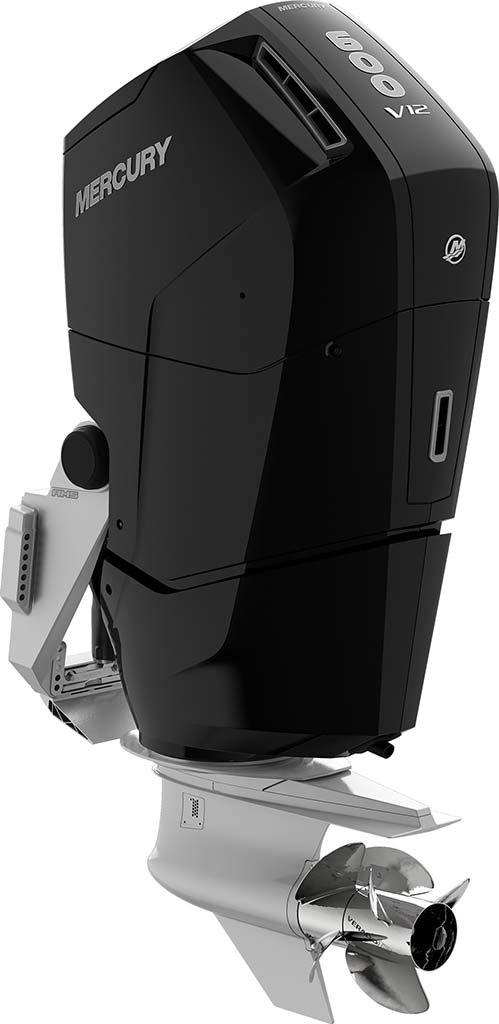
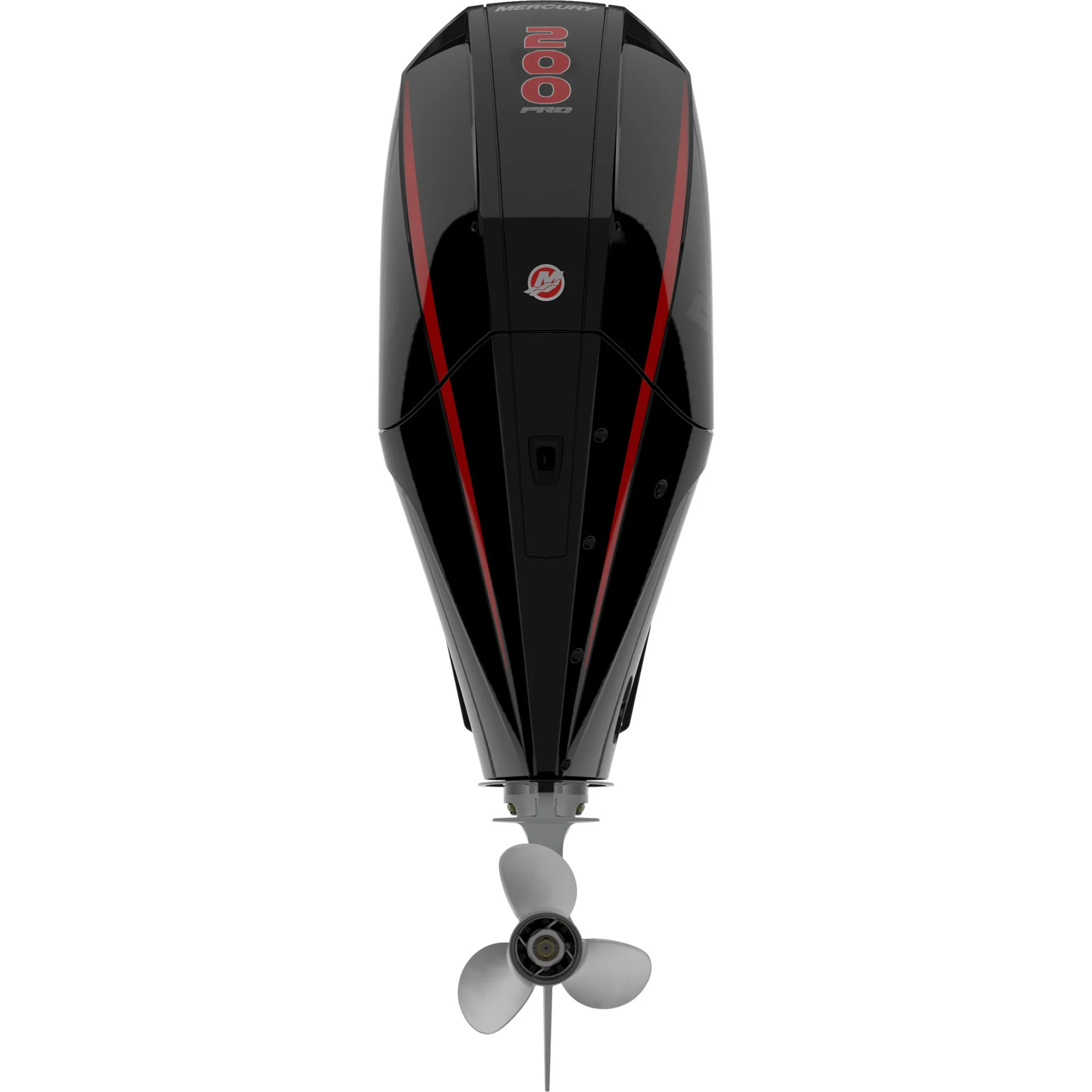
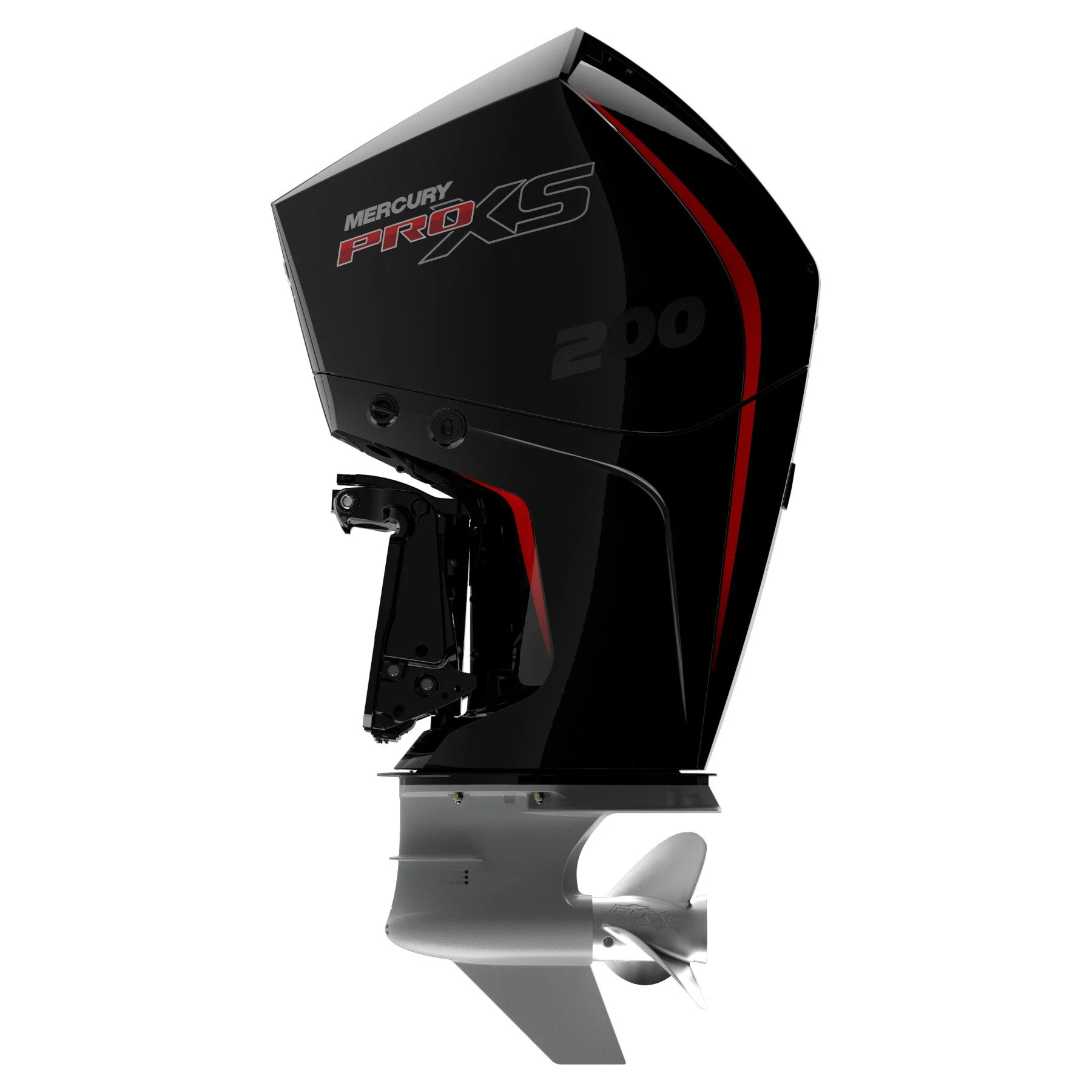
Mercury also builds a 200 HP on the 3.4-liter V6. The Pro XS 200 is the 4.6-liter V8, and choosing the bigger engine for the same output is the entire point of this model.
Four point six liters producing 200 horsepower means each cylinder is barely working. The same block, unchanged, produces 300 horsepower higher up the range. Running at two thirds of what the architecture is capable of has three consequences worth paying for.
The first is longevity. Mechanical stress scales sharply with how hard an engine works relative to its capability. A V8 loafing at 200 HP accumulates wear far more slowly than a smaller engine producing the same figure at its limit.
The second is torque. Displacement produces torque, and the 4.6-liter block delivers it across the whole rev range rather than in a narrow band near the ceiling. That shows up as a hole shot and as the ability to hold a plane at low speed with a load aboard.
The third is refinement. A 64-degree V8 with dual overhead cams and 32 valves is inherently smoother and better balanced than a four or a six, and Mercury tunes the exhaust note deliberately rather than just muffling it.
The cost is weight. At 505 to 511 lb, this is a substantial engine, heavier than the 175 Pro XS V6 by roughly 35 lb. If your transom cannot take it, the V6 is the correct answer, and there is no shame in that.
TorqueMaster, and Why the Gearcase Choice Matters More Here
The 200 Pro XS offers two gearcases, and they suit genuinely different boats.
TorqueMaster runs 1.75:1 through a 4.8-inch case with a robust 1.25-inch-diameter propeller shaft, designed specifically for semi-surfacing, high-speed applications. Semi-surfacing means the propeller is running partly out of the water at speed, which is how fast boats are set up: the gearcase is raised, drag drops, and the prop bites intermittently. That regime destroys a normal prop shaft over time, which is why the TorqueMaster gets a thicker one.
The standard 4.8-inch gearcase runs 1.85:1 and suits conventional mounting on boats that are not set up to surface the prop.
If you are running a bass boat, a tournament hull, or anything with a jack plate and a raised mounting position, order TorqueMaster. If you are running a conventional center console at a normal mounting height, the standard case is correct, and TorqueMaster gains you nothing.
Adaptive Speed Control and Idle Charge
Two features on this engine solve problems that most outboards ignore.
Adaptive speed control maintains a target rpm regardless of changes in load or conditions, without you touching the throttle lever. Mercury describes it as an industry first. In practice, it means the engine holds speed when you turn, when a following sea lifts the stern, or when weight shifts. In the long run, that removes a constant low-level correction you would otherwise be making unconsciously.
Idle charge addresses a specific and very common failure. The alternator produces 20 amps at idle and 85 amps at wide-open throttle. Trolling for hours at idle while running a sounder, a live well, and a trolling motor charger drains batteries faster than 20 amps replace them. Idle Charge detects a low battery and automatically raises idle rpm to increase alternator output until the battery recovers. It is the difference between finishing the day and finding a dead cranking battery at the ramp.
Fueling is electronic fuel injection with advanced range optimization and closed-loop fuel control, which leans the mixture at cruise for better economy. Transient Spark adjusts ignition timing during throttle transitions for additional torque on acceleration. Ignition is SmartCraft PCM 112.
Rigging
Steering is hydraulic as standard, with power steering optional and a Big Tiller option available. Shaft lengths are 20 inches and 25 inches. Trim is power trim and tilt with a 20-degree trim range and a 73-degree tilt range. Starting is electric with SmartStart protection.
Fuel is unleaded regular at 87 octane minimum or 90 RON, with up to 10 percent ethanol. Warranty is Mercury’s three-year limited plus three-year corrosion.
What It Suits
Offshore center consoles, bay boats, larger bass boats, performance runabouts, and pontoons at the upper end. It is also a common repower option for aging 200- to 250 HP two-strokes.
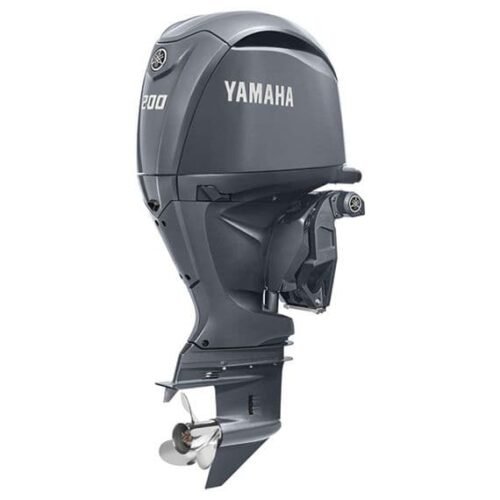
Every Mercury 200 Pro XS we ship is new, factory sealed, and pre-delivery inspected before crating. Compare across the Pro XS 200 to 300 range, step down to the Fast Frenzy range for the V6 and inline-four Pro XS engines, or browse the Mercury outboard motors hub. Cross-brand, the closest in stock is the Yamaha F200 outboard motor. For rigging advice, send us your hull details.
Mercury Pro XS 200 HP: Full Factory Specifications
| Feature / Specification | Technical Detail / Value |
|---|---|
| Horsepower | 200 HP / 147 kW |
| Engine type | V8, 64 degrees, dual overhead cam (DOHC), 32 valves |
| Displacement | 4.6 L / 279 CID / 4572 cc |
| Bore and stroke | 92 x 86 mm / 3.6 x 3.4 in |
| Full-throttle RPM range | 5600 to 6200 rpm |
| Fuel induction | Electronic fuel injection with advanced range optimization, closed-loop fuel control |
| Torque technology | Transient Spark |
| Speed control | Adaptive Speed Control |
| Recommended fuel | Unleaded regular, 87 octane minimum or 90 RON, 10% ethanol max |
| Ignition | SmartCraft PCM 112 Digital Inductive |
| Cooling system | Water-cooled with thermostat |
| Alternator | 85 amp / 1,071 W with Idle Charge (20 amp at idle) |
| Starting | Electric with SmartStart protection |
| Steering | Hydraulic standard, power optional, big tiller optional |
| Gear shift | Forward, Neutral, Reverse |
| Gearcase ratio | 1.75:1 TorqueMaster, or 1.85:1 standard 4.8 in |
| Propeller shaft | 1.25 in diameter (TorqueMaster) |
| Shaft lengths | 20 in / 508 mm, 25 in / 635 mm |
| Trim system | Power trim and tilt |
| Maximum trim range | 20 degrees (-6 to +14) |
| Maximum tilt range | 73 degrees (-6 to +67) |
| SmartCraft compatible | Yes. |
| Dry weight | 505 to 511 lb / 229 to 232 kg by configuration |
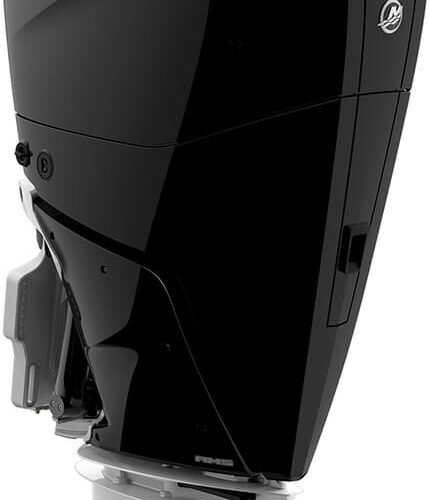
| Color | Phantom Black |
| Warranty | 3-year limited, 3-year corrosion |
| Condition | New, factory sealed, PDI completed |
Frequently Asked Questions
Is the Mercury 200 Pro XS a V8?
Yes. The Mercury 200 Pro XS uses a 4.6-liter, 64-degree V8 with dual overhead cams and 32 valves. It is the smallest engine in Mercury’s V8 Pro XS platform. Mercury also builds a 200 HP on the 3.4-liter V6, so confirm which you are buying: the Pro XS 200 is the V8 version and is roughly 35 lb heavier than the V6.
What is the TorqueMaster gearcase?
TorqueMaster is Mercury’s lightweight high-speed gearcase, running a 1.75:1 ratio through a 4.8-inch case with a 1.25-inch diameter propeller shaft. It is built for semi-surfacing applications where the propeller runs partly out of the water at speed, which is how tournament and performance hulls are set up. For conventional mounting at normal height, the standard 1.85:1 gearcase is correct.
What is the idle charge on the Mercury 200 Pro XS?
Idle Charge automatically raises idle rpm to increase alternator output when it detects a low battery. The alternator produces 20 amps at idle and 85 amps at wide-open throttle, so extended trolling while running electronics can drain batteries faster than idle output replaces them. Idle charge prevents the dead cranking battery that situation otherwise produces.
Why choose a 4.6L V8 at only 200 horsepower?
Because the same block produces 300 horsepower higher in the range, which means at 200 HP it is working at roughly two-thirds of its capability. That gives longer service life through lower mechanical stress, more torque across the rev range from the displacement, and the smoothness of a 64-degree V8. The trade-off is weight: 505 to 511 lb against roughly 470 lb for the 3.4L V6.
What is Adaptive Speed Control?
Adaptive speed control maintains your target rpm regardless of changes in load or conditions, without adjusting the throttle lever. The engine holds speed through turns when a following sea lifts the stern or when weight shifts aboard. Mercury introduced it as an outboard industry first, and it is standard on the V8 Pro XS range.