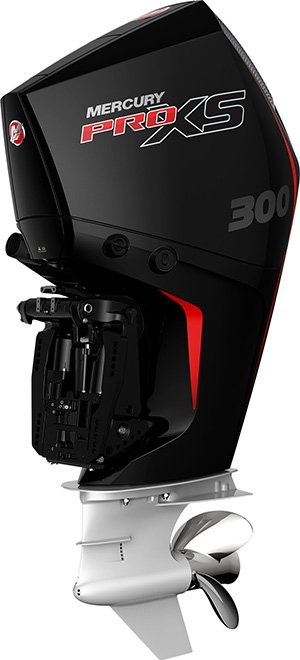
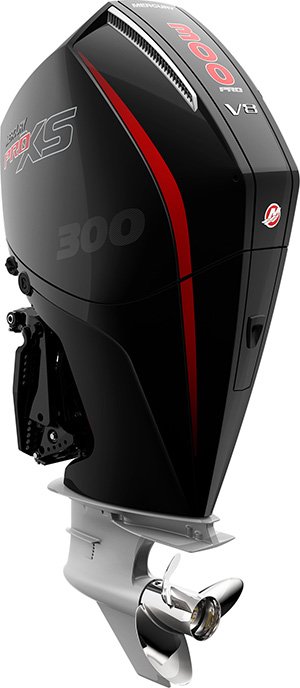
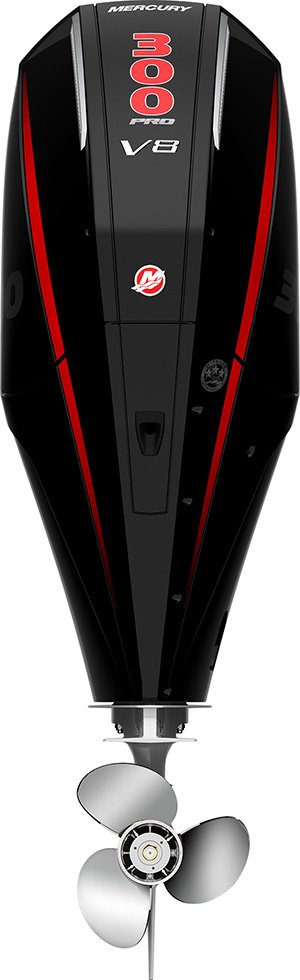
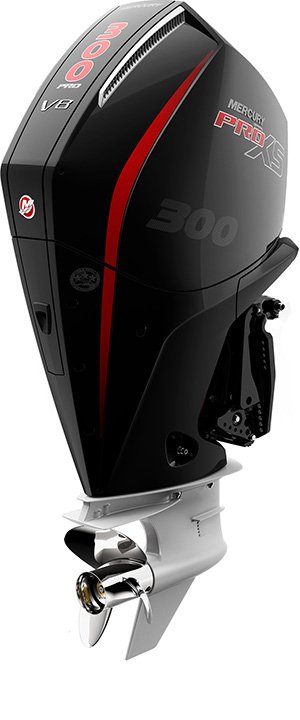

Description
The Top of the Pro XS Range
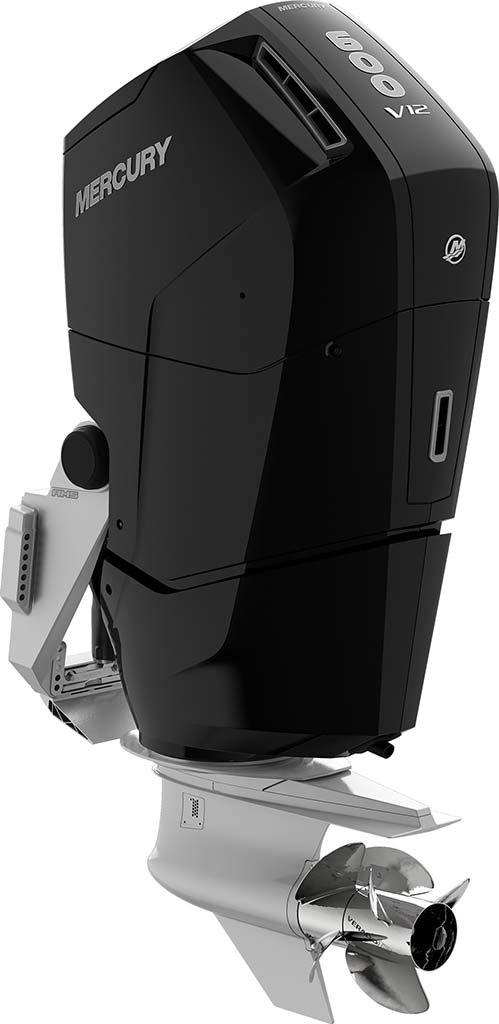
Three hundred horsepower from 4.6 liters is where Mercury takes this V8 in the Pro XS line, and it is worth understanding what that represents. The same block produces 200 horsepower at the bottom of the range. At 300 it is working hard by comparison, but it remains a large-displacement engine reaching a high output through capacity rather than through forced induction or extreme rpm.
That distinction matters for how the engine behaves and how long it lasts. A naturally aspirated 4.6-liter engine making 300 horsepower is under considerably less thermal and mechanical stress than a smaller engine making the same figure. It is also more responsive, because there is no boost to build: throttle input produces torque immediately.
The 64-degree V8 layout with dual overhead cams and 32 valves gives four valves per cylinder and independent intake and exhaust timing. Combined with a 5,600 to 6,200 rpm operating range, this setup produces a torque curve that stays strong from low in the band through to the top.
Why the 300 Is the Default Choice in This Range
Every V8 Pro XS from 200 to 300 shares the same block, the same 92 x 86 mm bore and stroke, the same powerhead, the same alternator, the same gearcase options, the same 505 to 511 lb dry weight, and the same transom footprint. Mercury changes calibration only.
So the choice between them is not an engineering trade-off. The choice depends on two things: what your hull capacity plate permits and the price difference.
Check the capacity plate first. It states a maximum horsepower and a maximum weight, both of which are structural and safety limits set by the boat builder. Exceeding the horsepower rating typically voids insurance and is illegal in many jurisdictions. If your plate reads 250, the 300 is not an option regardless of how attractive the arithmetic looks.
The 300 Pro XS is the engine that gives you the most from an identical installation, provided your plate reads 300 or higher.
TorqueMaster and High-Speed Rigging
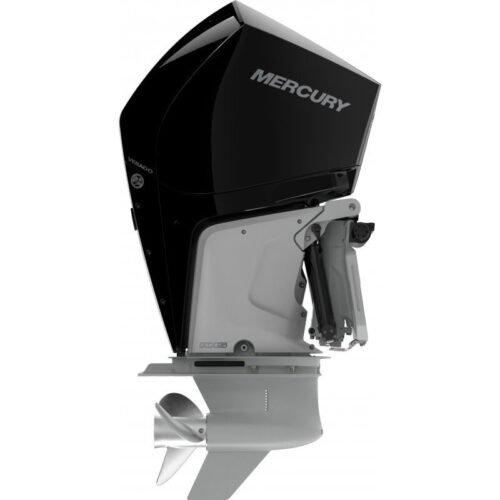
The TorqueMaster gearcase runs 1.75:1 through a 4.8-inch case with a 1.25-inch-diameter propeller shaft, built specifically for semi-surfacing high-speed applications.
Semi-surfacing is how fast boats are rigged. The engine is mounted high, often on a jack plate, so the gearcase sits shallower and creates less drag. At speed the propeller runs partly out of the water, biting intermittently rather than continuously. That regime produces shock loading that fatigues a conventional propeller shaft, which is why Mercury specifies the thicker shaft on this gearcase.
If you are rigging for speed on a tournament or performance hull, this gearcase is why you buy a Pro XS rather than a standard FourStroke. If you are running a conventional offshore console at standard mounting height, it works normally, and you simply will not be using its designed advantage.
Adaptive Speed Control, Transient Spark, and Idle Charge
Adaptive speed control maintains a target rpm regardless of load or condition changes without throttle adjustment, which Mercury introduced as an outboard industry first. Over a long offshore run, it removes the constant small corrections you would otherwise have to make.
Transient Spark electronically advances ignition timing during throttle transitions to produce additional torque for faster hole shot and acceleration. On a 300 HP hull coming out of a turn, that is where you feel it.
Advanced range optimization with closed-loop fuel control leans the mixture at cruise. At 300 horsepower, fuel is the dominant running cost, and the difference between managed and unmanaged part-throttle fuelling over a season is significant.
Idle Charge automatically raises idle rpm to increase alternator output when a battery runs low, preventing the flat cranking battery that extended trolling with a full electronics load would otherwise cause.
Ignition is SmartCraft PCM 112. Starting is electric with SmartStart protection. Steering is hydraulic as standard, with power optional and a big tiller available. Shaft lengths are 20 inches and 25 inches. The trim range is 20 degrees, and the tilt range is 73 degrees. Exhaust is performance-tuned.
Fuel is unleaded regular at 87 octane minimum or 90 RON with up to 10 percent ethanol, which is worth noting for an engine of this output. The warranty is three years limited plus three years of corrosion.
What It Suits
Offshore center consoles from 24 to 30 feet as a single, or larger hulls in twin and triple installations. Tournament bass and bay boats at the top of their rating. Performance runabouts. Large pontoons where permitted.
Every Mercury 300 Pro XS we ship is new, factory sealed, and pre-delivery inspected before crating. For multi-engine installations, we can quote matched sets with counter-rotation as required. Compare across the Pro XS 200 to 300 range, the Verado 250 to 600 range for the quieter touring alternative, and the Mercury outboard motors hub. For rigging, propeller selection, or multi-engine quotes, send us your hull details.
Mercury Pro XS 300 HP: Full Factory Specifications
| Feature / Specification | Technical Detail / Value |
|---|---|
| Horsepower | 300 HP / 224 kW |
| Engine type | V8, 64 degrees, dual overhead cam (DOHC), 32 valves |
| Displacement | 4.6 L / 279 CID / 4572 cc |
| Bore and stroke | 92 x 86 mm / 3.6 x 3.4 in |
| Full-throttle RPM range | 5600 to 6200 rpm |
| Fuel induction | Electronic fuel injection with advanced range optimization, closed-loop fuel control |
| Torque technology | Transient Spark |
| Speed control | Adaptive Speed Control |
| Exhaust | Performance-tuned |
| Recommended fuel | Unleaded regular, 87 octane minimum or 90 RON, 10% ethanol max |
| Ignition | SmartCraft PCM 112 Digital Inductive |
| Cooling system | Water-cooled with thermostat |
| Alternator | 85 amp / 1,071 W with Idle Charge (20 amp at idle) |
| Starting | Electric with SmartStart protection |
| Steering | Hydraulic standard, power optional, big tiller optional |
| Gear shift | Forward, Neutral, Reverse |
| Gearcase ratio | 1.75:1 TorqueMaster |
| Propeller shaft | 1.25 in diameter |
| Shaft lengths | 20 in / 508 mm, 25 in / 635 mm |
| Trim system | Power trim and tilt |
| Maximum trim range | 20 degrees (-6 to +14) |
| Maximum tilt range | 73 degrees (-6 to +67) |
| SmartCraft compatible | Yes. |
| Multi-engine | Twin and triple capable, counter-rotation available |
| Dry weight | 505 to 511 lb / 229 to 232 kg by configuration |
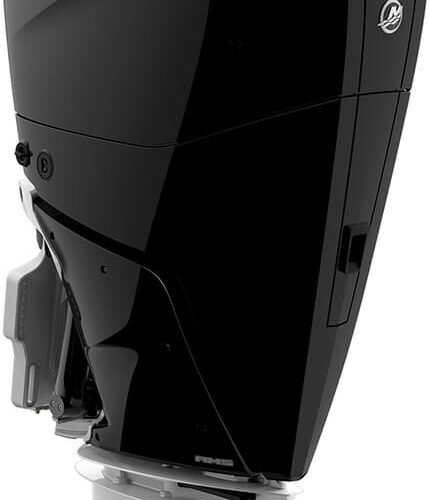
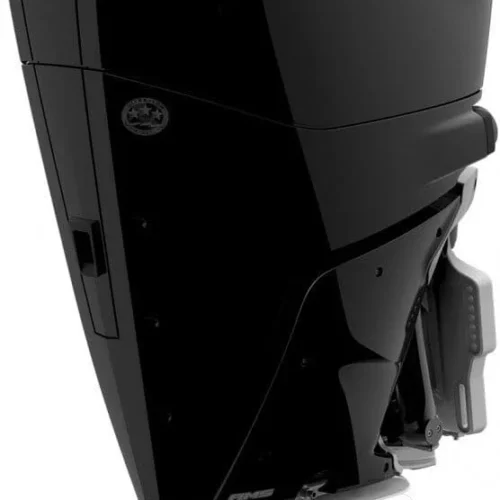
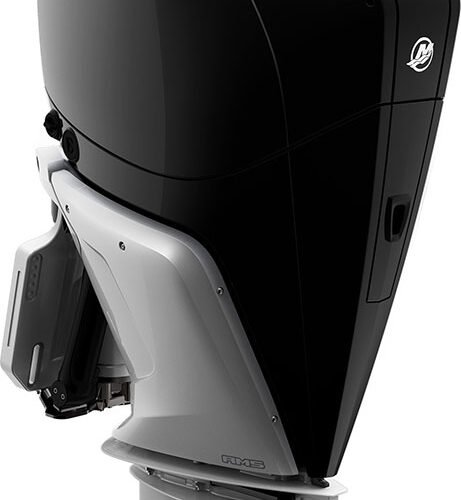
| Color | Phantom Black |
| Warranty | 3-year limited, 3-year corrosion |
| Condition | New, factory sealed, PDI completed |
Frequently Asked Questions
Is the Mercury 300 Pro XS the same engine as the 200 Pro XS?
Mechanically, yes. Both use the 4.6-liter 64-degree V8 with 32-valve dual overhead cams, the same 92 x 86 mm bore and stroke, the same 85 amp alternator, and the same 505 to 511 lb dry weight. Mercury changes the calibration to produce 100 more horsepower. The installation, rigging, and transom loading are identical.
What is the difference between the Mercury 300 Pro XS and the 300 Verado?
Both use the 4.6-liter V8. The Pro XS is tuned for acceleration and top speed with a performance-tuned exhaust and the TorqueMaster gearcase for high-speed semi-surfacing rigs. The Verado prioritizes quiet, refined operation for touring and cruising applications. Choose Pro XS for tournament fishing and performance hulls, and Verado for comfort over distance.
Can I run twin or triple Mercury 300 Pro XS engines?
Yes. The 300 Pro XS is used in twin and triple installations on larger offshore hulls, with counter-rotation available for the second engine to balance steering torque. Multi-engine rigs require matched calibration, correct propeller pairing, and appropriate control systems, so contact us with your hull details for a matched-set quote rather than ordering engines individually.
Does the Mercury 300 Pro XS require premium fuel?
No. Despite producing 300 horsepower, it runs on unleaded regular at 87 octane minimum (R+M/2) or 90 RON with up to 10 percent ethanol. Because it is naturally aspirated and reaches its output through 4.6 liters of displacement rather than forced induction, it does not carry the octane requirement a boosted engine would.
What is the TorqueMaster gearcase for?
TorqueMaster runs a 1.75:1 ratio through a 4.8-inch case with a 1.25-inch-diameter propeller shaft, built for semi-surfacing high-speed applications where the propeller runs partly clear of the water. That regime shock-loads a conventional shaft, which is why this one is thicker. It is the right gearcase for jack-plate and raised-mount performance rigs.