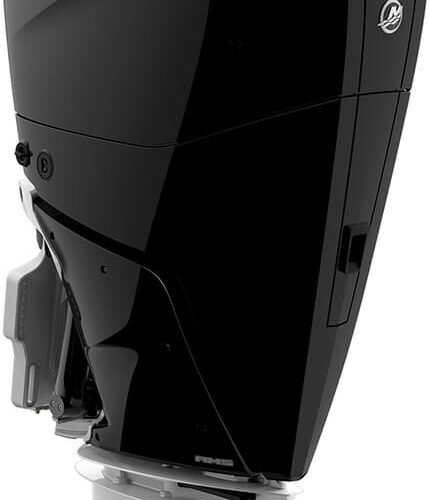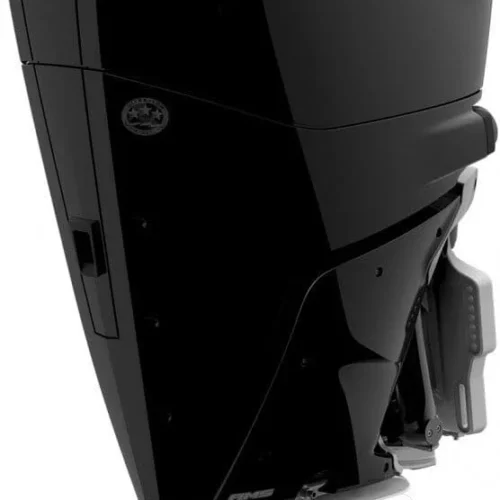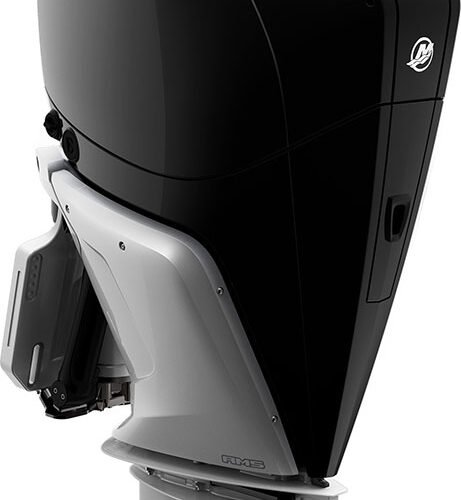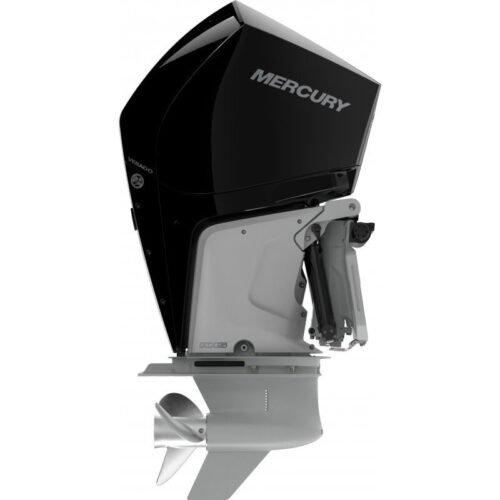

Description
Four Cylinders at 50 Horsepower
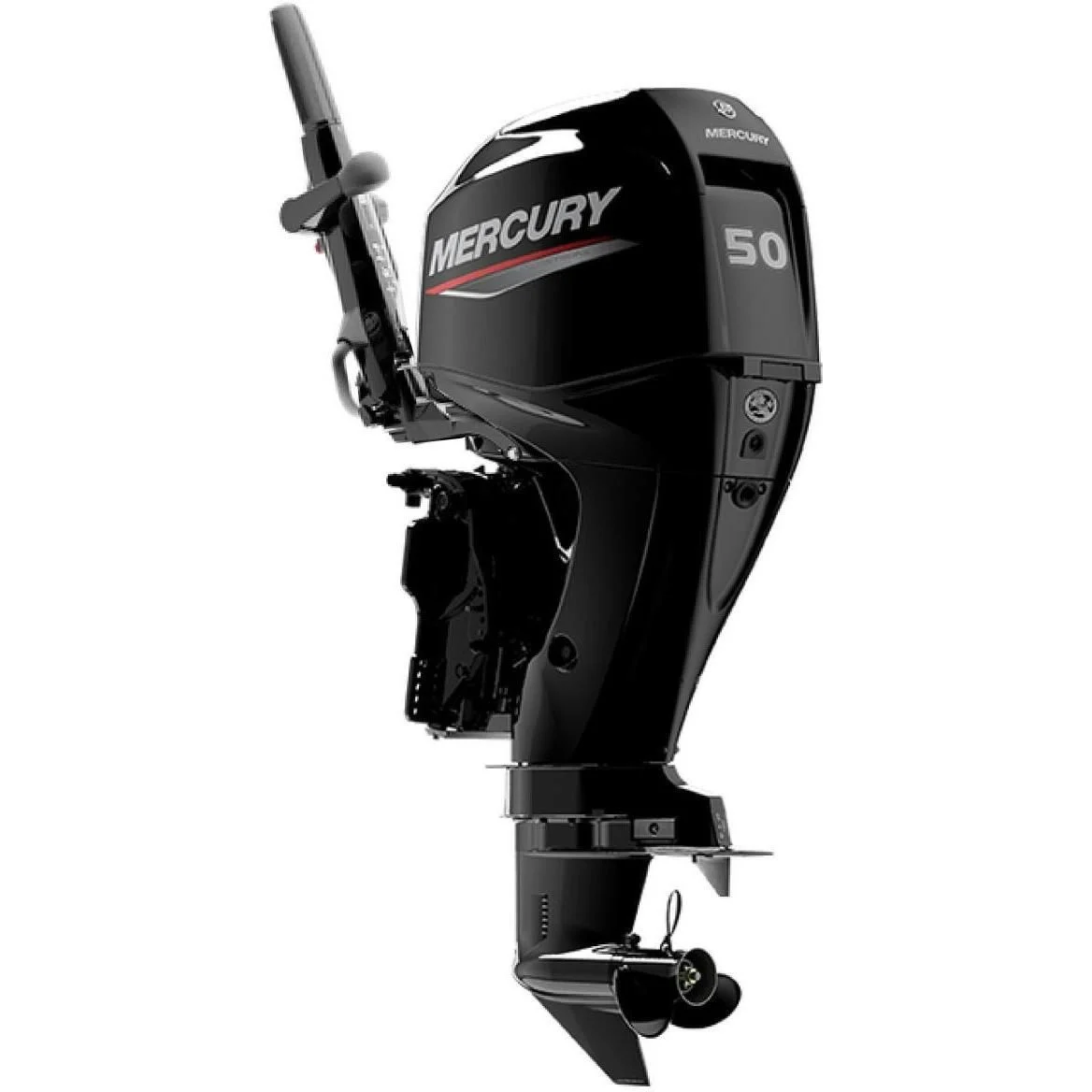
Most 50 HP outboards are three-cylinder engines. Mercury builds this one on a 995cc inline four, which is the same block that carries the 60 HP, and that decision shapes everything about how it behaves.
Four cylinders at this output means each cylinder works less. The engine is not straining for its rating, which affects two things you notice and one you do not. You notice smoothness because a four fires twice per revolution with inherently better balance than a three. You notice noise, or rather the absence of it, since an engine running well inside its capability is quieter than one at its limit. What you do not notice, until years later, is wear: an engine loafing at 70 percent of its comfortable output accumulates hours far more gently than one at 95 percent.
The bore and stroke are 65 x 75 mm, which is a long stroke. Stroke length is what produces torque. Mercury’s engineering choice across the 40 to 60 HP family is explicitly a compact single-overhead-cam design with a long piston stroke for low-end torque and acceleration under load, and that is exactly what it delivers. This engine is at its best pulling a heavy boat out of the hole, not chasing a top-speed number.
Electrical Capacity and Why It Matters Here
The 18 amp, 226-watt alternator is a genuine differentiator at this size. Fifty horsepower is where boats start carrying real electronics: a chart plotter, a sounder or side-imaging unit, a live well pump, a bilge pump, deck lighting, and navigation lights. Underpowered charging at this size means a start battery that dies on the third outing.
226 watts runs that load and charges at the same time. If you are rigging a fishing boat, this is a specification worth comparing across brands rather than assuming.
Electronic fuel injection gives turnkey starts, instant throttle response, and protection against poor-quality fuel. Ignition is ECM 07 digital inductive. The engine is SmartCraft compatible, so Mercury’s digital gauges give you live fuel burn, engine hours, trim position, and diagnostic codes.
Gearcase, Trim, and Configuration
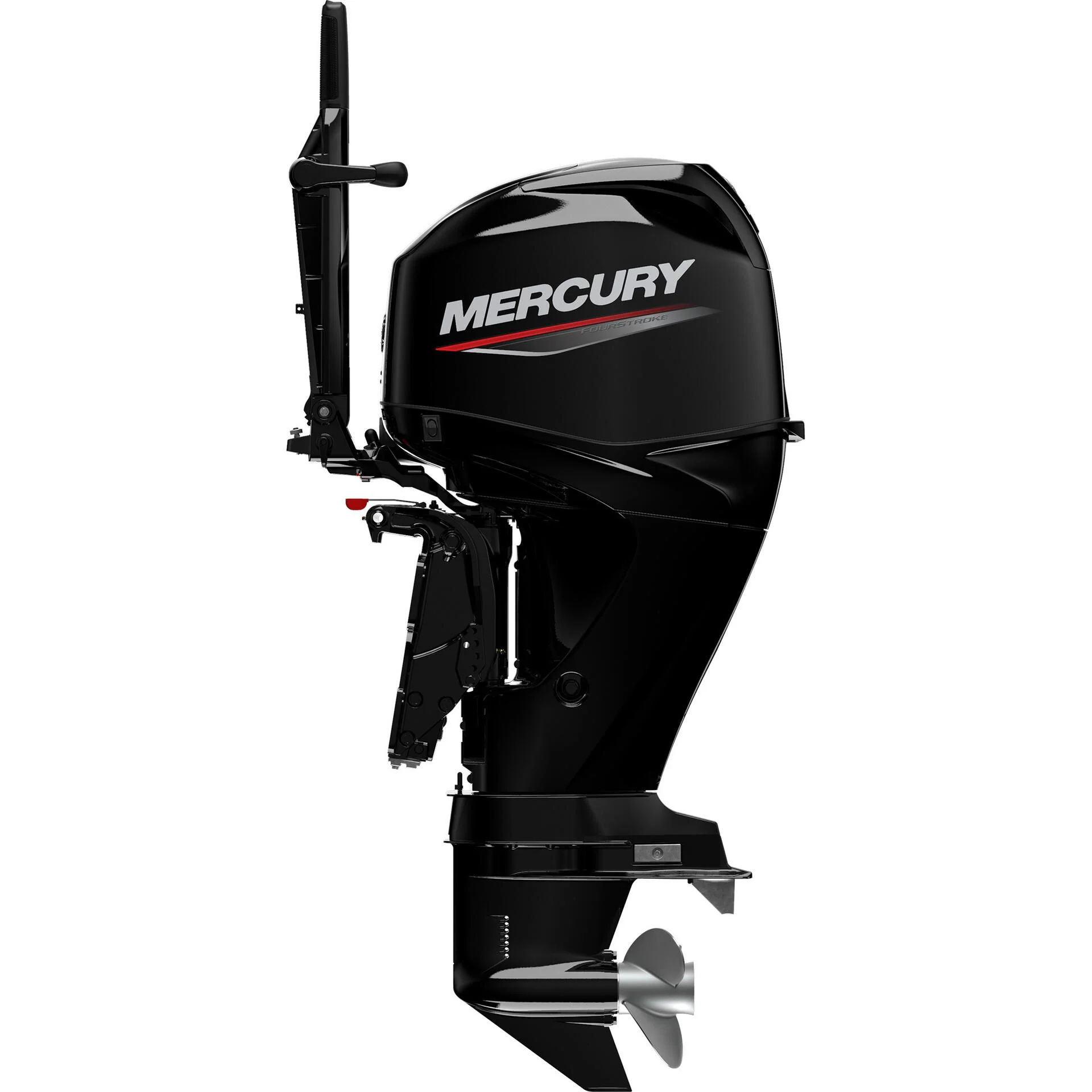
The gearcase decision covered at the top of this batch applies directly. The Command Thrust option runs a 2.33:1 ratio with 44 percent larger gears, sits deeper in the water, and turns a propeller with 20 percent more blade surface. Mercury also fits desmodromic shifting on this gearcase, which makes gear engagement noticeably smoother than a conventional dog clutch.
Standard gearcases suit lighter hulls where you want speed. Command Thrust suits heavy boats, loaded pontoons, and anything that currently struggles onto a plane. Order the right one: changing a gearcase afterwards is not a realistic retrofit.
Trim is power trim and tilt. Gear shift is forward, neutral, and reverse. Exhaust discharges through the propeller hub. Cooling runs through a thermostat. Starting is an electric turnkey. Steering is available as remote or with a Big Tiller kit, which is a heavy-duty tiller built for this power range rather than an upscaled small-engine part.
Fuel is 87 octane with up to 10 percent ethanol. Oil is Mercury FourStroke 25W40 Marine, which is a heavier grade than the 10W-30 used in the smaller engines and reflects the higher sustained loads this block carries.
What It Suits
Aluminum console and tiller boats from roughly 17 to 20 feet, fiberglass runabouts, pontoons, larger RIBs, and small center consoles. As a repower, it directly replaces aging 50- to 70 HP two-stroke engines, with a large improvement in fuel consumption and noise for a straightforward transom swap.
Every Mercury 50 HP outboard we ship is new, factory sealed, and pre-delivery inspected before crating. Compare across the Potent Power range and the Mercury outboard motors hub. For hull matching, see our pontoon boats and rigid-hull inflatables. Cross-brand, see the Yamaha midrange series. For gearcase advice on your specific hull, request a quote with your boat details and typical load.
Mercury 50 HP FourStroke EFI: Full Factory Specifications
| Feature / Specification | Technical Detail / Value |
|---|---|
| Horsepower | 50 HP / 37 kW |
| Engine type | Inline 4-cylinder, four-stroke |
| Displacement | 995 cc / 60.8 CID |
| Bore and stroke | 65 x 75 mm / 2.56 x 2.95 in |
| Full-throttle RPM range | 5500 to 6000 rpm |
| Fuel induction | 2 valves per cylinder, single overhead cam (SOHC) |
| Fuel system | Electronic fuel injection (EFI) |
| Recommended fuel | 87 octane, up to 10% ethanol (91 RON minimum) |
| Recommended oil | Mercury FourStroke 25W40 Marine |
| Ignition | ECM 07 Digital Inductive |
| Cooling system | Water-cooled with thermostat |
| Alternator | 18 amp / 226 W |
| Starting | Electric (turn-key) |
| Steering | Remote, or Big Tiller kit compatible |
| Gear shift | Forward, Neutral, Reverse, and desmodromic on Command Thrust |
| Gearcase options | Standard (1.83:1) or Command Thrust (2.33:1) |
| Shaft lengths | 20 in / 508 mm |
| Trim system | Power trim and tilt |
| Exhaust system | Through the propeller |
| SmartCraft compatible | Yes. |
| Dry weight | Approx. 260 lb / 118 kg (Command Thrust configuration) |
| Emissions star rating | 3 stars |
| Color | Phantom Black |
| Saltwater rated | Yes. |
| Condition | New, factory sealed, PDI completed |
Frequently Asked Questions
Is the Mercury 50 HP a three-cylinder or four-cylinder engine?
Four-cylinder. Mercury builds the 50 HP on a 995cc inline four, the same block used in the 40 HP four-cylinder and the 60 HP. Most competing 50 HP outboards use three cylinders. The four runs are smoother, quieter, and well inside its capability, which means it accumulates wear more slowly than a smaller engine working at the same output.
Should I order the standard or Command Thrust gearcase on the Mercury 50 HP?
Order Command Thrust if your boat is heavy, if you run loaded, or if you currently struggle to get on plane. It uses a 2.33:1 ratio with 44 percent larger gears, sits deeper in the water, and turns a propeller with 20 percent more blade surface. Order the standard 1.83:1 gearcase for lighter hulls where top speed matters more. Command Thrust does not reduce top speed; it improves planing.
How much electrical output does the Mercury 50 HP produce?
The alternator produces 18 amps at 226 watts. That is enough to run a chart plotter, a sounder, a live well pump, a bilge pump, and navigation lights simultaneously while still charging the start battery. Charging capacity is worth comparing across brands at this size, because 50 HP is where boats start carrying electronics loads that underpowered alternators cannot sustain.
What oil does the Mercury 50 HP use?
Mercury FourStroke 25W40 Marine oil. That is a heavier grade than the 10W-30 specified for Mercury’s smaller portable outboards, reflecting the higher sustained loads the 995cc block carries. Using the lighter grade in this engine is not a substitution you should make.
What size boat does a 50 hp outboard motor suit?
A 50 hp outboard motor suits aluminum console and tiller boats from roughly 17 to 20 feet, fiberglass runabouts, pontoons, larger RIBs, and small center consoles. It is also a common repower for aging 50- to 70 HP two-stroke engines, where the fuel consumption and noise improvement is substantial for a straightforward transom swap.