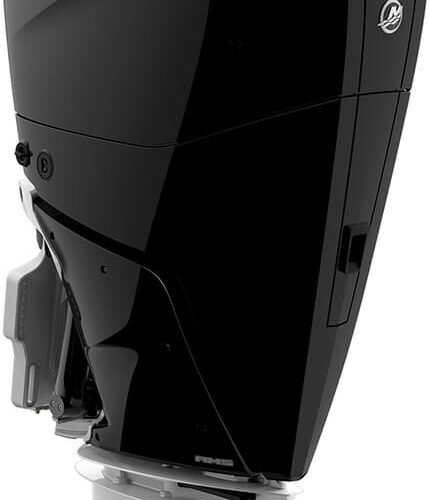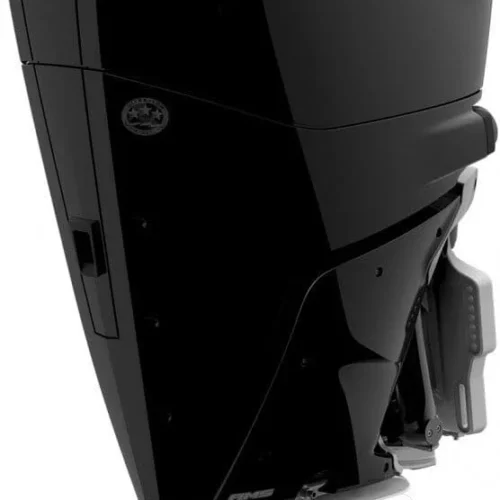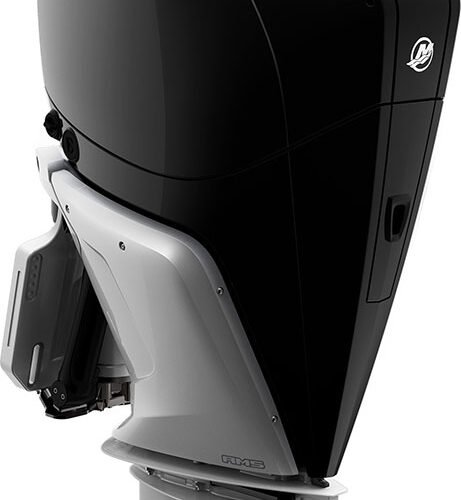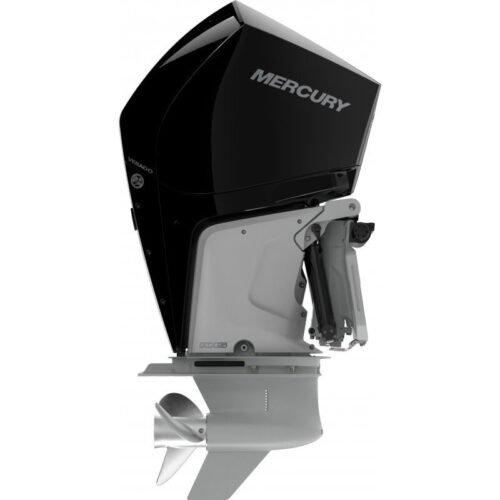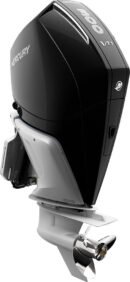
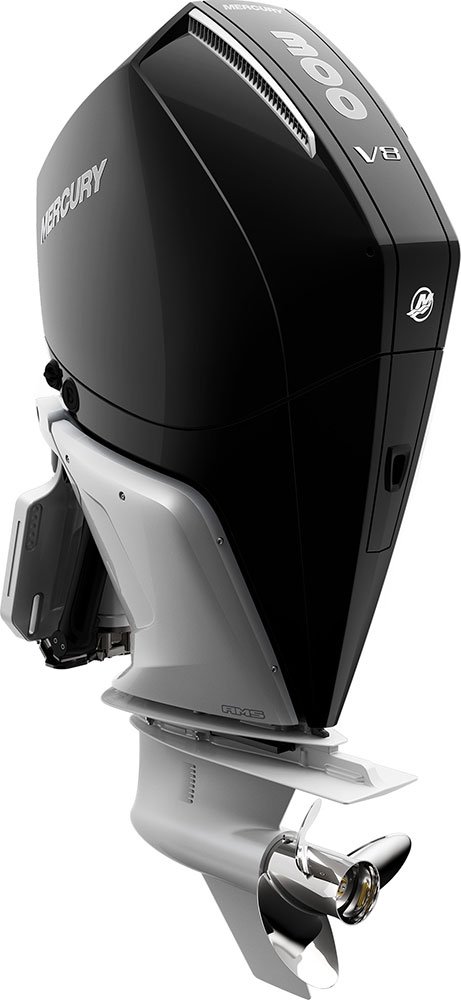
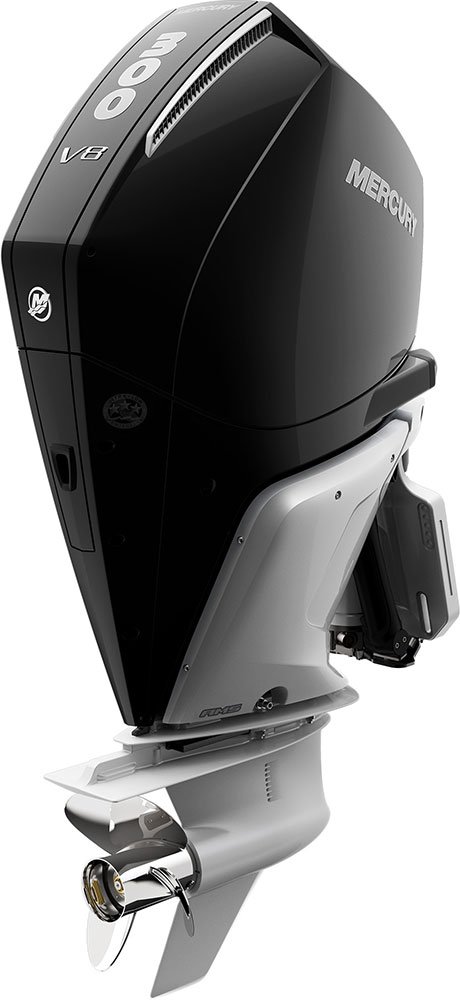
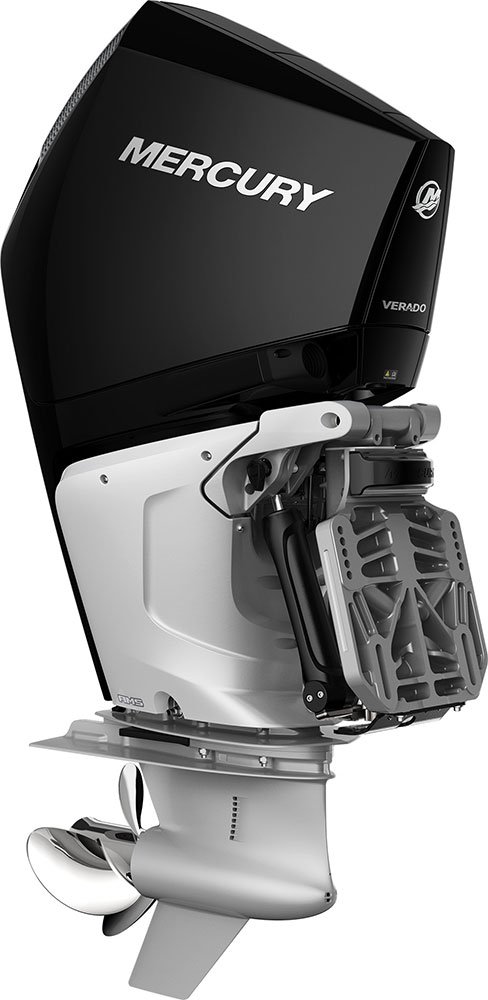
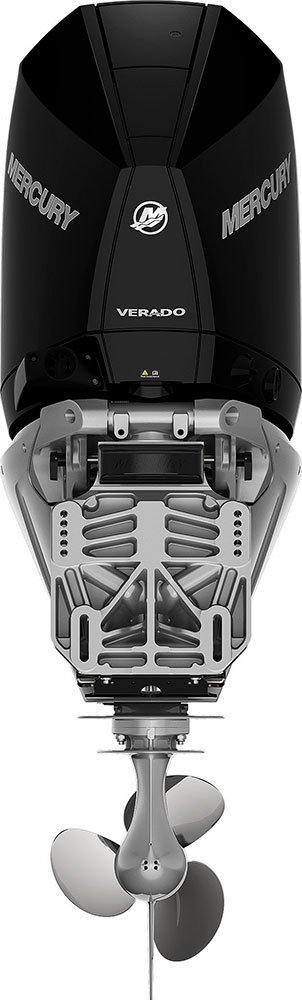
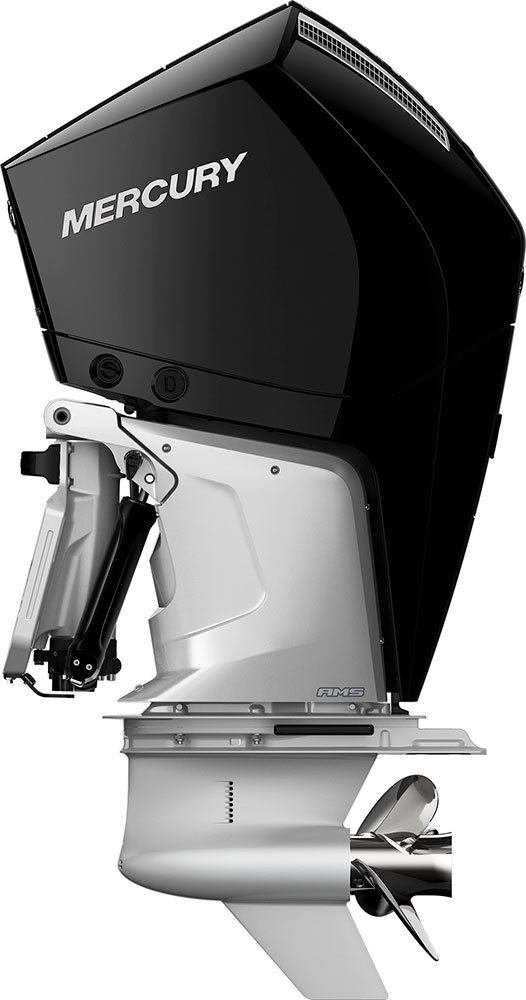
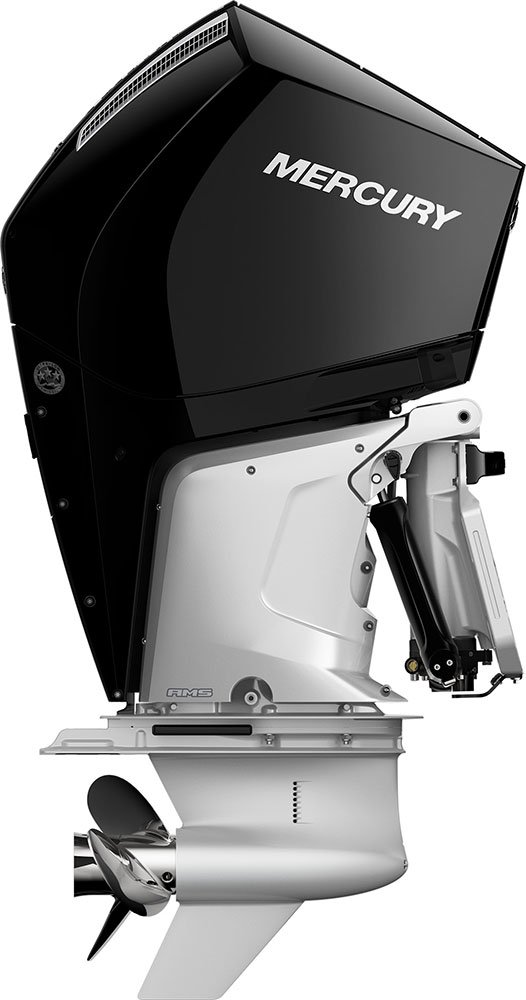

Description
The Displacement Argument, Measured
Mercury makes a specific and checkable claim about the 300 HP Verado: its 4.6-liter displacement produces 12 to 15 percent more torque than the leading competitor’s 300 HP at cruising speed, averaged across the 3,500 to 4,500 rpm band.
That band is where a cruising boat lives. You accelerate onto the plane, you settle at a cruise rpm, and you stay there. Peak horsepower at 6,000 rpm describes a condition you occupy for seconds. Mid-range torque describes the condition you occupy for hours.
More mid-range torque means the boat can hold plane at a lower rpm with the same load. Lower rpm at the same speed means less fuel burned and less noise. In the long run with a family aboard, both of those compound.
The powerhead is the same 64-degree V8 with dual overhead cams and 32 valves as the Verado 250, running a 92 x 86 mm bore and stroke through a performance-tuned long-runner intake manifold. It is naturally aspirated, with no supercharger, no intercooler, and no belt.
Gearcase Choice on the 300
The Verado 300 offers 1.85:1 or 1.75:1, whereas the 250 is 1.85:1 only.
The 1.85:1 is the default and suits most cruising applications: it multiplies torque for planing heavier hulls and holding them there.
The 1.75:1 is the taller ratio, spinning the propeller faster relative to the engine. It suits lighter, more efficient hulls where you want speed and the boat does not need help getting on plane. If you are rigging a fast express cruiser or a light performance hull and still want Verado refinement, this setup is the combination that gets you both.
Discuss the choice against your hull weight before ordering. A taller ratio on a heavy boat produces a hull that struggles onto a plane, which is the opposite of what a Verado buyer wants.
Verado Against Pro XS at 300 Horsepower
The same choice as at 250 HP applies here, and it is worth restating because at 300 HP both engines are genuinely capable and the decision is about use rather than capability.
The Pro XS 300 weighs 505 lb, runs 5,600 to 6,200 rpm, carries a 4.8-inch TorqueMaster gearcase with a 1.25-inch prop shaft for semi-surfacing rigs, and has a performance-tuned exhaust. It is faster and lighter.
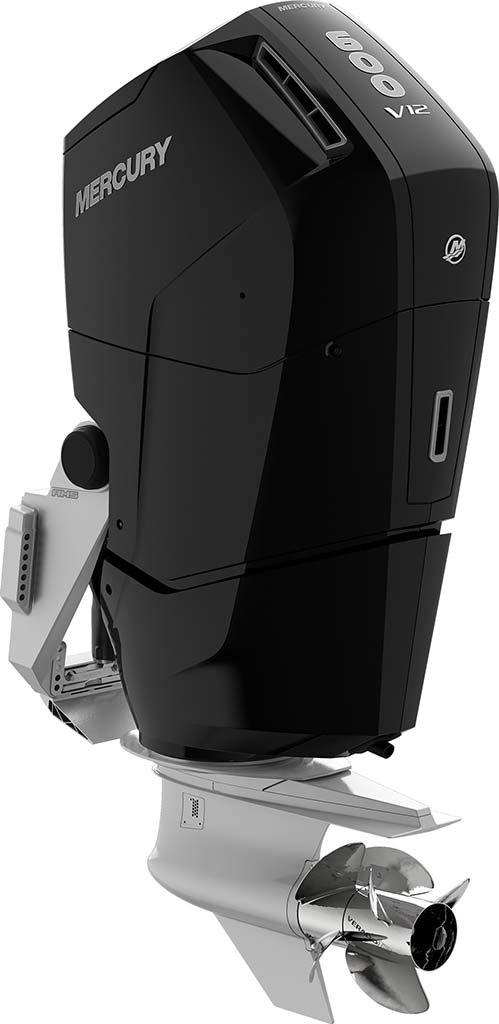
The Verado 300 weighs 600 lb, runs 5,200 to 6,000 rpm, carries a 5.44-inch gearcase, has an 115-amp alternator, has electro-hydraulic power steering as standard, and has noise-reduced through-prop exhaust. It is quieter and better equipped for a boat carrying people rather than rods.
The 95 lb difference is real and worth checking against your transom rating. Beyond that, the honest question is whether you are chasing a number or chasing comfort.
Electrical, Steering, and Technology
The 115 amp, 1,449 watt alternator with idle charge supports the heavy electrical load a cruising boat carries and protects against battery drain at anchor or idle. Electro-hydraulic power steering is standard.
Adaptive speed control holds a target rpm through load and sea state changes without throttle input. Transient Spark boosts torque by up to 7 percent during hole shot. Advanced range optimization leans the mixture at cruise to maximize range.
Ignition is SmartCraft PCM 112. Starting is electric with SmartStart protection. Trim is power trim and tilt. Exhaust runs through the propeller with noise reduction. Fuel is unleaded regular, with a minimum of 87 octane.
What It Suits
Express cruisers, cruising center consoles, walkarounds, larger pontoons, family boats, and sport cruisers from roughly 26 to 34 feet as a single or in twins. It is also a common repower option for boats that previously had supercharged Verado L6 engines, as the naturally aspirated V8 reduces maintenance while producing more torque.
Every Mercury Verado 300 we ship is new, factory sealed, and pre-delivery inspected before crating. You can compare this engine against the Mercury Pro XS 300, step up to the V10 Verado 350 or 400, or browse the Mercury outboard motors hub. For hull matching, see our pontoon boats. For gearcase advice and twin-engine quotes, send us your hull details.
Mercury Verado 300 HP: Full Factory Specifications
| Feature / Specification | Technical Detail / Value |
|---|---|
| Horsepower | 300 HP / 224 kW at the propshaft |
| Engine type | V8, 64 degrees, dual overhead cam (DOHC), 32 valves |
| Displacement | 4.6 L / 279 CID |
| Bore and stroke | 92 x 86 mm / 3.6 x 3.4 in |
| Full-throttle RPM range | 5200 to 6000 rpm |
| Induction | Naturally aspirated, performance-tuned long-runner intake manifold |
| Fuel system | Computer-controlled EFI with Advanced Range Optimization |
| Torque technology | Transient Spark, up to 7% torque gain during hole shot |
| Speed control | Adaptive Speed Control |
| Recommended fuel | Unleaded regular, 87 octane minimum |
| Ignition | SmartCraft PCM 112 Digital Inductive |
| Cooling system | Water-cooled with thermostat |
| Alternator | 115 amp / 1,449 W with Idle Charge |
| Starting | Electric with SmartStart protection |
| Steering | Electro-hydraulic power steering, standard |
| Gear shift | Forward, Neutral, Reverse |
| Gearcase ratio | 1.85:1 or 1.75:1 |
| Gearcase size | 5.44 in |
| Exhaust system | Through propeller, noise-reduced |
| Trim system | Power trim and tilt |
| SmartCraft compatible | Yes. |
| Dry weight | 600 lb / 272 kg |
| Color | Phantom Black |
| Condition | New, factory sealed, PDI completed |
Frequently Asked Questions
Is the Mercury Verado 300 better than the Pro XS 300?
Neither is better; they answer different questions. Both use the same 4.6-liter V8 block. The Verado weighs 600 lb and prioritizes quiet, refined cruising with electro-hydraulic power steering, a 115 amp alternator, and a noise-reduced exhaust. The Pro XS weighs 505 lb and prioritizes acceleration and top speed. Choose based on what you do with the boat, not on which sounds more impressive.
How much more torque does the Verado 300 produce than competitors?
Mercury’s comparison puts the 4.6-liter V8 Verado at 12 to 15 percent more mid-range torque than the leading competitor’s 300 HP, averaged across 3,500 to 4,500 rpm. That band matters because it is where a cruising boat spends most of its running time. More torque there means holding the plane at a lower rpm, which means less fuel and less noise.
Which gearcase ratio should I order on the Verado 300?
The 1.85:1 is the default and suits most cruising hulls, multiplying torque to plane heavier boats and hold them there. The 1.75:1 gearcase ratio is taller and better suited for lighter, more efficient hulls that prioritize speed and do not require assistance with planing. On a heavy boat, the taller ratio produces a hull that struggles to get onto the plane, so match it to your hull weight.
Is the Mercury Verado 300 supercharged?
No. Current 4.6-liter V8 Verado engines are naturally aspirated. Earlier Verado generations, including the L6, used forced induction. Mercury now reaches the output through displacement, which removes the supercharger, intercooler, and drive belt along with their maintenance requirements.
Can the Verado 300 replace a supercharged Verado L6?
Yes, and it is a common repower. The naturally aspirated 4.6-liter V8 produces more torque than the supercharged L6 it replaces while removing the supercharger and intercooler maintenance entirely. Confirm your transom weight rating and rigging compatibility before ordering, since the mounting and control systems may differ.