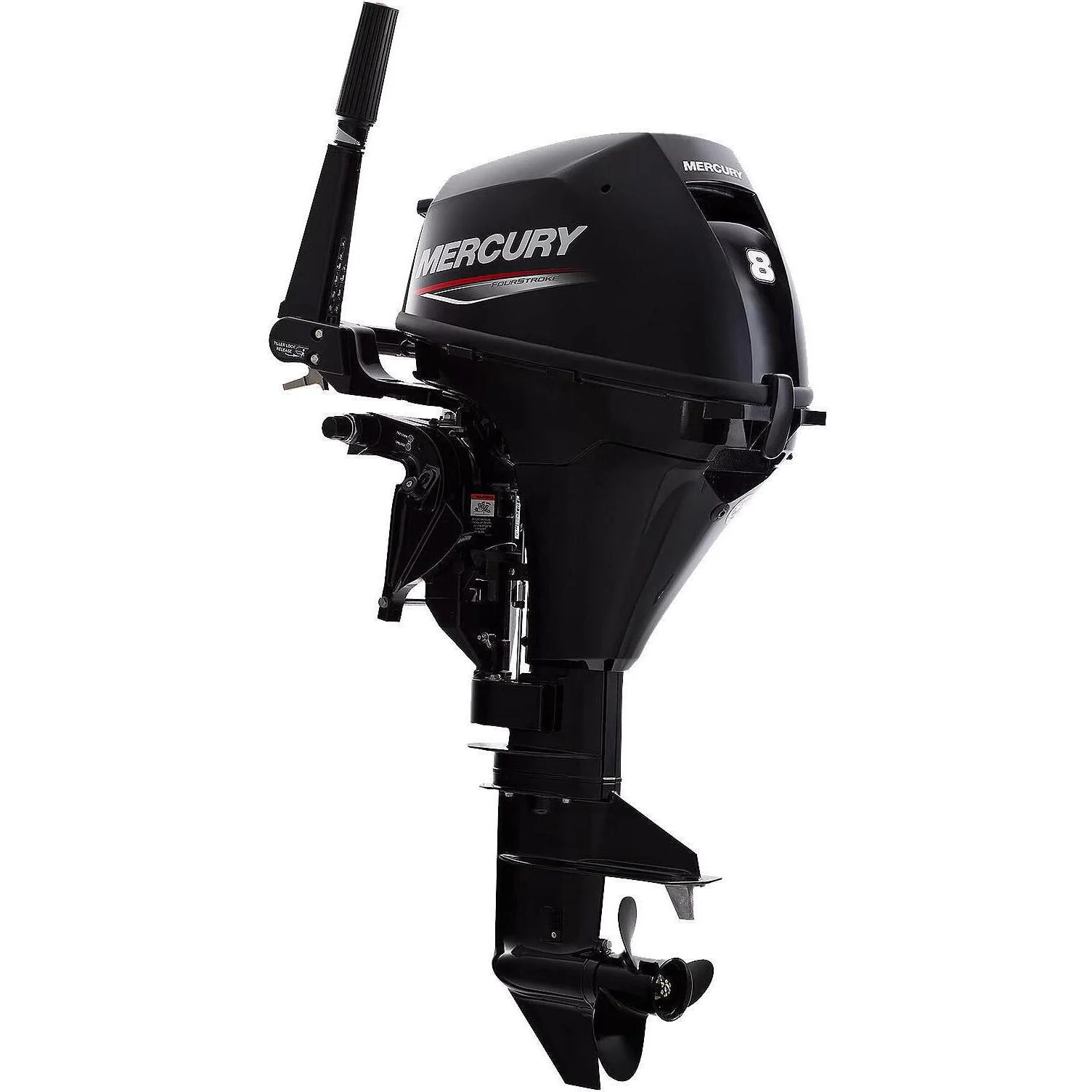
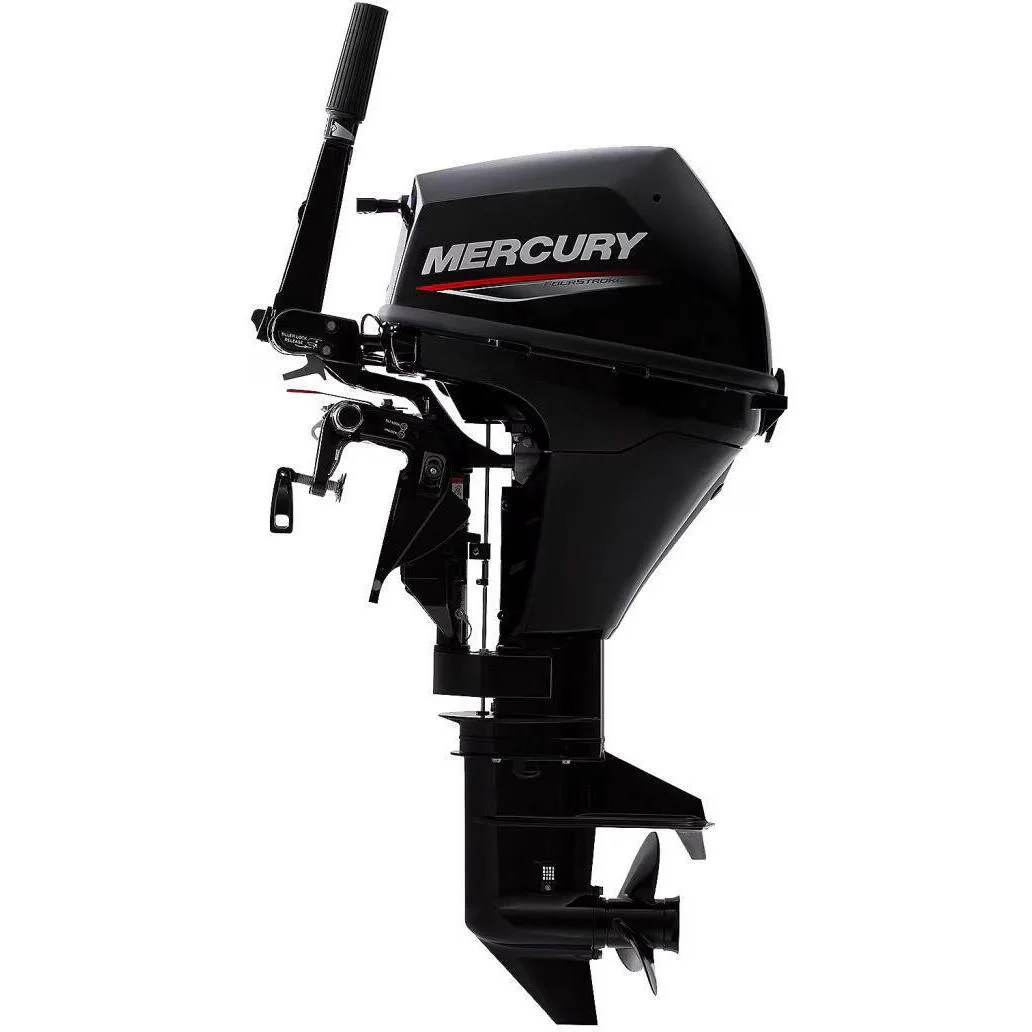

Description
Why the 8 HP Costs Twice What the 6 HP Costs
This inquiry is the first question every buyer asks, so it belongs at the top. The 6 HP retails at $1,659.99 and the 8 HP at $2,989.99. Two extra horsepower does not explain a doubling. What explains this is that Mercury replaces the entire engine.
The 123 cc single cylinder gives way to a 209 cc inline twin with a 55 x 44 mm bore and stroke. Two cylinders firing alternately means the power delivery is fundamentally smoother. A single-cylinder outboard transmits a pulse through the tiller arm on every combustion event, which is tolerable for twenty minutes and tiring after two hours. A twin half that. Anyone who trolls, runs long distances, or simply values their hands at the end of a day will notice the difference within the first outing.
Fuelling moves from a carburettor to electronic fuel injection. That removes the choke, removes the cold-start ritual, and removes the single most common failure mode on seasonally used small outboards: a varnished float bowl after a layup. EFI also compensates automatically for altitude and temperature, so the engine that runs correctly at sea level also runs correctly on a lake at elevation without rejetting.
Lubrication moves from splash to a trochoid pump wet sump system, with genuine oil pressure and a low oil pressure alert. A 12-volt, 76-watt, 6-amp alternator appears, which is enough to run navigation lights and keep a starting battery topped up rather than merely trickling it.
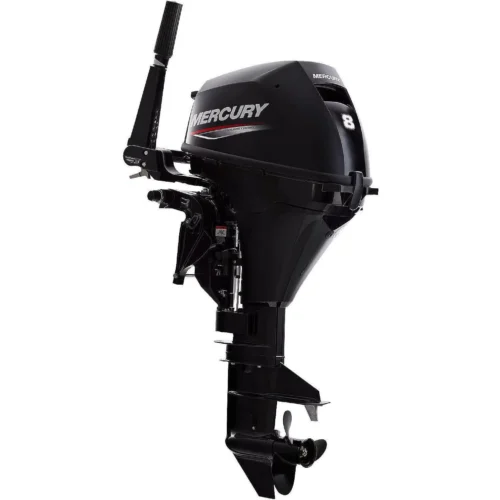
The gearcase moves to a 2.08:1 ratio, and the shift lever moves into the tiller handle itself. The multi-function tiller allows one-handed operation of forward-neutral-reverse, throttle, throttle tension, steering, and the stop switch. On a small boat where your other hand is holding a rod, a line, or a passenger, that matters.
Trim, Handling, and Real Weight
Trim is Mercury’s auto-ratchet system across five positions with a shallow water drive setting. The ratchet holds the leg angle without a manual pin, so adjusting trim under way is a single movement rather than a stop-and-set procedure. Full tilt is available for beaching or trailering.
Exhaust discharges through the propeller hub. The standard propeller is an 8.5-inch-diameter by 7.5-inch-pitch three-blade aluminum unit, and unlike the composite props on the smaller engines, this one can be repaired rather than replaced if you find a rock.
Dry weight is 84 lb (38 kg). That is 27 lb above the 6 HP, and it changes how you handle the engine. Mercury fits an ergonomic carry handle, which helps, but 84 lb is a deliberate two-person lift for most people or a one-person lift with a proper technique and a short distance. If your workflow involves removing the engine from the transom after every outing and carrying it to a car, be honest about whether you want this weight in your life. If the engine lives on the boat, the weight is irrelevant, and everything the twin gives you is pure gain.
Shaft options are 15-inch and 20-inch, with manual and electric start available. Saltwater rated from the factory with sacrificial zinc anodes, a trim tab anode, a stainless steel water pump housing, and zinc-coated water passages. Cooling runs through a thermostat.
Who the 8 HP Is Actually For
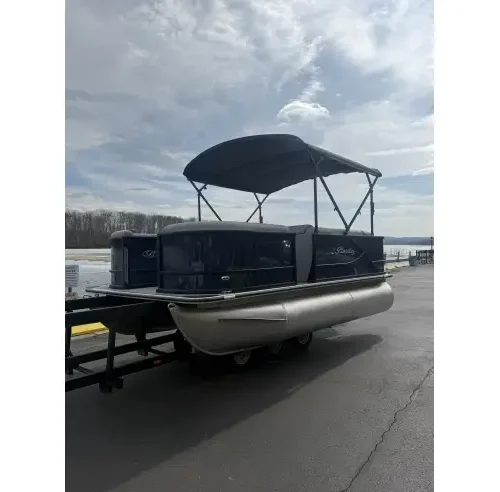
It is also suitable for long shaft jon boats, skiffs, small pontoons, sailboats used as auxiliary power on larger displacement hulls, and for trolling or kicker applications alongside a main engine. It is also the right answer for anyone running a tender on a larger yacht who wants to get to shore quickly rather than eventually.
Where it is the wrong answer: if you are within a regulatory or insurance band capped at 9.9 HP, buy the 9.9 HP instead. The 8 HP and 9.9 HP share the same 209 cc block, the same 84 lb dry weight, and the same gearcase. You are paying $409 more for the 9.9 and receiving roughly 24 percent more power at zero weight penalty. Unless your local rules cap you at 8 HP specifically, the 9.9 is the better buy, and the math is not close.
Every Mercury 8 HP outboard we ship is new, factory sealed, and pre-delivery inspected before crating. Compare the whole Cool Compacts range before deciding. For hull matching, see our inflatable boats and tenders and the rigid-hull inflatables. The direct cross-brand comparison in stock is the Yamaha F8 portable outboard.
Mercury 8 HP FourStroke: Full Factory Specifications
| Feature / Specification | Technical Detail / Value |
|---|---|
| Models | 8MH (15″), 8MLH (20″), 8ELH (20″ electric start) |
| Horsepower | 8 HP / 5.9 kW |
| Engine type | Inline 2-cylinder, four-stroke |
| Displacement | 209 cc / 12.8 CID |
| Bore and stroke | 55 x 44 mm / 2.16 x 1.73 in |
| Full-throttle RPM range | 5000 to 6000 rpm |
| Fuel induction | 2 valves per cylinder, single overhead cam (SOHC) |
| Fuel system | Electronic fuel injection (EFI) |
| Recommended fuel | 87 octane, up to 10% ethanol |
| Recommended oil | Mercury FourStroke 10W-30 |
| Lubrication | Trochoid pump, wet sump |
| Oil capacity | 1.1 L / 0.29 gal |
| Ignition | CDI with electronic spark advance |
| Cooling system | Water-cooled with thermostat |
| Alternator | 12V, 76 W, 6 amp |
| Starting | Manual or electric |
| Steering | Multi-function tiller |
| Gear shift | Forward, Neutral, Reverse (shift in tiller handle) |
| Gearcase ratio | 2.08:1 |
| Standard propeller | 8.5 in diameter x 7.5 in pitch, 3-blade aluminum |
| Shaft lengths | 15 in / 381 mm, 20 in / 508 mm |
| Trim system | Auto-ratchet, 5 positions, full tilt |
| Shallow water drive | Yes. |
| Exhaust system | Through the propeller |
| Remote fuel tank | 3.2 gal / 12 L, standard |
| Dry weight | 84 lb / 38 kg |
| Engine protection | Low oil pressure alert, temperature alert, rev limiter |
| CARB star rating | 3 stars |
| Colour | Phantom Black |
| Saltwater rated | Yes, zinc anodes and coated water passages |
| Condition | New, factory sealed, PDI completed |
Frequently Asked Questions
Why does the Mercury 8 HP cost so much more than the 6 HP?
The 8 HP is an entirely different engine, not a tuned-up 6 HP. It replaces the 123cc single cylinder with a 209cc inline twin, swaps the carburettor for electronic fuel injection, adds a 12-volt 76-watt alternator, moves from splash lubrication to a trochoid pump wet sump with oil pressure monitoring, and builds the gear shift into the tiller handle. The price reflects a class change rather than two extra horsepower.
Should I buy the Mercury 8 HP or the 9.9 HP?
Buy the 9.9 HP unless a regulation or insurance band caps you at 8 HP. The two engines share the same 209 cc twin block, the same 84 lb dry weight, the same 2.08:1 gearcase, and the same tiller. The 9.9 HP delivers roughly 24 percent more power for no weight penalty at a modest price difference. The 8 HP only makes sense if 8 HP is a strict limit.
Does the Mercury 8 HP outboard have fuel injection?
Yes. Current Mercury 8 HP FourStroke models use electronic fuel injection rather than a carburetor. EFI removes the choke and the cold-start procedure, compensates automatically for altitude and air temperature, and eliminates the varnished float bowl problem that affects carbureted outboards left standing over a season.
How heavy is the Mercury 8 HP outboard motor?
The Mercury 8 HP has a dry weight of 84 lb (38 kg), which is 27 lb more than the 6 HP. Mercury fits an ergonomic carry handle, but this is realistically a two-person lift or a short-distance one-person lift with proper technique. If the engine stays mounted on the boat, the weight is irrelevant. If you remove it after every outing, weigh that against the twin-cylinder smoothness you gain.
What boats suit an 8 hp outboard motor?
An 8 hp outboard motor suits long shaft jon boats, skiffs, small pontoons, larger inflatable tenders, and displacement sailboats needing auxiliary power. It also works well as a trolling or kicker engine alongside a larger main outboard, where the twin-cylinder smoothness and the multi-function tiller make long low-speed runs comfortable.