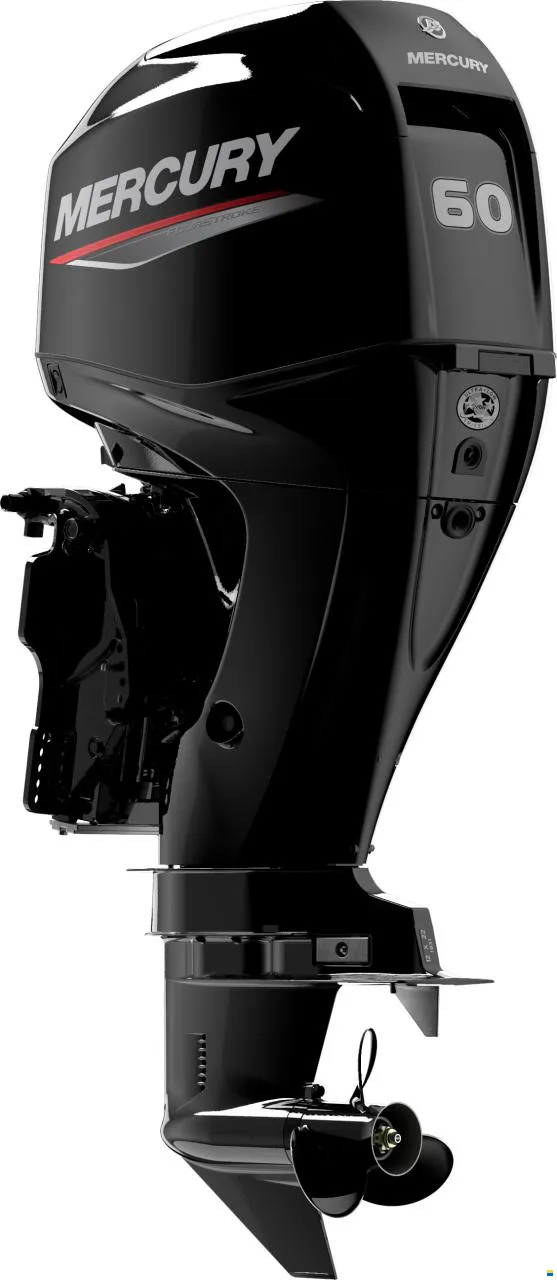
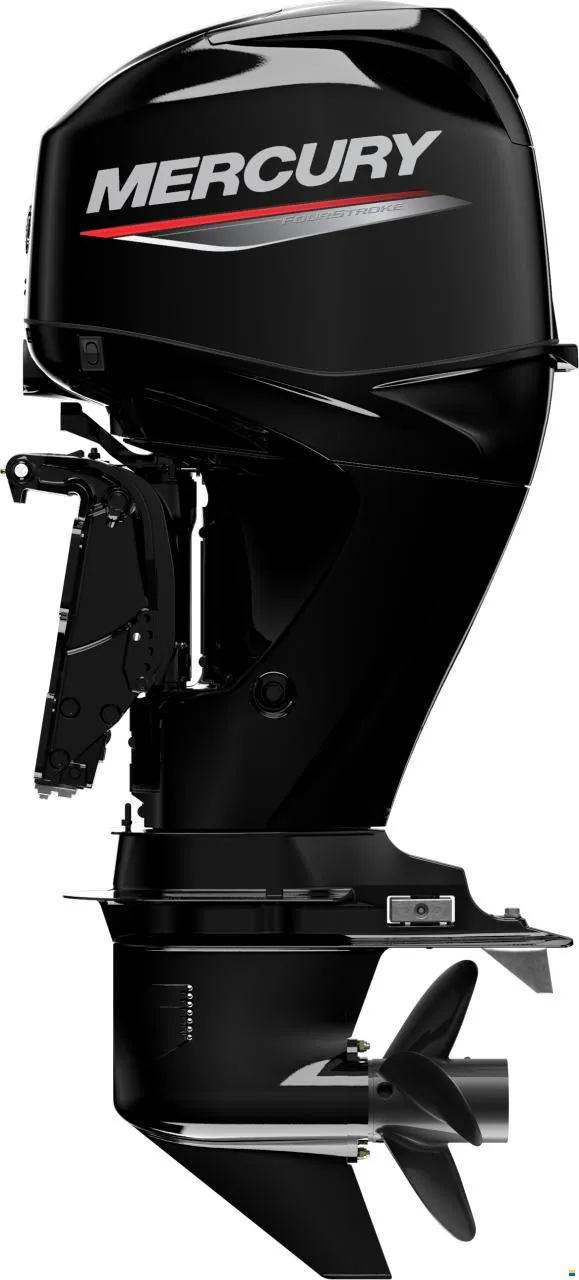

Description
The Most Configurable Engine in the Range
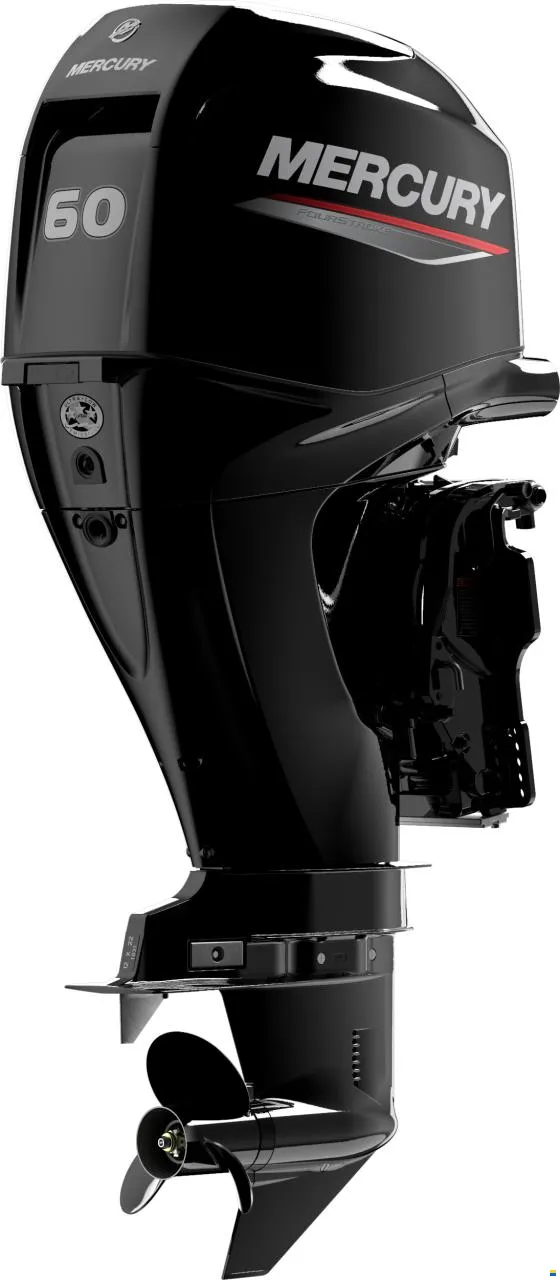
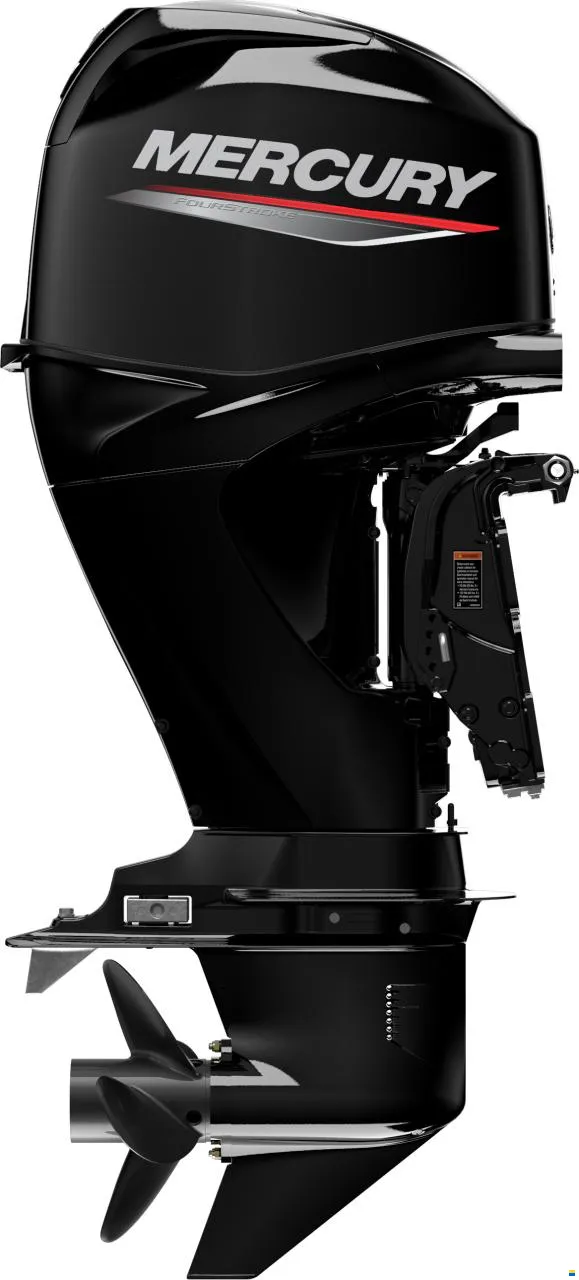
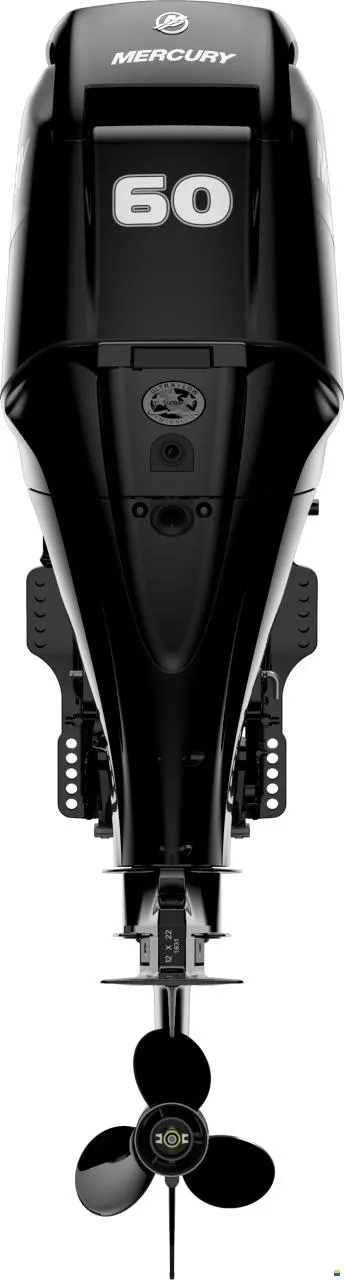
The 60 HP is the same 995cc inline four as the 50 HP, tuned higher and offered in more variations than anything else in this catalog. You can order it with:
- 20-inch-long or 25-inch extra-long shaft
- Remote control or tiller steering
- Standard or Command Thrust gearcase
- 1.83:1 or 2.33:1 gear ratio, following from the gearcase choice
- Dry weight between 252 and 284 lb depending on how you combine the above
That 32 lb spread is worth pausing on. The lightest and heaviest configurations use the same engine, but which one is right depends entirely on your boat. Nobody can specify this engine correctly without knowing the hull.
Command Thrust on the 60 HP Specifically
Mercury makes an unusually direct claim about this engine: that the 60 HP Command Thrust matches the acceleration and fuel efficiency of a competitor’s more expensive 70 HP outboard. That is a strong statement, and it rests on how the gearcase works.
The Command Thrust gearcase runs 2.33:1 with 44 percent larger gears. It sits deeper in the water and swings a propeller with 20 percent more blade surface. Desmodromic shifting makes gear engagement smoother than a conventional arrangement. The combination means that on a heavy hull, the boat comes onto plane at a lower engine speed and holds it there.
The reason this feature matters more than raw horsepower is that most boats are not speed-limited; they are planing-limited. A boat that will not plane runs bow-high, burns fuel, and handles poorly. A boat that planes easily at 3,500 rpm is faster in practice and cheaper to run than a boat that needs 4,800 rpm to get over the hump, even if the second one has a higher theoretical top speed. Command Thrust attacks that problem directly.
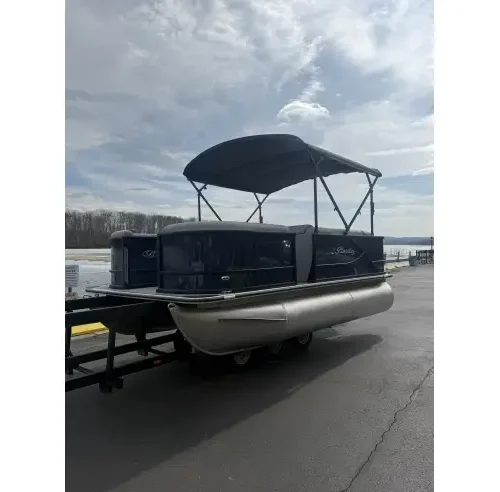
If your boat is a pontoon, a loaded aluminum hull, a workboat, or anything carrying passengers regularly, order Command Thrust. If it is a light runabout and you want top speed, order the standard 1.83:1 gearcase and save the weight.
Intake, Torque, and Long-Stroke Design
The 995cc block uses a 65 x 75 mm bore and stroke: long stroke, two valves per cylinder, and a single overhead cam. Mercury fits a performance-tuned scroll intake manifold, which shapes the intake charge to favor torque across the usable rev range rather than peak horsepower at the ceiling.
The design intent across the 40 to 60 HP family is explicit: a compact SOHC layout with a long piston stroke giving low-end torque for acceleration under load. At 60 HP on this displacement, the engine is working comfortably rather than straining, which is why it can sustain load all day without the wear that a smaller, harder-working engine would accumulate.
The operating range is 5500 to 6000 rpm on 87 octane with up to 10 percent ethanol. Oil is Mercury FourStroke 25W40 Marine oil. Ignition is ECM 07 digital inductive with EFI providing turnkey starting, instant throttle response, and tolerance of poor fuel quality.
Electrical, Trim, and Steering
The 18 amp, 226-watt alternator is standard. At 60 HP, boats typically carry a full electronics package, and this capacity supports it while charging.
Power trim and tilt are standard rather than optional, which is not the case for every engine of this size. Exhaust runs through the propeller hub. Cooling is thermostatically controlled. Starting is an electric turnkey. SmartCraft compatibility gives live fuel burn, engine hours, trim position, and diagnostic codes on Mercury digital gauges.
Steering is remote control or Big Tiller compatible. At 60 HP, most installations are remote, but the Big Tiller kit is available for tiller-steered aluminum boats, and it is a purpose-built heavy-duty unit rather than a scaled-up small-engine part.
What It Will Move
Pontoons, aluminum consoles and deck boats from roughly 18 to 21 feet, fiberglass runabouts, larger RIBs, small center consoles, and work boats. The 25-inch shaft option extends it to hulls with deeper transoms and to twin-engine bracket installations.
As a repower, it replaces 60- to 90 HP two-stroke engines, and this is where the Command Thrust argument becomes strongest: an old 90 HP two-stroke on a heavy pontoon can often be replaced by a 60 HP Command Thrust with better planing behavior and roughly half the fuel burn.
Every Mercury 60 HP outboard we ship is new, factory sealed, and pre-delivery inspected before crating. Compare across the Potent Power range and the Mercury outboard motors hub. For hull matching, see our pontoon boats and rigid-hull inflatables. Cross-brand, the Yamaha midrange series covers equivalent sizes, including the Yamaha F90. This engine has more configuration options than any other in the range, so send us your hull details and we will specify it properly.
Mercury 60 HP FourStroke EFI: Full Factory Specifications
| Feature / Specification | Technical Detail / Value |
|---|---|
| Horsepower | 60 HP / 45 kW |
| Engine type | Inline 4-cylinder, four-stroke |
| Displacement | 995 cc / 60.8 CID |
| Bore and stroke | 65 x 75 mm / 2.56 x 2.95 in |
| Full-throttle RPM range | 5500 to 6000 rpm |
| Fuel induction | 2 valves per cylinder, single overhead cam (SOHC) |
| Intake | Performance-tuned scroll intake manifold |
| Fuel system | Electronic fuel injection (EFI) |
| Recommended fuel | 87 octane, up to 10% ethanol (91 RON minimum) |
| Recommended oil | Mercury FourStroke 25W40 Marine |
| Ignition | ECM 07 Digital Inductive |
| Cooling system | Water-cooled with thermostat |
| Alternator | 18 amp / 226 W |
| Starting | Electric (turn-key) |
| Steering | Remote control, or Big Tiller kit compatible |
| Gear shift | Forward, Neutral, Reverse, and Desmodromic on Command Thrust |
| Gearcase options | Standard (1.83:1) or Command Thrust (2.33:1) |
| Shaft lengths | 20 in / 508 mm, 25 in / 635 mm |
| Trim system | Power Trim and Tilt, standard |
| Exhaust system | Through the propeller |
| SmartCraft compatible | Yes. |
| Dry weight | 252 to 284 lb / 114 to 129 kg by configuration |
| Emissions star rating | 3 stars |
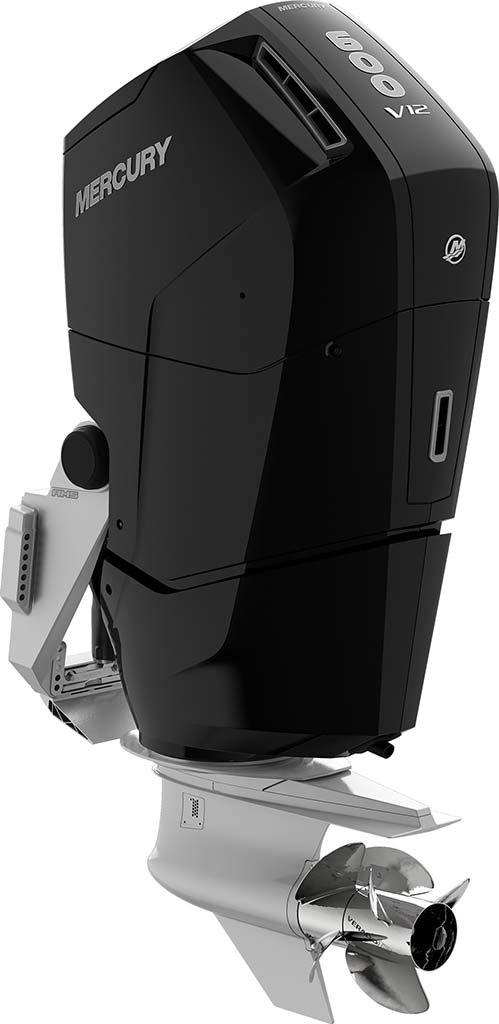
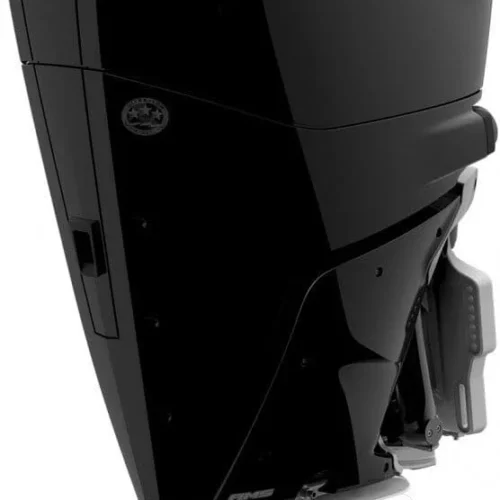
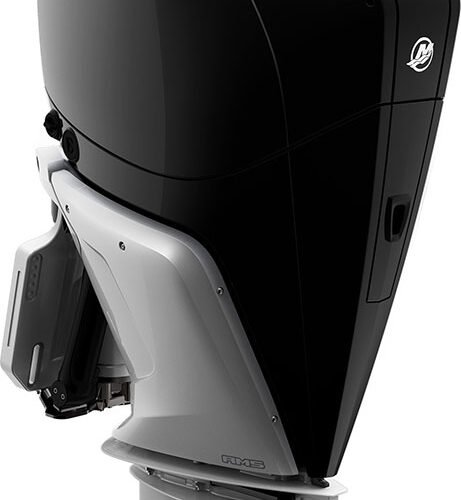
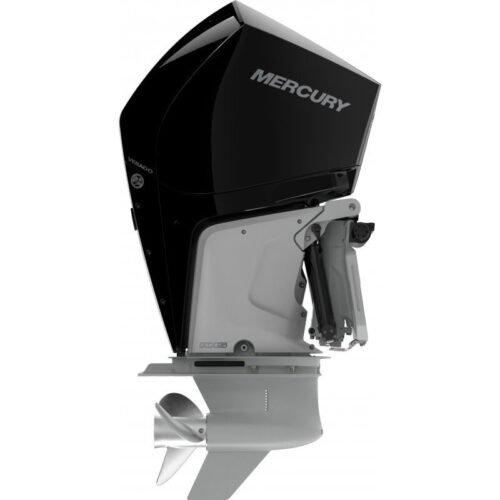
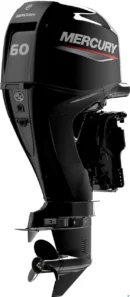
| Color | Phantom Black |
| Saltwater rated | Yes. |
| Condition | New, factory sealed, PDI completed |
Frequently Asked Questions
Is the Mercury 60 HP Command Thrust worth the extra cost?
For heavy boats, yes. The Command Thrust gearcase runs 2.33:1 with 44 percent larger gears, sits deeper, and turns a propeller with 20 percent more blade surface, which lifts a loaded hull onto a plane at a lower engine speed without costing top speed. Mercury states that the 60 HP Command Thrust matches the acceleration and fuel efficiency of a competitor’s more expensive 70 HP. On a light runabout, the standard gearcase is the better choice.
What is the difference between the Mercury 50 HP and 60 HP?
Both use the same 995cc inline-four block, with the same 65 x 75 mm bore and stroke, the same 18 amp alternator, and the same gearcase options. Mercury tunes the 60 HP higher. The 60 HP also adds a 25-inch extra-long shaft option that the 50 HP does not offer. As with other Mercury families built on a shared block, the higher-rated model is generally the better value.
How much does the Mercury 60 HP outboard weigh?
The weight of the Mercury 60 HP outboard ranges from 252 to 284 lb (114 to 129 kg), depending on its configuration. Shaft length, gearcase choice, and steering type all affect the figure. The lightest configuration is a standard gearcase with a 20-inch shaft. The heaviest is a Command Thrust gearcase with a 25-inch shaft. Confirm your exact configuration weight before planning the transom.
Can the Mercury 60 HP replace an older 90 HP two-stroke?
Often, yes, particularly with the Command Thrust gearcase on a heavy hull. An aging 90 HP two-stroke on a pontoon can frequently be replaced by a 60 HP Command Thrust with better planing behavior and roughly half the fuel consumption. Two-stroke horsepower ratings do not translate directly to four-stroke usable thrust, so compare planing performance rather than the number on the cowling.
Does the Mercury 60 HP come with Power Trim and Tilt as standard?
Yes. Power trim and tilt are standard on the 60 HP rather than an option, which is not the case on every outboard at this size. It is also SmartCraft compatible, giving live fuel burn, engine hours, trim position, and diagnostic fault codes through Mercury digital gauges.