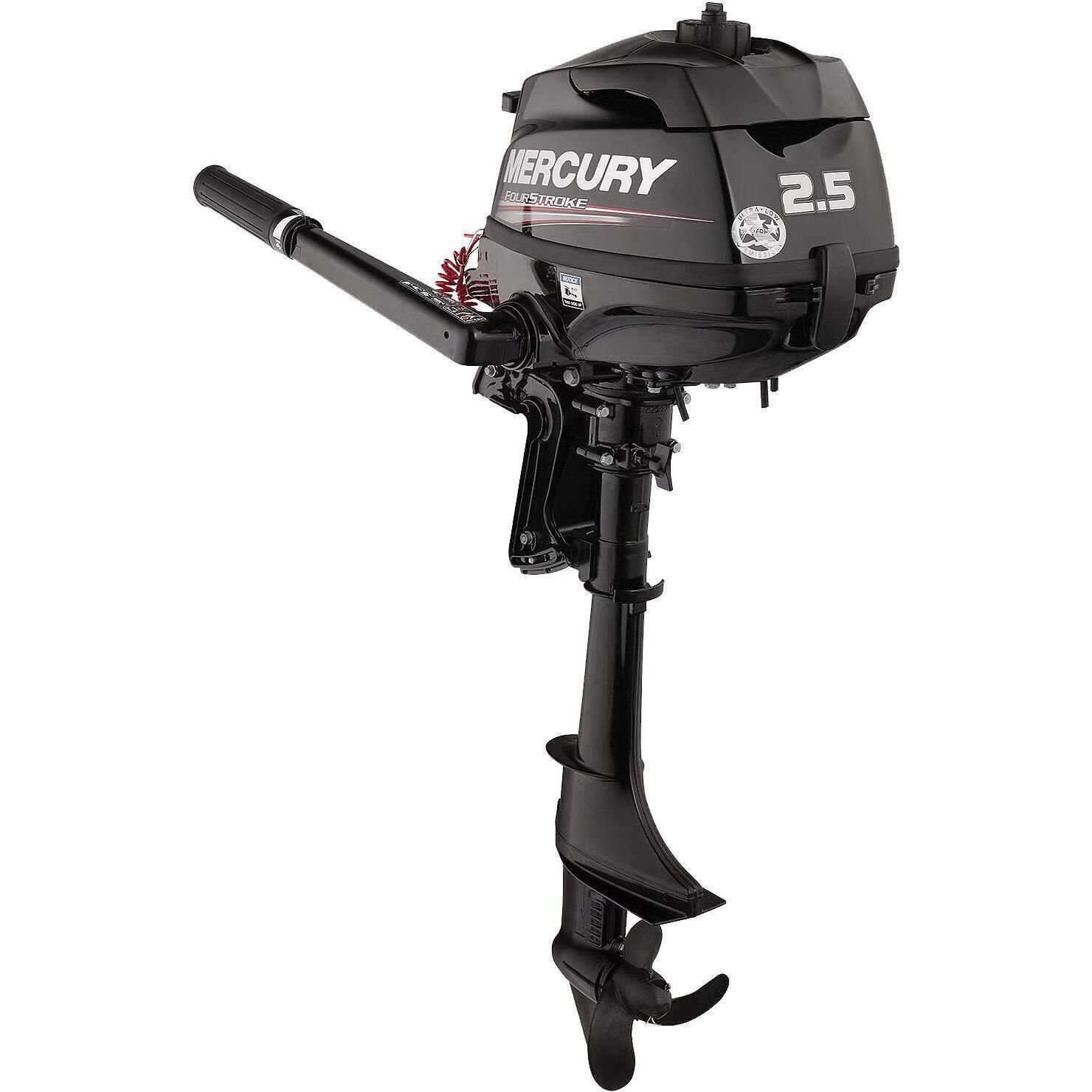
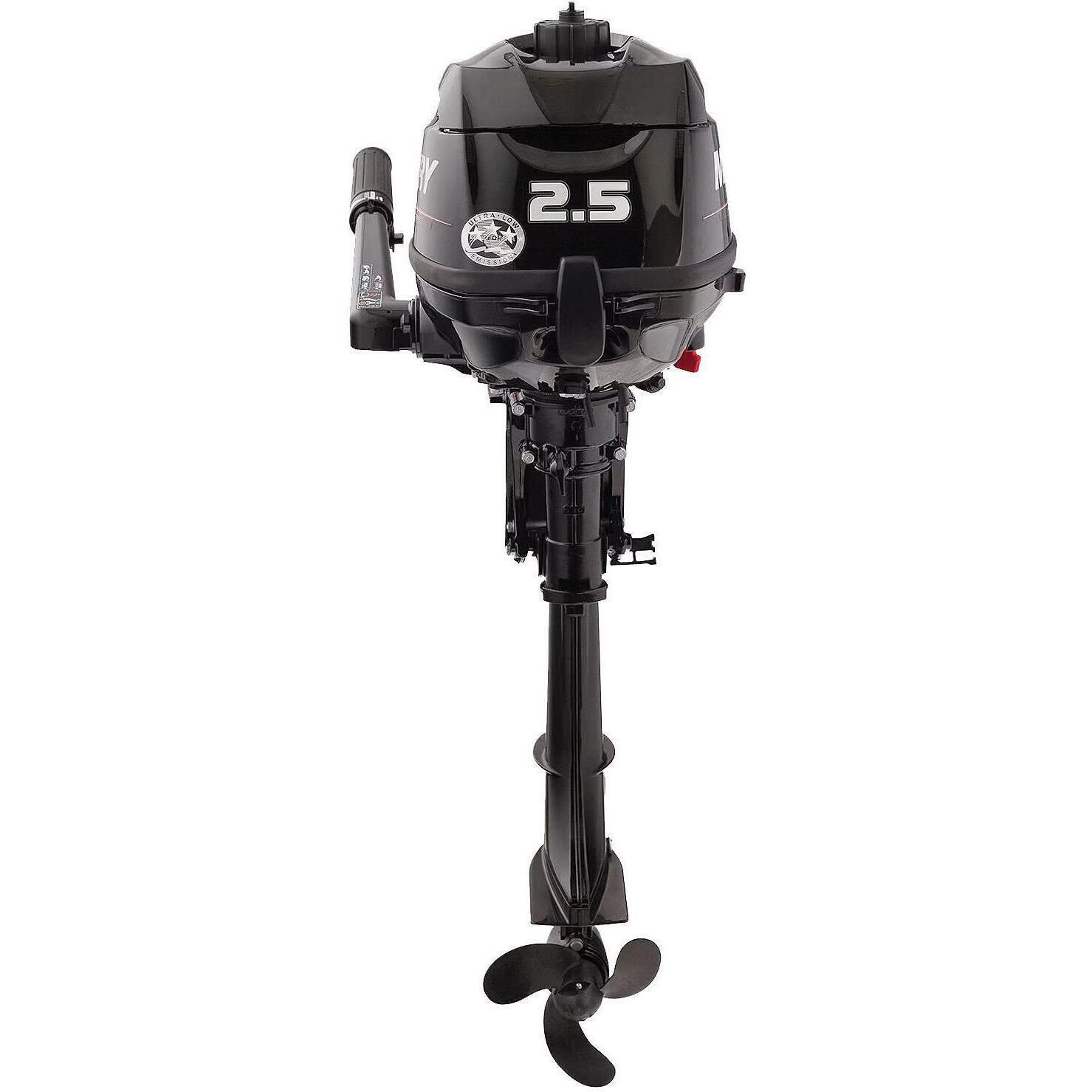
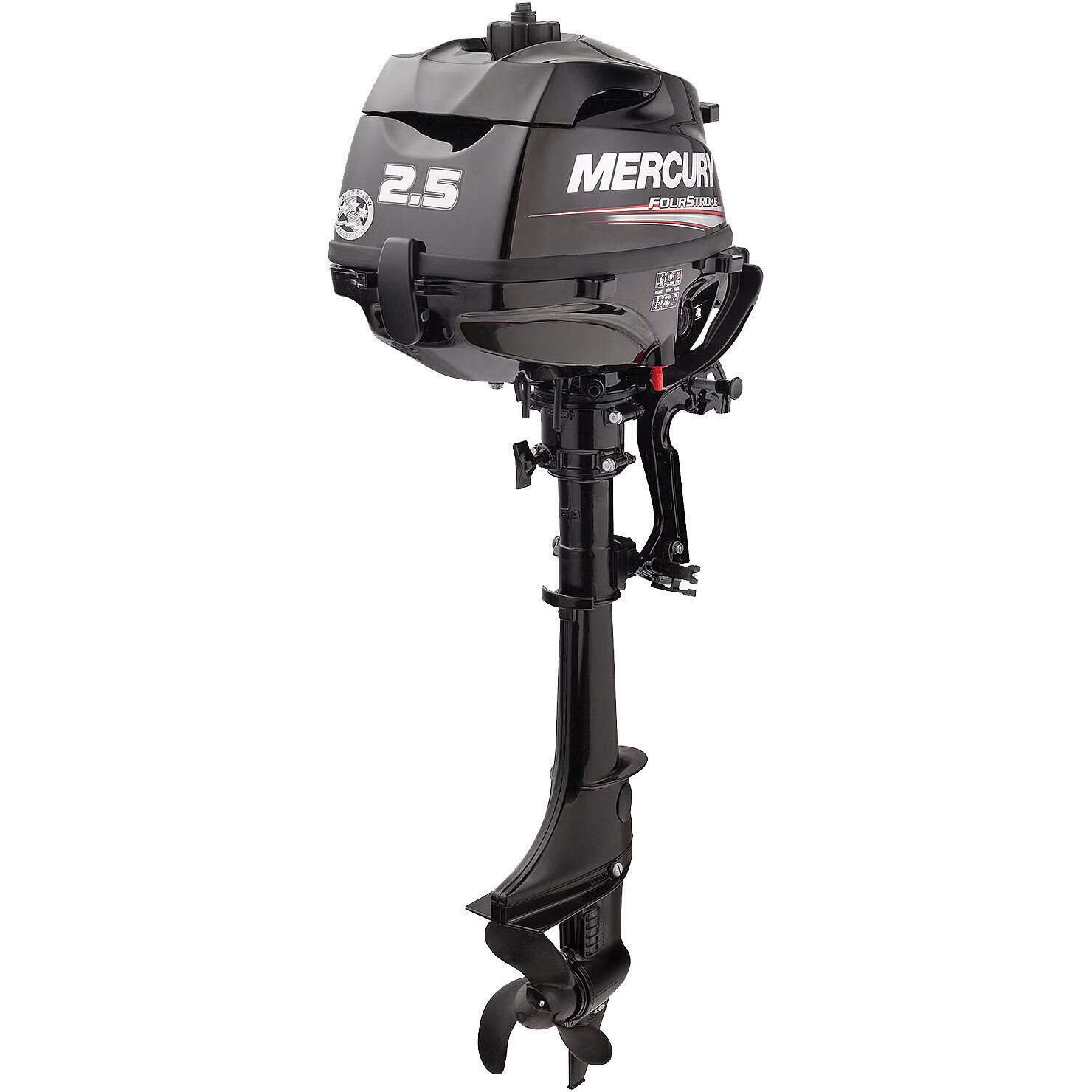
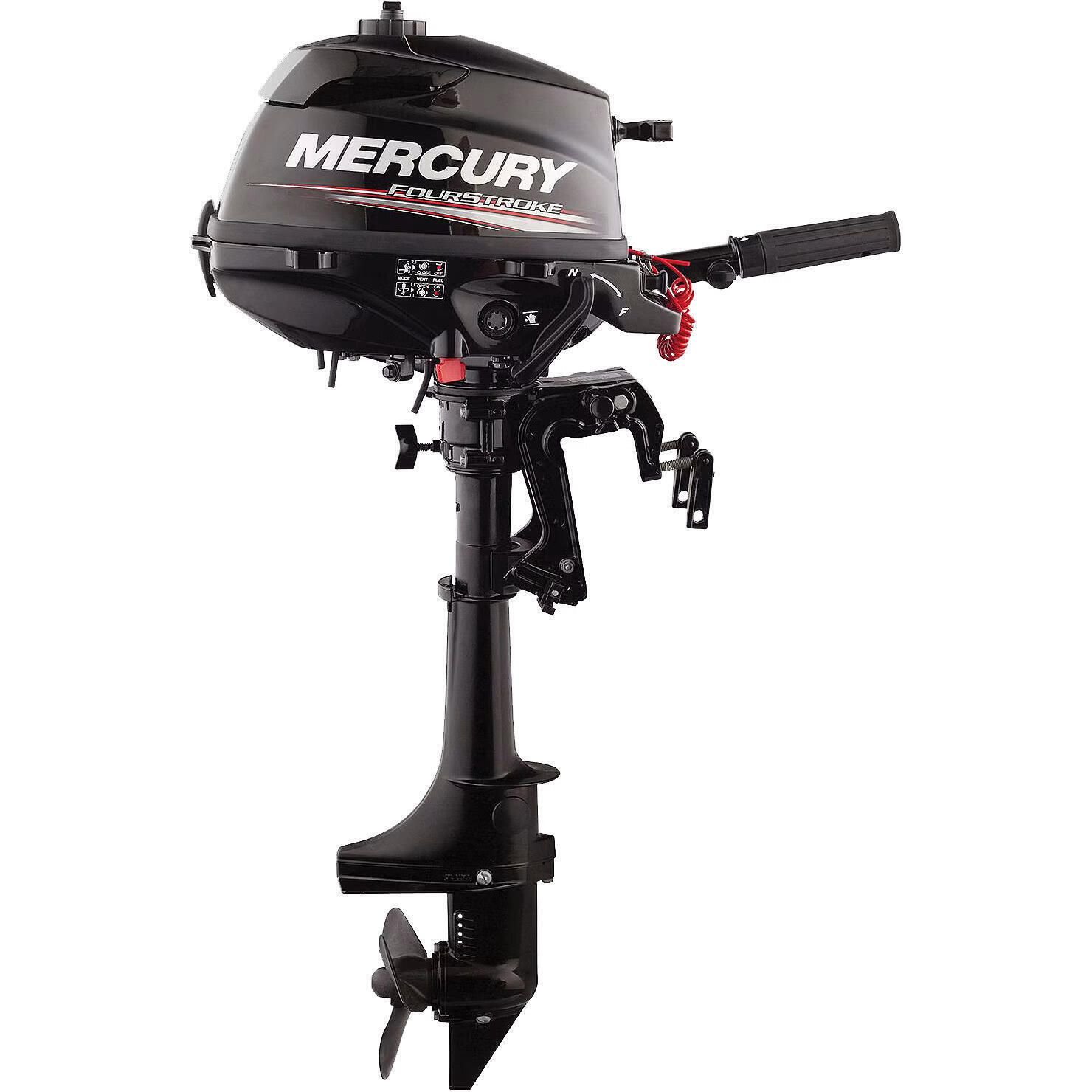
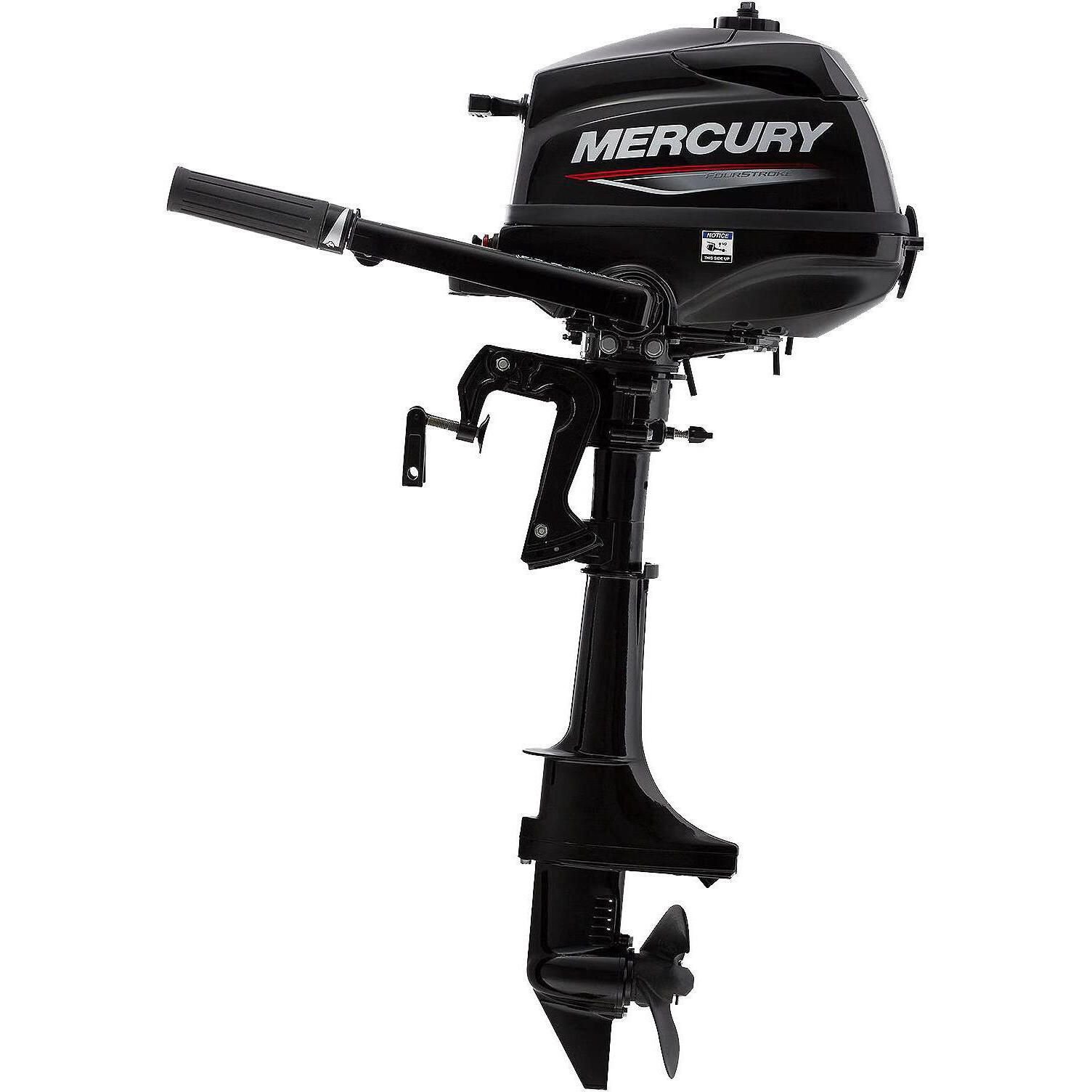

Description
What the Mercury 2.5 HP Outboard Motor Actually Moves
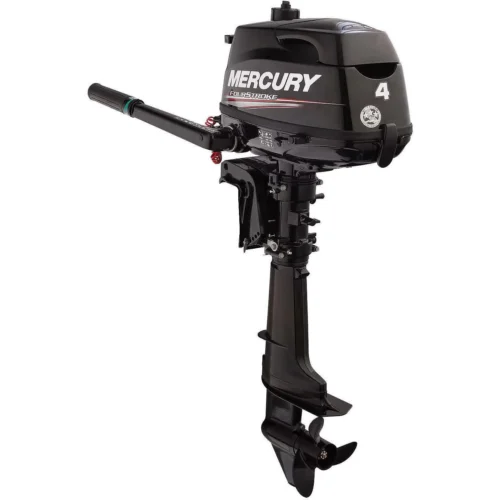
A 2.5 hp outboard motor is an auxiliary engine, and treating it as anything else leads to disappointment. On a 8 to 10 foot inflatable tender carrying one adult and a bag of gear, this engine planes nothing but holds a comfortable 4 to 5 knots and handles light chop without labouring. Add a second adult and you are at hull speed with steady progress rather than quick progress. On a 12 foot aluminium jon boat in flat water it moves the hull competently. Past that, or against any real current, you want the 3.5 HP or a 5 HP from the same Cool Compacts range.
Where it earns its place is the jobs bigger engines cannot do. It fits inside a cockpit locker. It lives on a yacht pushpit bracket without loading the stern. One person moves it from car to dock in a single trip. For cruising sailors running a dinghy to shore, for anglers using an electric-free backup on a small lake, and for anyone with a soft-bottom tender that stows deflated, the weight is the specification that matters and 41 lb is as low as a four-stroke gets.
The single cylinder runs a genuine 85cc, which is large for the class. Mercury builds this displacement to produce rated power at a lower engine speed rather than screaming for it, so the 4500 to 5500 rpm operating band sits well below the mechanical limit. In practice that means the engine is quieter at cruise than the raw horsepower number suggests, and it holds its tune longer because it is not living at redline.
Powerhead, Fuel System and Cooling Hardware
The powerhead is a 55 x 36 mm bore and stroke running a two-valve pushrod overhead valve layout with splash lubrication. There is no oil pump to fail and no oil filter to source, which is the correct engineering choice at this displacement: fewer parts, fewer failure points, and field servicing that needs nothing more than a socket set.
Fuelling is carbureted on 87 octane pump fuel, compatible with blends up to 10 percent ethanol. The integrated 0.3 gallon (1.1 litre) tank sits under the cowling, which removes the external tank, the fuel line and the primer bulb from the equation entirely. At cruise that gives roughly 45 to 60 minutes of running, which matches how this engine is genuinely used: shore runs, not passages. If you need longer legs, the tank refills from a jerry can in seconds and there is no priming sequence to work through afterward.
Cooling is water-cooled through a thermostat rather than the simpler splash or air-cooled approach some competing 2.5 hp outboard engines use. The thermostat matters for a tender engine because tender engines idle a lot: alongside a boarding ladder, waiting on a passenger, holding position at a dock. A thermostatically controlled circuit brings the engine to operating temperature and holds it there through those long idles instead of running cold and washing down the bores.
Ignition is CDI with electronic spark advance, so there are no points to set and starting is consistent from cold. The engine protection system monitors over-rev and pulls timing before damage occurs, which is the realistic failure mode when a prop ventilates in chop.
Reverse, Shallow Water and What to Expect in Handling
This is the part most listings leave out, so read it before you buy. The 2.5MH gearbox is forward and neutral only. There is no reverse gear. You reverse by rotating the tiller through 360 degrees so the propeller thrust points the other way. Mercury builds it this way deliberately to save weight and a shift linkage, and in practice it is a two-second manoeuvre once you have done it twice. But if you are coming from a 9.9 HP with a three-position shifter, it is a change in technique and you should know that going in.
Shallow water trim gives 16 degrees across four trim positions, enough to run over a sandbar or lift the gearcase clear when beaching a tender. Steering is the tiller itself with full 360-degree rotation. Standard gearcase, 2.15:1 reduction, driving a 7.375 inch diameter by 6.0 inch pitch three-blade composite propeller. Exhaust discharges above the propeller.
Corrosion protection is the same specification Mercury applies to its large-block outboards, which is the practical argument for buying Mercury at this size rather than a budget clone. Saltwater rated from the factory. Flush after every salt use, store the engine upright or on its designated side per the manual, and the maintenance schedule is an annual gearcase lube change, a spark plug, and a carburettor clean if it sits over a winter with fuel in it.
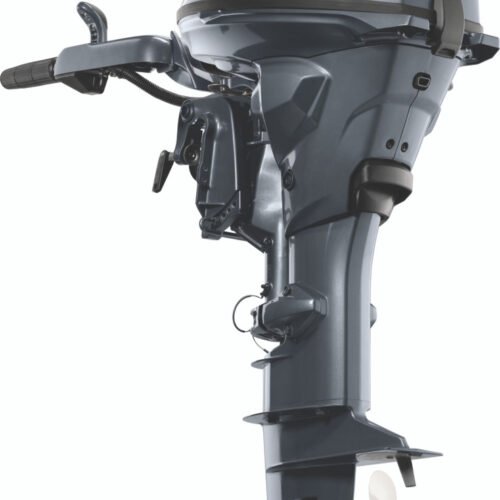
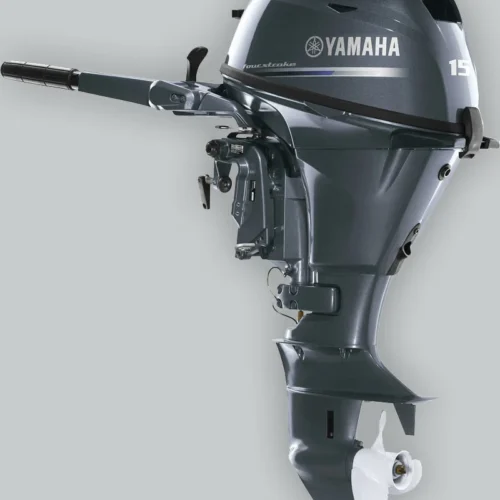
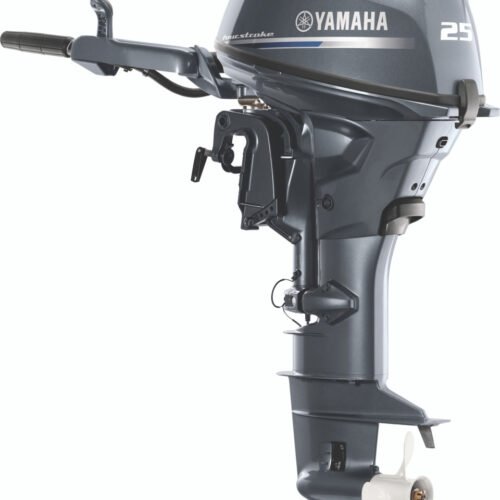
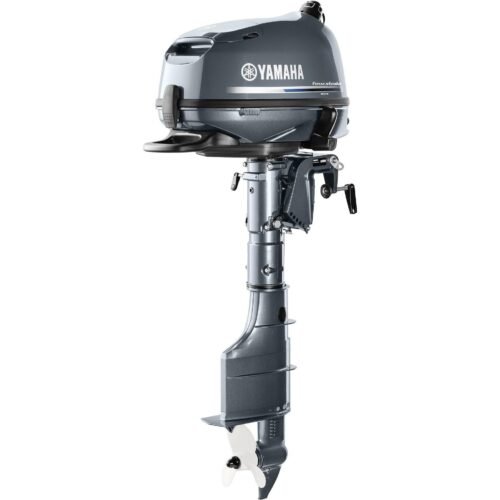
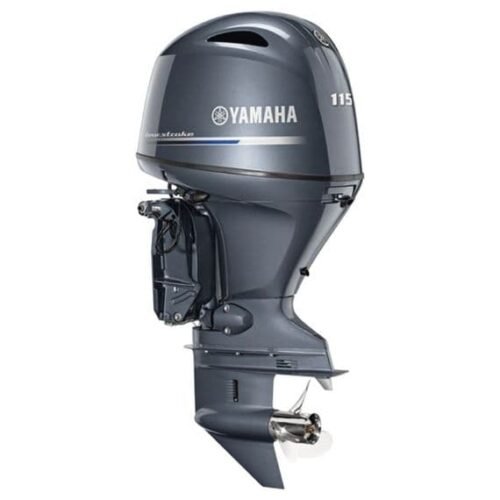
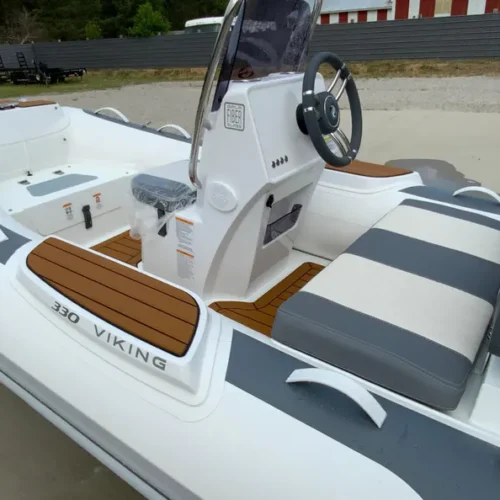
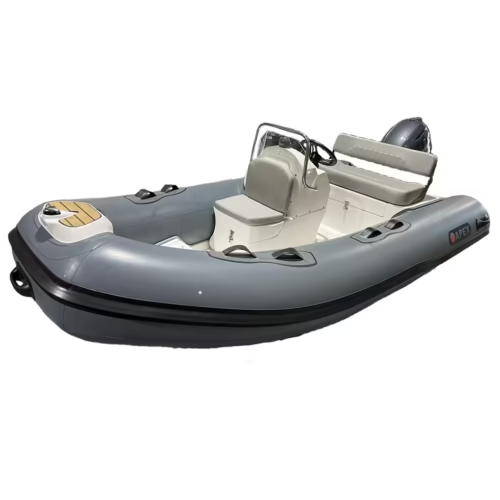
Every Mercury 2.5 HP outboard we ship is new, factory sealed and pre-delivery inspected before crating. The engine arrives with its propeller fitted, owner’s manual, tool kit and Mercury FourStroke oil. If you are matching this engine to a hull, our inflatable boats and tenders and Apex dinghy range are transom-rated for this class. Buyers weighing brands can compare the closest Yamaha equivalent, the Yamaha F4 portable outboard, or browse the full Yamaha portable series.
Mercury 2.5 HP FourStroke: Full Factory Specifications
| Feature / Specification | Technical Detail / Value |
|---|---|
| Model | Mercury 2.5MH FourStroke |
| Part number (MPN) | 1F02201KK |
| Horsepower | 2.5 HP / 1.9 kW |
| Engine type | 1 cylinder, four-stroke |
| Displacement | 85 cc / 5.2 CID |
| Bore and stroke | 55 x 36 mm / 2.16 x 1.42 in |
| Full throttle RPM range | 4500 to 5500 rpm |
| Fuel induction | 2-valve pushrod (overhead valve) |
| Fuel system | Carbureted |
| Recommended fuel | 87 octane, up to 10% ethanol |
| Recommended oil | Mercury FourStroke 10W-30 |
| Ignition | CDI with electronic spark advance |
| Cooling system | Water-cooled with thermostat |
| Starting | Manual (recoil) |
| Steering | Tiller with 360-degree turning |
| Gear shift | Forward, Neutral (no reverse gear) |
| Gearcase ratio | 2.15:1 |
| Gearcase options | Standard |
| Propeller | 7.375 in diameter x 6.0 in pitch, 3-blade composite |
| Shaft length | 15 in / 381 mm (short) |
| Trim system | Manual, 4 positions |
| Shallow water trim range | 16 degrees |
| Exhaust system | Above propeller |
| Integrated fuel tank | 0.3 gal / 1.1 L |
| Dry weight | 41 lb / 18 kg |
| Engine protection | Over-rev warning system |
| CARB star rating | 3 stars |
| Colour | Phantom Black |
| Country of manufacture | Japan |
| Saltwater rated | Yes |
| Condition | New, factory sealed, PDI completed |
Frequently Asked Questions
Does the Mercury 2.5 HP outboard have reverse?
No. The Mercury 2.5 HP outboard has a forward and neutral gearbox only, with no dedicated reverse gear. To reverse, you rotate the tiller handle through 360 degrees so the propeller thrust points astern. Mercury omits the reverse linkage on this model to keep dry weight at 41 lb, which is the lightest four-stroke in its catalog. Every other portable Mercury from 3.5 HP upward uses the same forward-neutral arrangement, so this is a class characteristic rather than a limitation specific to the 2.5.
What size boat will a 2.5 hp outboard motor push?
A 2.5 hp outboard motor is rated for tenders, dinghies and small craft up to roughly 10 to 12 feet carrying one to two adults. On an 8 to 10 foot inflatable with a single occupant it holds a comfortable 4 to 5 knots in flat water. Two adults plus gear brings you to hull speed with steady rather than quick progress. Beyond 12 feet, or anywhere you face sustained current or wind, step up to a 3.5 HP or 5 HP from the same range.
How long does the built-in fuel tank last?
The integrated 0.3 gallon (1.1 litre) tank gives roughly 45 to 60 minutes of running at cruise throttle. That figure drops at wide open throttle and extends at idle or displacement speeds. Because the tank is internal there is no external hose or primer bulb to manage, and refilling from a jerry can takes seconds with no priming sequence afterward. For longer sessions, carry a small fuel container rather than looking for an external tank fitting, which this model does not have.
Is the Mercury 2.5 HP suitable for saltwater use?
Yes. The Mercury 2.5 HP FourStroke is saltwater rated from the factory and uses the same corrosion protection specification Mercury applies across its larger outboard range. That includes sacrificial anodes, treated fasteners and a coated powerhead. Flush the cooling circuit with fresh water after every salt outing and rinse the external surfaces, and the engine handles coastal and tender duty without issue. Skipping the flush is the single most common cause of premature failure at this size.
Should I buy the 2.5 HP or the 3.5 HP Mercury outboard?
Choose the 2.5 HP if weight is your deciding factor and you are moving a single occupant on a small tender. Choose the 3.5 HP if you regularly carry two adults, face current or wind, or want a reserve of thrust. The 3.5 HP shares the same 15 inch shaft and tiller layout but produces meaningfully more thrust for a modest weight and price increase. As a practical rule: if you will ever carry a second person, buy the 3.5. If the engine spends most of its life in a locker, buy the 2.5.
Do you ship the Mercury 2.5 HP outboard internationally?
Yes. Naviora Marine ships outboard motors worldwide by sea and air freight, with export documentation prepared for you. Engines are crated new and factory sealed with the pre-delivery inspection completed before dispatch. Freight cost depends on destination port and service level, so request a freight quote with your delivery address and we will return a landed figure. Buying guidance and model comparisons are collected in our marine blog and guides.