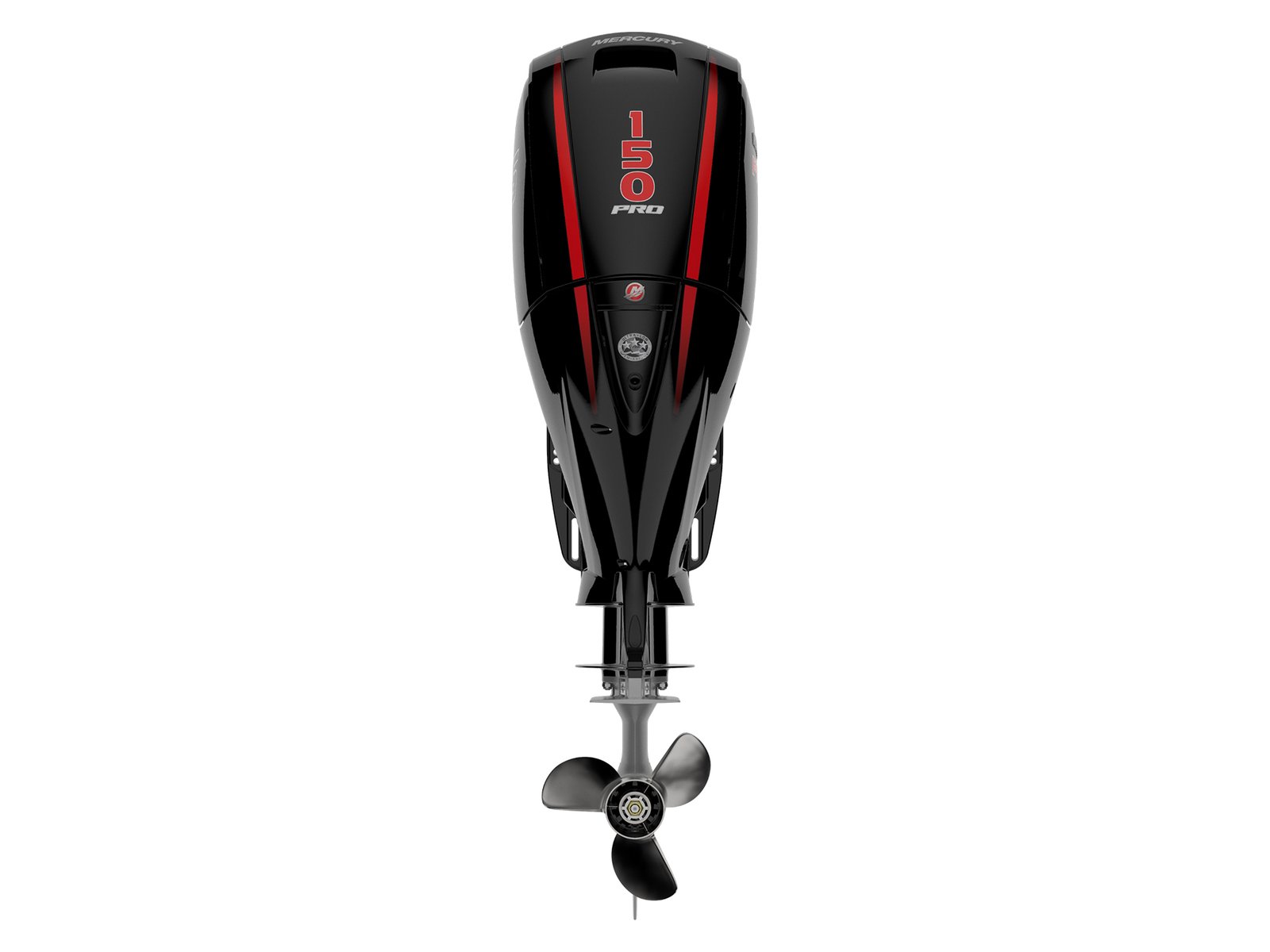
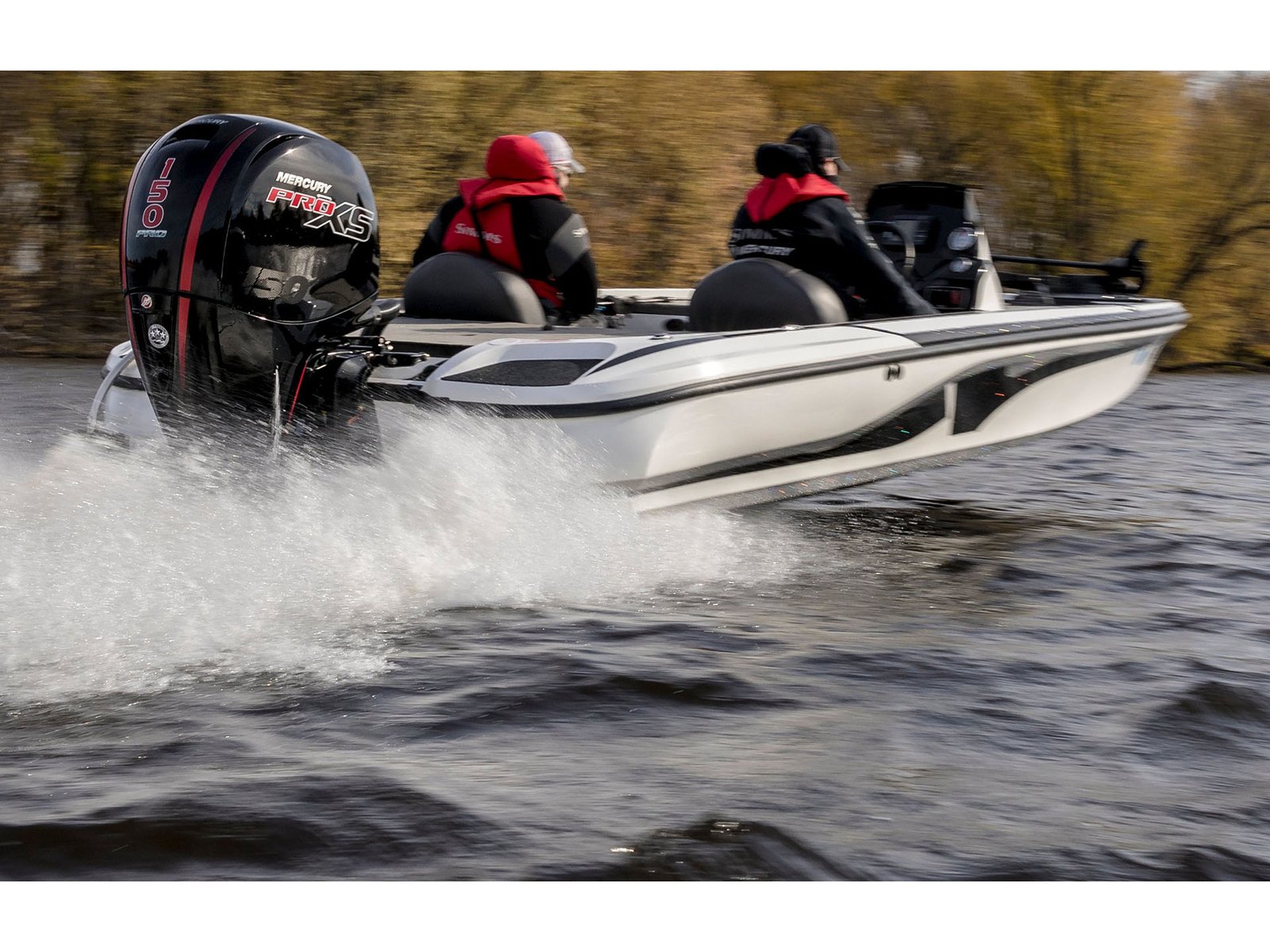

Description
Three Liters from Four Cylinders
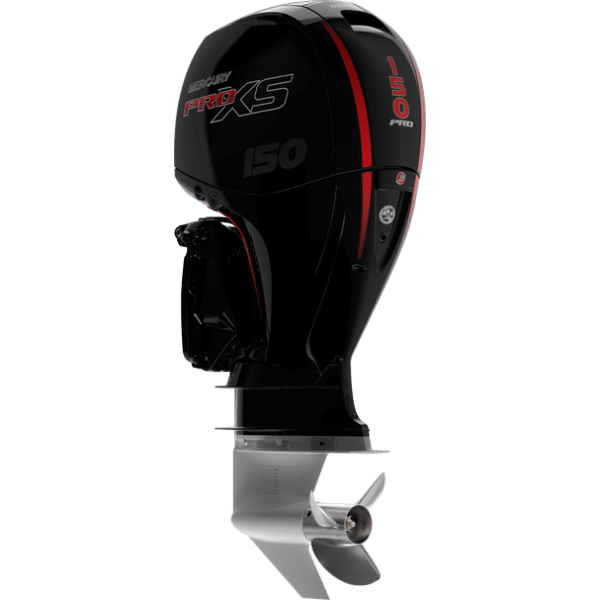
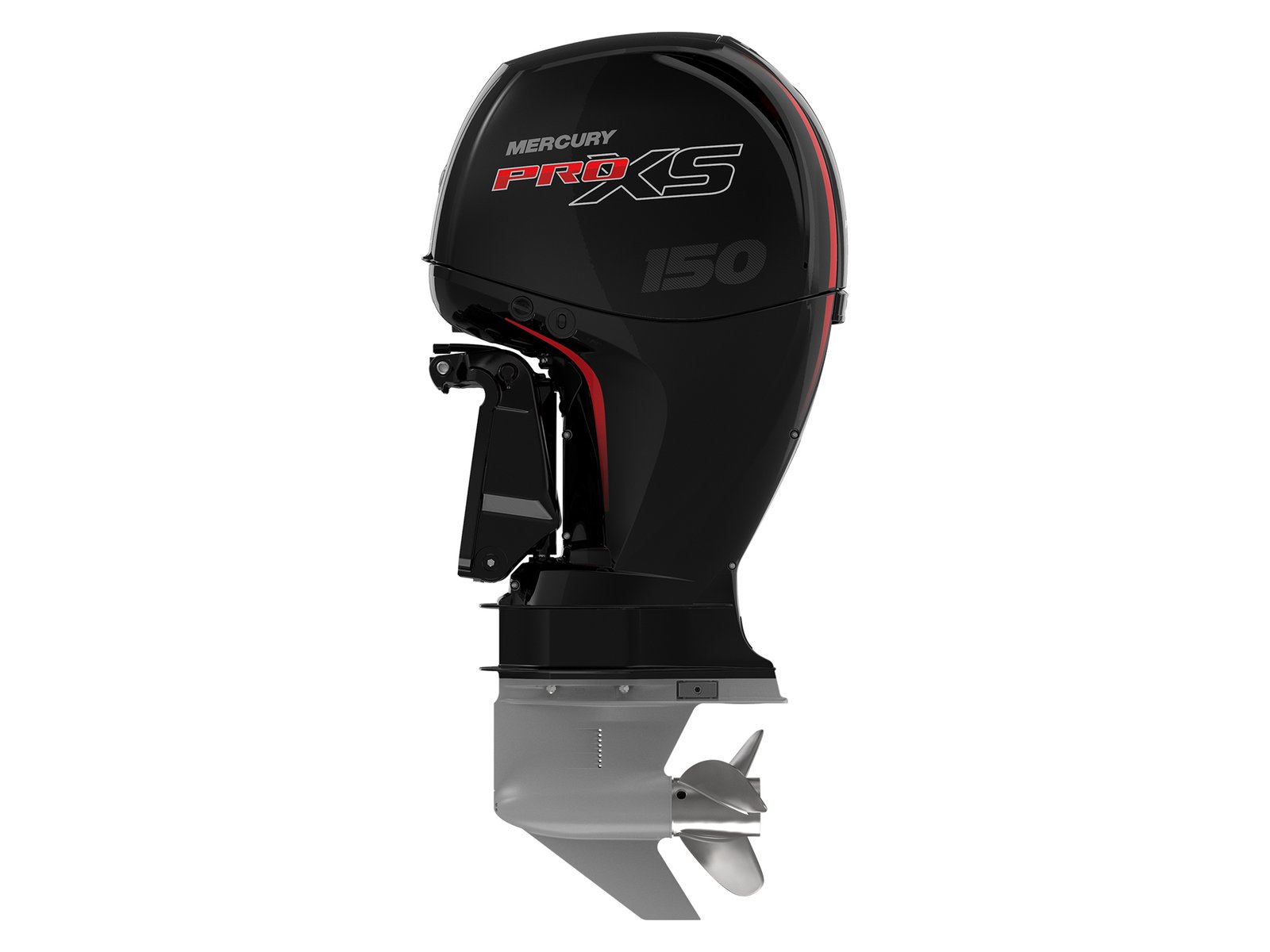
The 150 Pro XS runs a 3.0-liter inline-four with a 102 x 92 mm bore and stroke. That is a huge displacement for a four-cylinder outboard, and it is a deliberate engineering position rather than an accident of design.
Mercury’s argument, and it holds up, is that high displacement producing a given output means the engine works less hard than a smaller, harder-revving alternative. The 150 Pro XS operates between 5,200 and 6,000 rpm, which is a lower ceiling than the 115 Pro XS. It reaches its rating through capacity rather than revs. The consequences are a broader torque curve, less mechanical stress, and a quieter engine at cruise.
The powerhead uses an 8-valve single overhead cam arrangement, which is simpler than a DOHC layout and has fewer components to maintain. Air comes through a performance-tuned scroll intake manifold developed specifically to optimize airflow across the whole rev range rather than just at peak. Fueling is computer-controlled multi-port electronic fuel injection.
Transient Spark, and What It Does
The 150 Pro XS carries transient spark technology, which the 115 Pro XS does not. It is worth understanding because it is one of the few genuinely distinguishing features in this class.
Transient Spark optimizes ignition timing during throttle transitions to add torque exactly when you are demanding acceleration. Mercury quotes an additional 3 to 5 percent torque at key rpm points. Where you feel it is coming out of the hole and coming out of turns, which on a bass boat or a bay boat is most of the throttle inputs you make in a day.
Three to five percent sounds small on paper. The difference between a clean hole shot and a labored one occurs when the hull is transitioning onto the plane and the engine is working hardest.
Weight and Rigging Flexibility
At 456 lb / 207 kg, Mercury positions the 150 Pro XS as nearly 20 pounds lighter than its closest competitor. On a bass boat, 20 pounds at the transom is a real handling variable.
The gearcase runs 2.08:1. Mercury specifically notes that this gearing lets you mount the engine higher, install a jack plate, or trim higher to advance overall performance. That is relevant for the rigging-conscious buyer: an engine that tolerates a higher mounting position reduces gearcase drag, which is free speed if your hull and your setup can use it.
The engine pairs with a wide range of Mercury propellers, which is not a throwaway claim. Prop selection is where most of the achievable performance on a 150 actually lives, and having genuine choice across bass boats, pontoons, and center consoles means the engine can be tuned to the hull rather than the hull accepting whatever the engine came with.
Electrical Capacity
The alternator produces 60 amps at 756 watts with water-cooled voltage regulation. That is nearly double the 115 Pro XS output, and it reflects what boats at this size carry.
A rigged fishing boat at 150 HP typically runs a large-screen sounder or side-imaging unit, a chart plotter, a trolling motor charging circuit, live well and bait well pumps, aerators, and deck and navigation lighting. Sixty amps supports that load with a margin. The water-cooled regulator extends component life on an engine that runs hard.
Starting is an electric turnkey. Controls are mechanical throttle and shift. Steering is dual-cable mechanical or hydraulic power steering. Trim is power trim and tilt, with Active Trim available to manage it automatically through hole shots, turns, and changing conditions. SmartCraft compatibility gives live fuel burn, engine hours, trim position, and diagnostic codes on Mercury digital gauges. Engine protection runs through SmartCraft Engine Guardian.
Fuel is unleaded regular at a minimum of 87 octane or 90 RON, with up to 10 percent ethanol. Oil is NMMA-certified FCW SAE 10W-30, with a capacity of 6.0 liters. The warranty is a three-year limited warranty from Mercury, plus an additional three years for corrosion.
What It Suits
Bass boats, offshore fishing boats, runabouts, pontoons, and center consoles. Mercury positions it explicitly for bass, offshore fishing, and runabout applications, and the breadth of that list reflects how configurable the propeller and rigging options are.
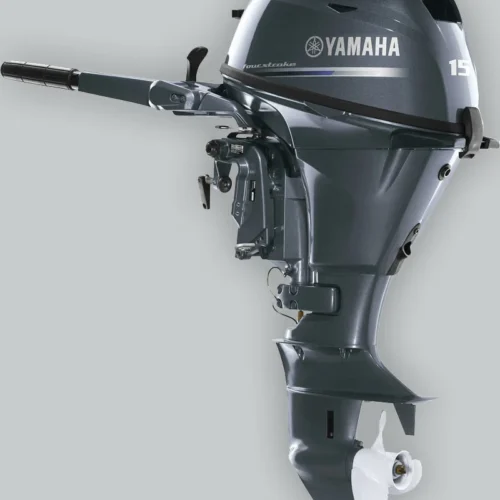
Every Mercury 150 Pro XS we ship is new, factory sealed, and pre-delivery inspected before crating. Compare across the Fast Frenzy range and the Mercury outboard motors hub. For hull matching, see our pontoon boats and rigid-hull inflatables. Cross-brand, the closest in stock is the Yamaha F150 outboard motor.
Mercury Pro XS 150 HP: Full Factory Specifications
| Feature / Specification | Technical Detail / Value |
|---|---|
| Horsepower | 150 HP / 110 kW at the propshaft |
| Engine type | Inline-4, 8-valve single overhead cam (SOHC) |
| Displacement | 3.0 L / 183 CID |
| Bore and stroke | 102 x 92 mm / 4.0 x 3.6 in |
| Full-throttle RPM range | 5200 to 6000 rpm |
| Air induction | Performance-tuned scroll intake manifold |
| Fuel induction | Computer-controlled multi-port electronic fuel injection (EFI) |
| Torque technology | Transient Spark |
| Recommended fuel | Unleaded regular, 87 octane minimum or 90 RON, 10% ethanol max |
| Recommended oil | NMMA-certified FCW SAE 10W-30 |
| Oil capacity | 6.0 L / 6.3 US quarts |
| Ignition | SmartCraft ECM 07 Digital Inductive |
| Cooling system | Water-cooled with thermostat |
| Alternator | 60 amp / 756 W with water-cooled voltage regulation |
| Starting | Electric (turn-key) with Smart Start |
| Controls | Mechanical throttle and shift |
| Steering | Dual cable mechanical or hydraulic power steering |
| Gear shift | Forward, Neutral, Reverse |
| Gearcase ratio | 2.08:1 |
| Shaft lengths | 20 in / 508 mm, 25 in / 635 mm |
| Trim system | Power trim and tilt, active trim available |
| SmartCraft compatible | Yes. |
| Engine protection | SmartCraft Engine Guardian |
| Dry weight | 456 lb / 207 kg |
| CARB star rating | 3 stars |
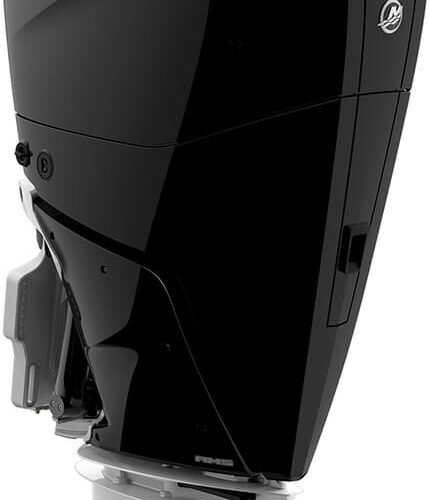
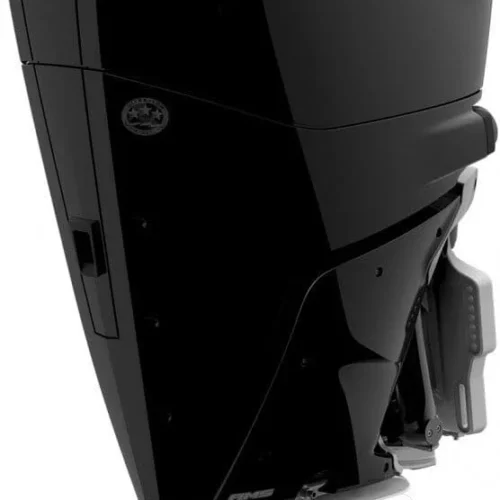
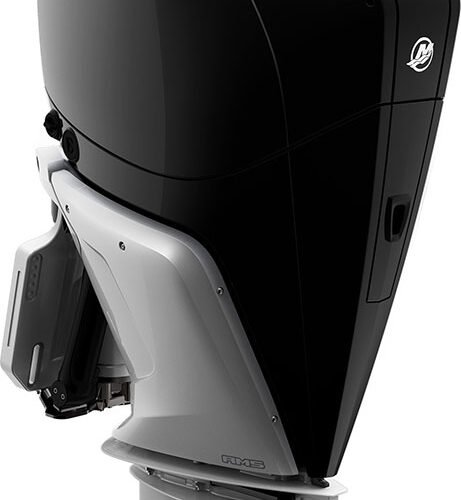
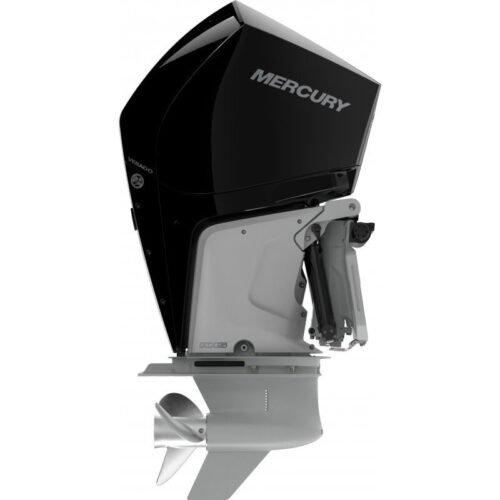
| Color | Phantom Black |
| Warranty | 3-year limited, 3-year corrosion |
| Condition | New, factory sealed, PDI completed |
Frequently Asked Questions
Is the Mercury 150 Pro XS a V8?
No. The Mercury 150 Pro XS is an inline-four with 3.0 liters of displacement and an 8-valve single overhead cam. Mercury’s V8 Pro XS platform is a 4.6-liter engine that starts at 200 horsepower. The 175 Pro XS is a 3.4-liter V6. Any listing describing a 150 Pro XS as a V8 is incorrect.
What is Transient Spark on the Mercury 150 Pro XS?
Transient Spark optimizes ignition timing during throttle transitions, adding roughly 3 to 5 percent additional torque at key rpm points. You feel it coming out of the hole and out of turns, which is where most throttle inputs happen on a fishing boat. The 150 Pro XS carries it. The 115 Pro XS does not.
How much does the Mercury 150 Pro XS weigh?
456 lb (207 kg) in the lightest configuration. Mercury positions the engine as nearly 20 pounds under its closest competitor at the same output. On a bass boat, where transom weight affects planing and handling directly, that margin is a measurable advantage rather than a marketing line.
Can I mount the Mercury 150 Pro XS higher or use a jack plate?
Yes. The 2.08:1 gearcase is specifically suited to higher mounting positions, jack plate installation, and running more trim. Raising the gearcase reduces drag, which converts directly into speed if your hull and setup can take advantage of it. Discuss your rigging plan with us before ordering so the shaft length is correct.
What is the difference between the Mercury 115 Pro XS and the 150 Pro XS?
The 115 Pro XS is a 2.1-liter inline-four at 359 lb revving to 6,300 rpm. The 150 Pro XS is a 3.0-liter inline-four at 456 lb revving to 6,000 rpm. The 150 reaches its rating through displacement rather than revs, carries transient spark, and produces 60 amps against the 115’s 35. It is a heavier, more capable engine, not a tuned-up version of the same thing.