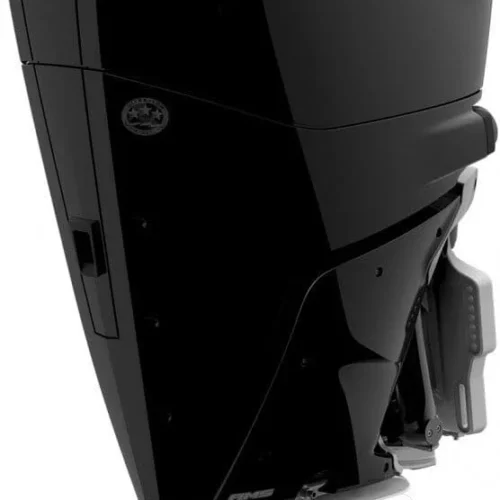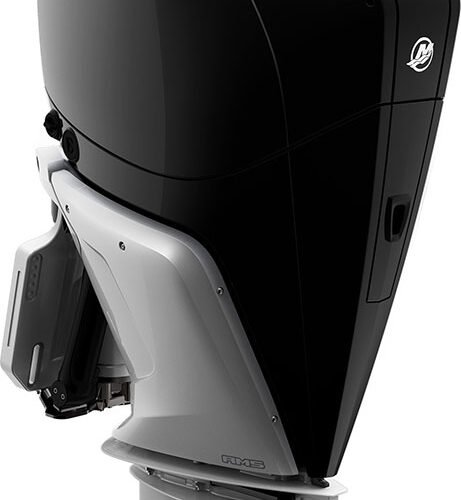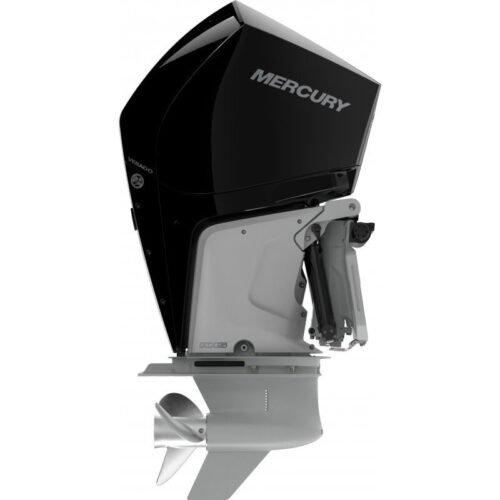

Description
Where the Pro XS Range Changes Architecture
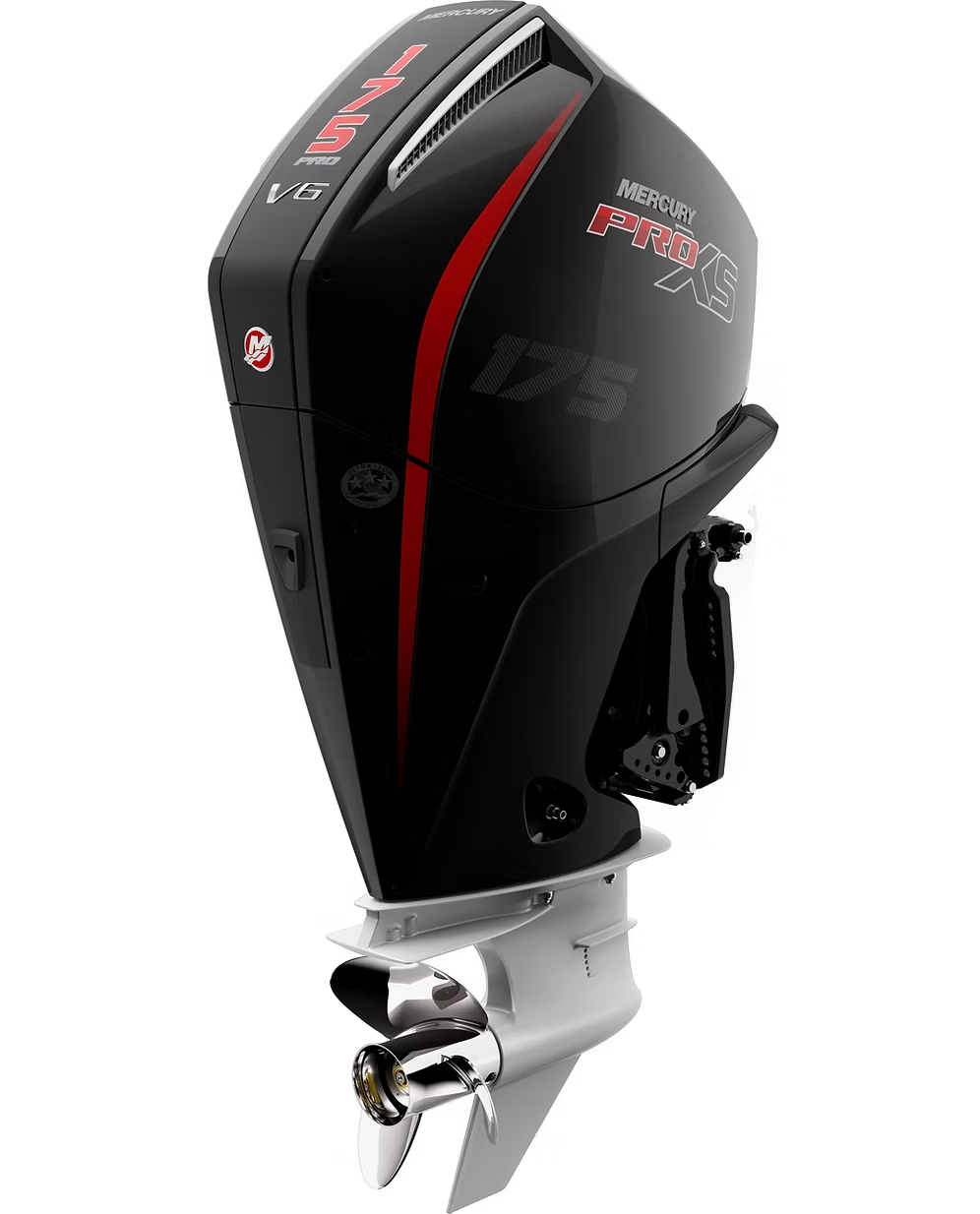
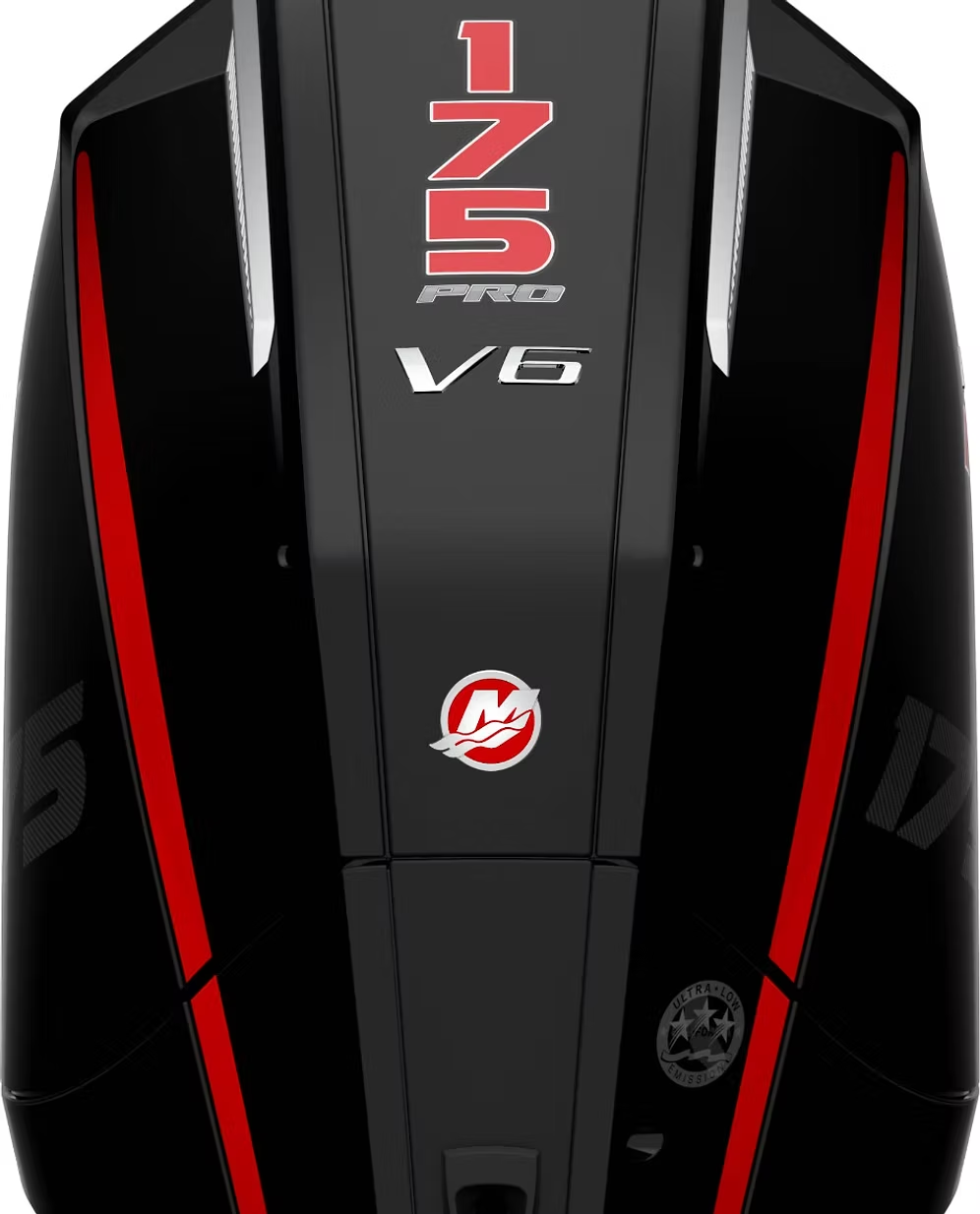
Everything below 175 HP in the Pro XS line is an inline-four engine. The 175 is the smallest V6, and the jump is not incremental.
The 3.4-liter V6 runs a 64-degree bank angle with dual overhead cams and 24 valves, against the 8-valve single overhead cam layout of the 115 and 150. Four valves per cylinder instead of two means substantially better breathing at high rpm, and twin cams allow independent intake and exhaust timing. The bore and stroke are 92 x 86 mm.
The practical result is a broader, flatter torque curve. Estimates put the 3.4L V6 at roughly 230 lb-ft, which reflects the DOHC layout producing more torque per cubic inch than the SOHC engines below it.
This design is also the platform that carries Mercury’s entire large-outboard range upward. The same architectural family runs from here to the 4.6L V8, which means the 175 Pro XS shares engineering, parts commonality, and dealer familiarity with engines several classes above it.
Gearing and the 1.85:1 Ratio
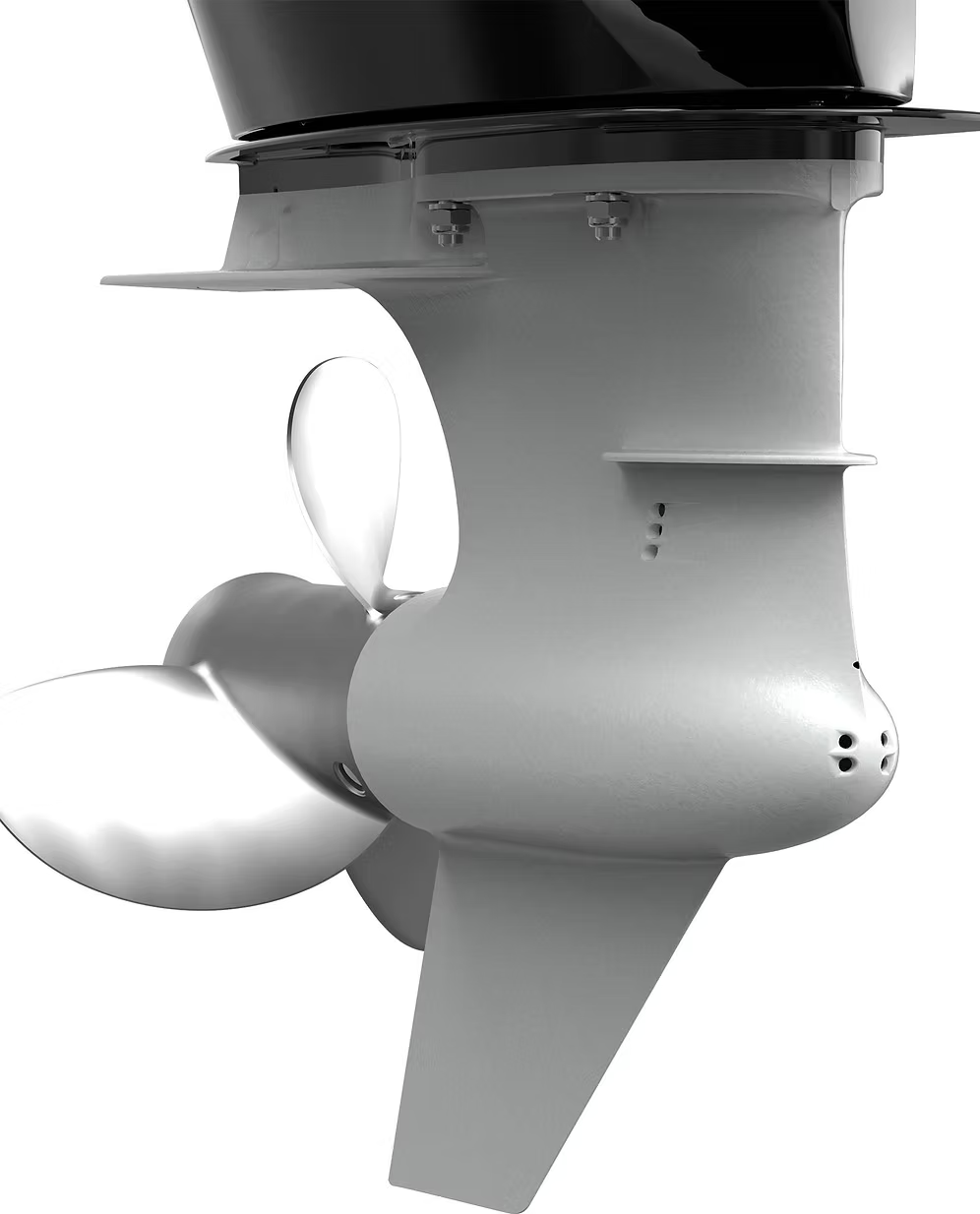
The 175 Pro XS runs a 1.85:1 gearcase, which is the tallest ratio anywhere in this catalog. The 150 Pro XS runs 2.08:1. The 115 runs 2.07:1 or 2.38:1.
A taller ratio means the propeller turns faster relative to the engine, which favors top speed over thrust multiplication. Combined with the V6’s torque, the 175 Pro XS is built to run fast on hulls that are already efficient rather than to drag heavy boats onto the plane. The gearcase is a 4.8-inch unit.
If your boat is a heavy pontoon or a loaded work hull, the 175 Pro XS is not the right answer despite the horsepower. A lower-rated engine with a Command Thrust gearcase will serve you better. The 175 Pro XS is for tournament boats, offshore center consoles, and performance hulls where the hull does its share of the work.
Advanced Range Optimization and Transient Spark
Two Mercury technologies come standard on the V6 and V8 Pro XS engines and are worth understanding because they address opposite ends of the throttle.
Advanced range optimization automatically adjusts fuel delivery for efficient cruising. On a long run at part throttle, which is where most fuel actually gets burned, the system leans the mixture to the most economical point the engine will tolerate. On an engine of this size running offshore distances, that is real money over a season.
Transient Spark works the other end, optimizing ignition timing during throttle transitions to add torque exactly when you accelerate. Together they mean the engine is efficient when you are cruising and responsive when you are not.
Rigging and Steering
Steering is hydraulic as standard, with power steering optional and a Big Tiller option available for tiller-steered applications, which is unusual at this output. Controls are remote mechanical. Trim is power trim and tilt with a maximum trim range of 20 degrees (minus 6 to plus 14) and a maximum tilt range of 73 degrees (minus 6 to plus 67).
Ignition is SmartCraft PCM 112 digital inductive. Fueling is electronic fuel injection, computer controlled, with Advanced Range Optimization. Cooling is water-cooled through a thermostat. The midsection is conventional. Shaft lengths are 20 inches and 25 inches.
Fuel is unleaded regular at 87 octane minimum or 90 RON with up to 10 percent ethanol. Warranty is Mercury’s three-year limited plus three-year corrosion.
Choosing Between the 175 Pro XS and the 200 Pro XS
Be honest with yourself about this comparison, because the two engines are close in our current pricing.
The 175 Pro XS is a 3.4L V6 at 470 lb. The 200 Pro XS is a 4.6L V8 at roughly 505 lb. The V8 gives you 25 more horsepower and considerably more displacement for about 35 lb.
If transom weight is a design constraint on your hull, the V6 is the right engine, and the weight saving is the reason to choose it. If weight is not constraining you, look carefully at the V8 before deciding. We would rather tell you that than sell you the wrong engine.
Every Mercury 175 Pro XS we ship is new, factory sealed, and pre-delivery inspected before crating. Compare across the Fast Frenzy range, step up to the Pro XS 200 to 300 range, or browse the Mercury outboard motors hub. Cross-brand, the closest in stock is the Yamaha F175 outboard motor. If you need rigging advice for a specific hull, just send us your boat details.
Mercury Pro XS 175 HP: Full Factory Specifications
| Feature / Specification | Technical Detail / Value |
|---|---|
| Horsepower | 175 HP / 130 kW |
| Engine type | V6, 64 degrees, dual overhead cam (DOHC), 24 valves |
| Displacement | 3.4 L / 209 CID |
| Bore and stroke | 92 x 86 mm / 3.6 x 3.4 in |
| Air induction | Performance-tuned long-runner intake manifold |
| Fuel induction | Electronic fuel injection, computer controlled, with advanced range optimization |
| Torque technology | Transient Spark |
| Recommended fuel | Unleaded regular, 87 octane minimum or 90 RON, 10% ethanol max |
| Ignition | SmartCraft PCM 112 Digital Inductive |
| Cooling system | Water-cooled with thermostat |
| Starting | Electric with SmartStart protection |
| Controls | Remote mechanical |
| Steering | Hydraulic standard, power optional, big tiller optional |
| Gear shift | Forward, Neutral, Reverse |
| Gearcase ratio | 1.85:1 |
| Gearcase | 4.8 in |
| Midsection | Conventional |
| Shaft lengths | 20 in / 508 mm, 25 in / 635 mm |
| Trim system | Power trim and tilt |
| Maximum trim range | 20 degrees (-6 to +14) |
| Maximum tilt range | 73 degrees (-6 to +67) |
| SmartCraft compatible | Yes. |
| Dry weight | 470 lb / 213 kg |
| CARB star rating | 3 stars |
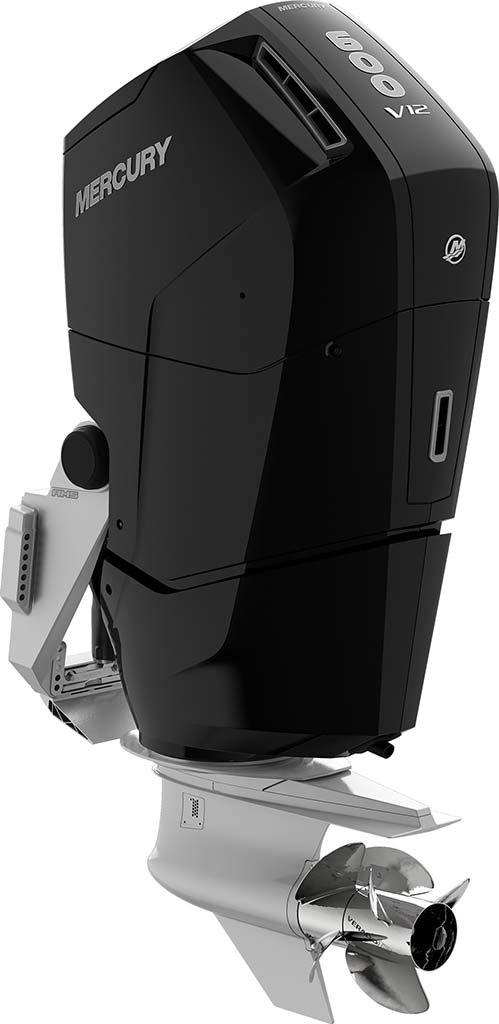
| Color | Phantom Black |
| Warranty | 3-year limited, 3-year corrosion |
| Condition | New, factory sealed, PDI completed |
Frequently Asked Questions
Is the Mercury 175 Pro XS a V6 or a V8?
The Mercury 175 Pro XS is a V6. It uses a 3.4-liter, 64-degree V6 powerhead with dual overhead cams and 24 valves. Mercury’s V8 Pro XS platform is the 4.6-liter, and it starts at 200 horsepower. The 175 is the smallest V6 in the Pro XS range and the largest engine in the line that is not a V8.
What is the difference between the Mercury 175 Pro XS and the 150 Pro XS?
The 150 Pro XS is a 3.0-liter inline-four with a single overhead cam and 8 valves, weighing 456 lb. The 175 Pro XS is a 3.4-liter V6 with dual overhead cams and 24 valves, weighing 470 lb. The jump is architectural rather than incremental: four valves per cylinder and twin cams give the V6 a broader torque curve and better high-rpm breathing.
Should I buy the 175 Pro XS or the 200 Pro XS?
The 175 Pro XS is a 3.4L V6 at 470 lb. The 200 Pro XS is a 4.6L V8 at roughly 505 lb. If transom weight is a design constraint on your hull, the V6 is the right choice, and the roughly 35 lb saving is the reason. If weight is not constraining you, the V8 offers 25 more horsepower and considerably more displacement for a modest weight increase.
What is Advanced Range Optimization?
Advanced range optimization automatically adjusts fuel delivery for efficient cruising, leaning the mixture at part throttle where most fuel is actually consumed. It is standard on Mercury’s V6 and V8 Pro XS engines. On an outboard of this size running offshore distances, the cumulative fuel saving over a season is substantial.
Is the 1.85:1 gearcase right for my boat?
The 1.85:1 ratio is the tallest in this catalog and favors top speed over thrust multiplication. It suits tournament boats, offshore center consoles, and efficient performance hulls. It is the wrong choice for heavy pontoons or loaded workboats, where a lower-rated engine with a Command Thrust gearcase will plane the hull better despite less horsepower.